Imago
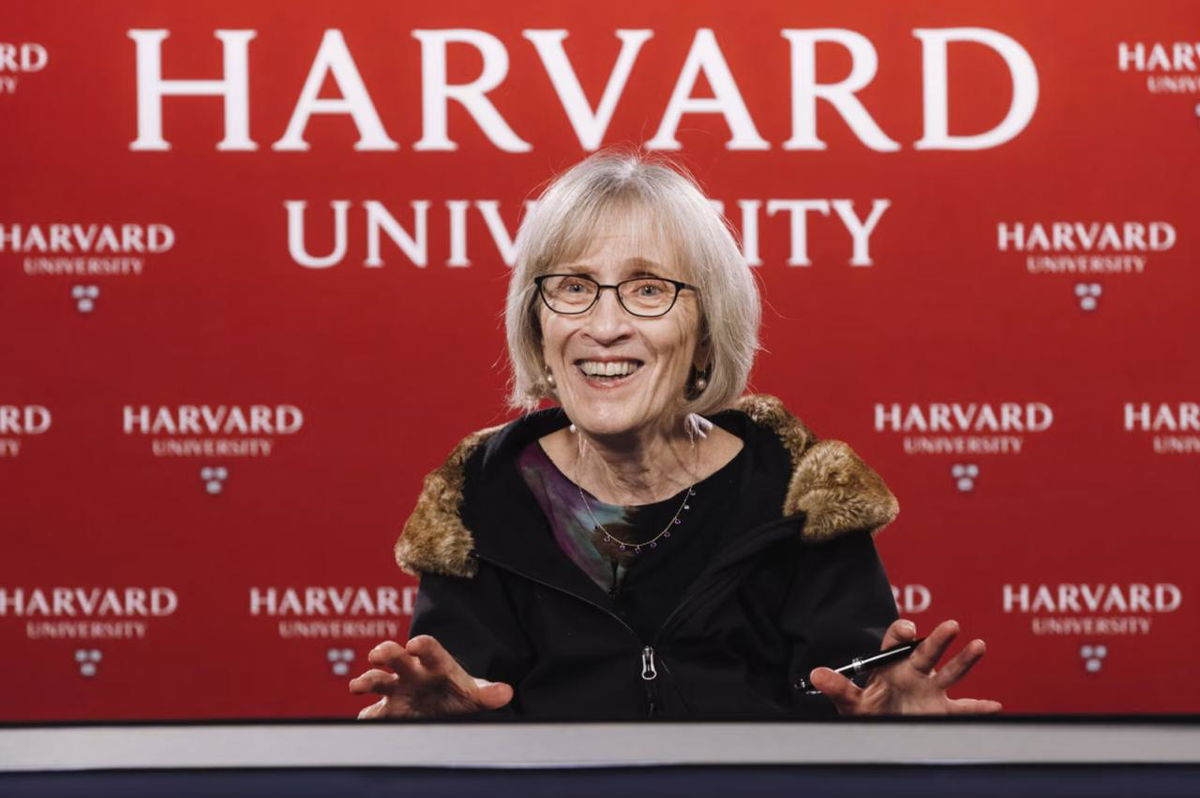
Claudia Goldin (Image via: The Wall Street Journal @X)
Imago
Claudia Goldin (Image via: The Wall Street Journal @X)
The prolonged WNBA CBA negotiations have been a landmark chapter in the league’s history. After months of a standoff and constant fear of a possible lockout, the players finally felt elation after signing a new deal two weeks ago. As the dust settled, one key 79-year-old economist who pulled the strings in the CBA talks emerged from the shadows.


Claudia Goldin, a Harvard professor and a Nobel Prize winner in Economics (2023), served as a consultant to the players’ association during the new CBA talks. She used her expertise on the gender pay gap during these talks, which helped both parties finalize a deal that led to a staggering 400% increase in WNBA players’ salaries.
Watch What’s Trending Now!
Harvard economist Claudia Goldin helped WNBA players win a nearly 400% pay raise https://t.co/GD2rKbyWmZ
— The Wall Street Journal (@WSJ) March 29, 2026
Goldin emphasized data from 1997 to build tables that concluded that the welfare benefits subject to over three years of active service aren’t tangible for players, because her data showed that an average WNBA player’s activity period was 2-3 years.
Furthermore, in her research, Goldin also found that the salary-to-revenue ratio declines when the NBA and WNBA are included. “When NBA players make a dollar, WNBA players don’t get a cent,” Goldin said of this situation. The assessment is accurate, as the average salary before the new CBA deal was around $120,000, while for the NBA it was $12M.
The improvement in this pay gap has been microscopic, with WNBA players’ average salary rising to $583,000 after the new CBA. Yet, despite that, it’s still far from what NBA players earn. But for Goldin, she wasn’t even trying to fit into that “equality pay” term. Her only line of argument was on equity, not equality.
Goldin believed that players should have the right to receive a substantial share of what they deserve from the league, not match the salaries of NBA players, which, in practice, isn’t a feasible argument.
Claudia Goldin has worked to address the pay structure system in women’s basketball since last year. In a piece in the New York Post, Goldin stated that the situation around the WNBA is “embarrassing” and needs a revamp. “The world of women’s professional basketball is ripe for an economic update that better reflects its influence and irresistibility,” Goldin wrote. “But it has not happened yet.”
Goldin’s work culminated in a deal that introduced several landmark financial changes: the team salary cap jumped to a historic $7M, revenue sharing was embedded for the first time, and maximum contracts were raised to begin at $1.4M.
This 400% pay surge is among the largest salary hikes in the US professional sports community. Along with enhanced paychecks, the new WNBA CBA also addressed several welfare factors crucial to WNBA players. A new housing provision and better health benefits are among the crucial terms that have often gone under the radar amid the historic pay rise.
Three-Time Champ Credits Current Generation for New WNBA CBA Deal
The new WNBA CBA deal isn’t just a silver lining for current players, but also a proud moment for former players. Playing in an era when neither the pay was high nor the spotlight on them, these players know what this success means for the spectrum of women’s basketball.
Getty
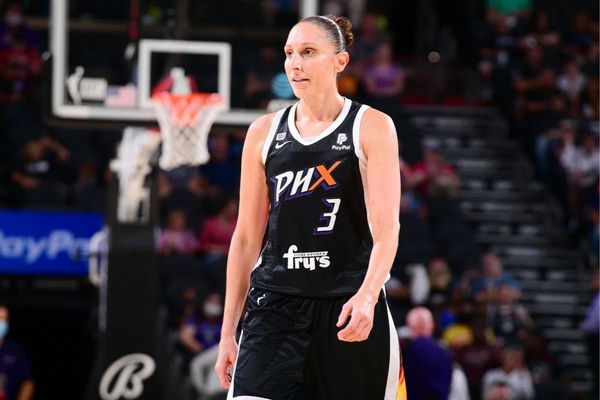
PHOENIX, AZ – June 27: Diana Taurasi #3 of the Phoenix Mercury looks on during the game against the Los Angeles Sparks on June 27, 2021, at the Phoenix Suns Arena in Phoenix, Arizona. NOTE TO USER: User expressly acknowledges and agrees that, by downloading and or using this photograph, user is consenting to the terms and conditions of the Getty Images License Agreement. Mandatory Copyright Notice: Copyright 2021 NBAE (Photo by Michael Gonzales/NBAE via Getty Images)
Now a three-time WNBA champion, Diana Taurasi has heaped praise on players of this generation like Nneka Ogwumike, Napheesa Collier, and Breanna Stewart, who didn’t shy away from taking their rightful share.
Speaking in an interview with NBC Sports, Taurasi shed light on this issue. “To see the league go forward like that in a way where it’s gonna change people’s lives, you know, our generation had to go to Europe, Russia, and overseas. And that’s a sacrifice we made. And I wouldn’t trade it for the world,” the Phoenix Mercury player said.
“But to see what this next generation has done in such a short time just says a lot about where this league is going and what these players are doing. It’s been really fascinating to watch. And you know, we’re all pulling in the same direction. And that feels good,” she added.
Taurasi played in the WNBA for about 20 years. And despite being one of the most accomplished players of her generation, her salary was roughly $234,000 per year during her final two seasons with the Mercury. This alone reflects how far the WNBA has come in 2026, with a new CBA deal that sets minimum salaries ranging from $270,000 to $300,000.
With the new WNBA CBA firmly in place, the upcoming season is just around the corner without any delay. It will start on May 8. But before that, the league still has a few crucial events lining up, including the college draft, free agency talks, and the team expansion drafts.
Written by

Edited by

Pranav Venkatesh