
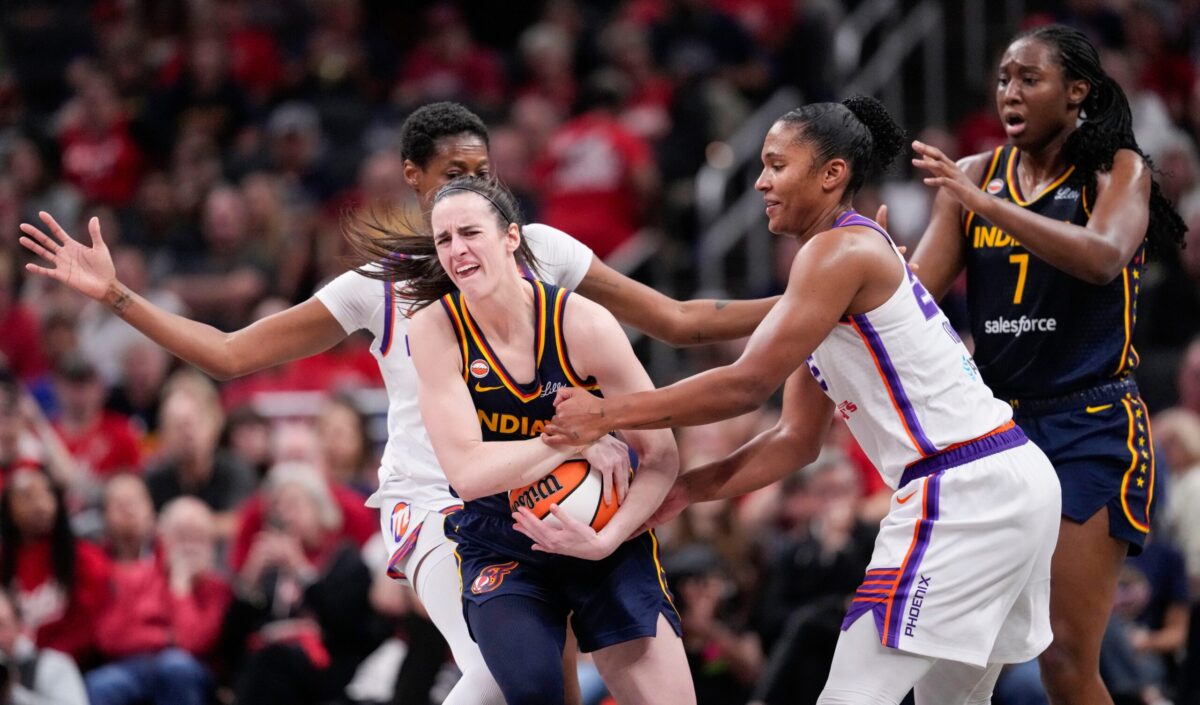
If there is one week the WNBA quickly wants to move forward from, it would be the one where the Indiana Fever and Phoenix Mercury locked horns in back-to-back games. While those matchups were always expected to bring intensity considering the rivalry between them, no one thought a Caitlin Clark-Alyssa Thomas incident would become the flashpoint that once again put the league’s handling of its biggest stars under the microscope.
Watch What’s Trending Now!
Now, the W did eventually assess Thomas a one-game suspension and upgraded the play to a Flagrant 2 foul after officials missed her contact with Clark’s throat in real time. But analyst Zena Keita believes the problem isn’t just the decision itself; it’s that the league often feels like it’s playing catch-up after situations have already spiraled.
“There continue to have these situations in which we’re like, ‘Somebody in that office would have known that this is going to play out this way. Somebody could have been prepared for people reacting this way, right?’,” she said in the latest episode of No Offseason. “So that’s where it’s like, ‘What’s going on?’ And it allows for a question: Does the W like these types of moments?
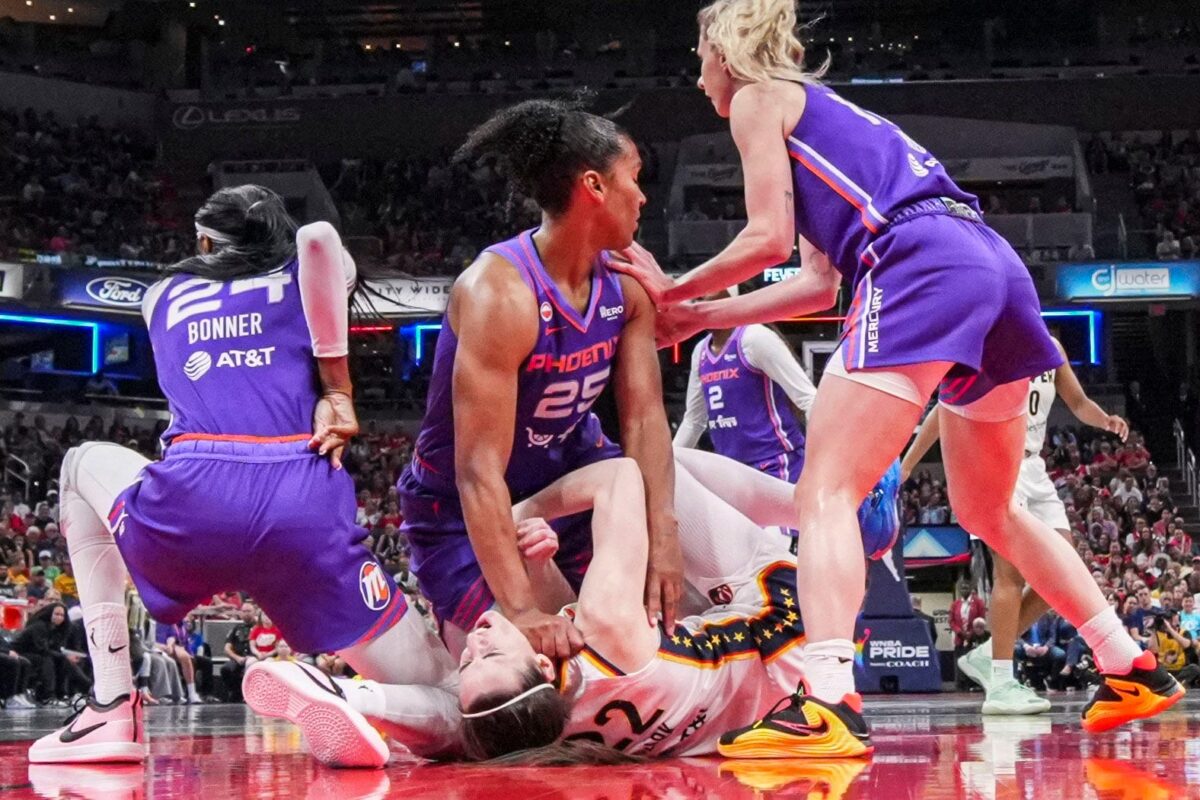
“I would venture to say they don’t, I don’t think people want this to happen, I don’t think they want to have to clean up a foul like that or have a picture like that a representative of their league.
“I doubt the WNBA is like, ‘Yes, this is great for us.’ For these to be the profound narratives of the league, is that a player is being willfully hurt by other players and the league isn’t doing anything about it — I don’t think that. But because of the way that they keep reacting to things or not proactively preempting things, it’s kind of like, ‘What’s going on? Why are we not ahead of these things?”
Imago
Phoenix Mercury forward Alyssa Thomas (25) scrambles to get up over Indiana Fever guard Caitlin Clark (22) on Wednesday, June 24, 2026, during a game at Gainbridge Fieldhouse in Indianapolis. The Phoenix Mercury defeated the Indiana Fever, 111-109.
When Caitlin Clark joined the WNBA in 2024, she brought a massive audience with her. So every hard foul, missed whistle, or physical sequence involving her quickly turns into a league-wide talking point about fairness and player protection. But this time, the outrage isn’t just because of her popularity; it’s about the inconsistency in officiating around her.
In the second game of the series between the Fever and Mercury, with just over six minutes left in the second quarter, Clark was driving into the paint. She slipped and fell to the floor as multiple Mercury defenders crowded her to secure the loose ball. But in the scramble, cameras caught Alyssa Thomas making contact near Clark’s neck before stepping over her.
Now, this was already a dangerous sequence, but what made it more controversial was that officials did not call a foul when it happened in real time. Still, if that wasn’t enough to outrage the fan base, there came more physicality.
Later in the third quarter, Caitlin Clark had to leave the court with a back injury after Valériane Ayayi failed to provide her with a clear landing space. Now, refs did call a personal foul on Ayayi for this, but even after a review, they declined to upgrade it to a reckless closeout, which just added more fuel to the fire.
Not only were these dangerous sequences, but they also highlighted a growing concern around officiating consistency in the league. After spending the offseason working on an officiating task force that would break down the physicality in the league, calls like a tech for clapping on one end and missed contact to the neck on the other have only reignited questions about whether anything has really changed at all.
Yet for now, the WNBA keeps finding itself trying to pick up the pieces. But if they want fans and players to put their trust in them, they will need to act more quickly and decisively when situations like these unfold, rather than managing the wreckage 24 hours too late.