Imago
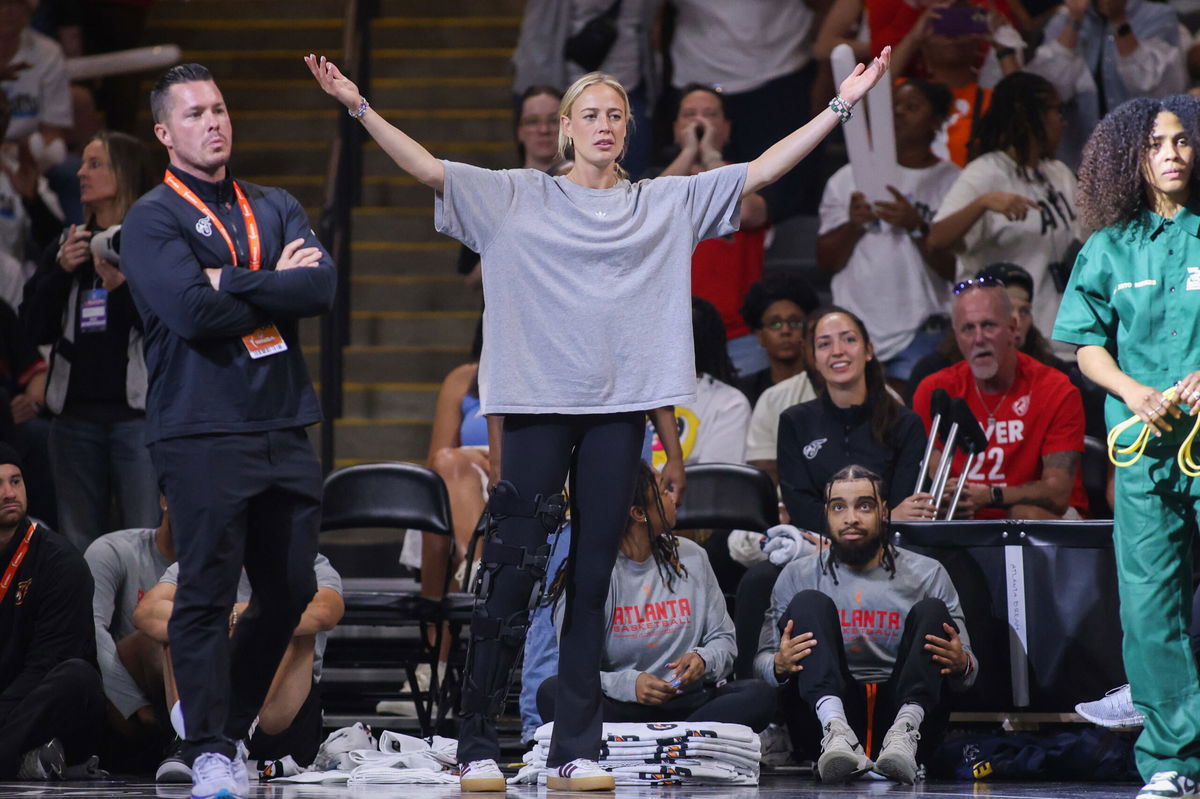
Sep 14, 2025; College Park, Georgia, USA; Indiana Fever guard Sophie Cunningham (8) reacts to a call against the Atlanta Dream in the fourth quarter during game one of round one for the 2025 WNBA Playoffs at Gateway Center Arena at College Park. Mandatory Credit: Brett Davis-Imagn Images
Imago
Sep 14, 2025; College Park, Georgia, USA; Indiana Fever guard Sophie Cunningham (8) reacts to a call against the Atlanta Dream in the fourth quarter during game one of round one for the 2025 WNBA Playoffs at Gateway Center Arena at College Park. Mandatory Credit: Brett Davis-Imagn Images
The WNBA calendar is supposed to be predictable. This year, however, one date has quietly created tension across the league. Indiana Fever guard Sophie Cunningham recently revealed that all 15 WNBA head coaches are aligned on one issue: starting training camp before March Madness ends simply does not make sense. She explained the conflict during the latest episode of the Show Me Something podcast, where she discussed the league’s earlier proposal to open camps as early as March 1.
Watch What’s Trending Now!
” The league said that they want to start March 1st, the training camp… March Madness, college season, hasn’t even ended… Today’s already March 2nd… But you know the funny thing about that is, the league is saying that, but the coaches of the team don’t even want that. So, tell me how that makes sense?”
The point Cunningham raised highlights a structural reality across the league. Every WNBA team relies heavily on March Madness to finalize scouting evaluations for incoming rookies, making the NCAA tournament a crucial part of preseason preparation.
Women’s college basketball has grown into one of the sport’s biggest talent pipelines. Stars like Caitlin Clark and Paige Bueckers have amplified the attention around the NCAA tournament, which now serves as the final showcase for many future WNBA players before the draft. Because of that, coaches often wait until the tournament concludes before finalizing draft boards and rookie integration plans.
As a result, an early March training camp would force teams into an awkward scenario. Coaches would either begin camp without incoming rookies or rush evaluations while the college season is still unfolding.
At the same time, several key offseason steps must happen before teams can even gather for camp. Free agency decisions still need to be finalized. The WNBA Draft follows shortly after the NCAA tournament. In certain years, like this one, the expansion draft also reshapes rosters before the regular offseason cycle fully settles.
Because of that timeline, most coaches prefer to start camp once the college season officially concludes and rookie selections are finalized. April has long been the practical window for that process. Cunningham echoed that timeline during the podcast discussion, suggesting that the earlier proposal never truly aligned with how teams operate.
The scheduling tension reflects larger CBA frustrations
Still, the scheduling debate is only part of a broader issue unfolding across the league.
Cunningham also addressed the ongoing collective bargaining agreement negotiations between the WNBA and the WNBPA. According to her, players believe the league’s leadership has been slow to address their core financial concerns.
” They’re waiting for us players to crack… if we don’t have a season, that says a lot more about the WNBA league than us because we’re ready.”
The central dispute revolves around revenue sharing and salary structure.
Players have emphasized revenue distribution as the key priority in negotiations. However, Cunningham noted that recent counterproposals from the league have not meaningfully addressed that issue.
Instead, the league’s latest offer focused primarily on modest salary cap adjustments. Those increases, according to players, create another complication. Teams may technically be allowed to offer higher salaries under the proposed framework, but the cap structure still limits how many large contracts a roster can realistically support.
As a result, the financial changes risk creating a paradox where the league advertises higher pay while teams remain unable to allocate those salaries across their roster. Meanwhile, players have continued to lower some of their demands during negotiations in hopes of securing a deal before the season timeline is affected.
That urgency exists for a reason. With the league’s March 10 negotiation deadline approaching, the possibility of further delays now hangs over the 2026 season. If both sides fail to reach common ground soon, the entire preseason timeline could shift.
For now, Cunningham’s comments reveal the reality inside the league. Coaches, players, and front offices are all trying to plan for the same season while two different timelines are still competing for control.
Related Newsletters