
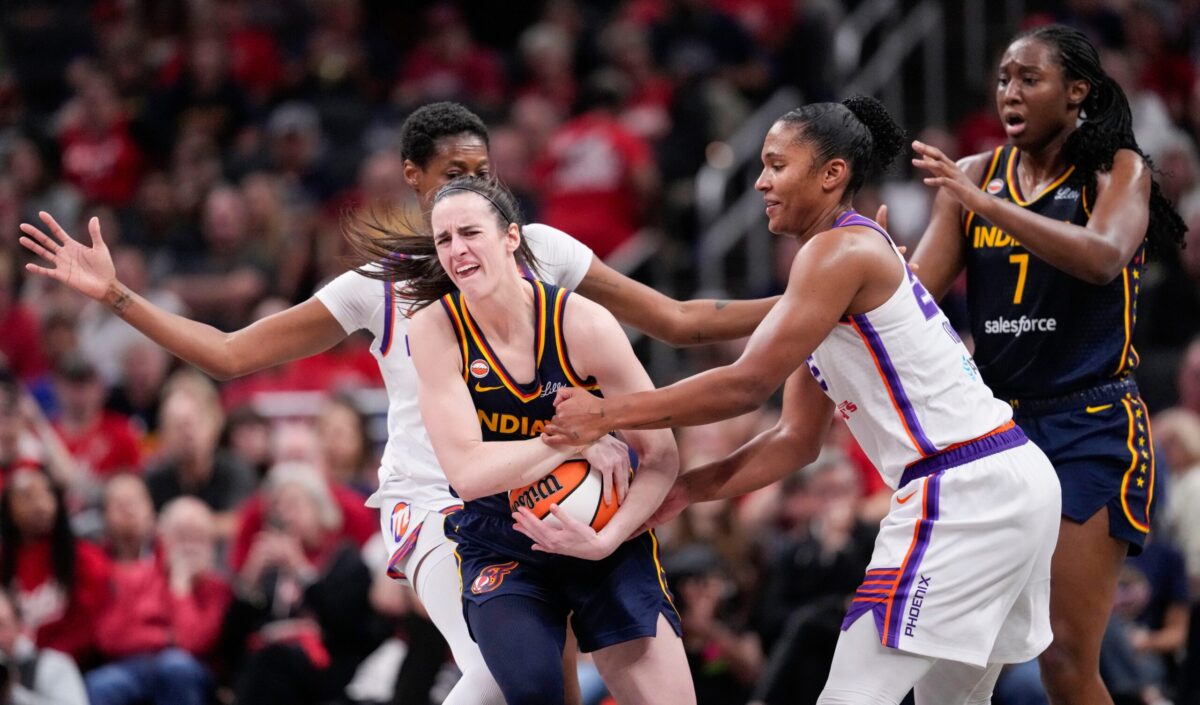
While Caitlin Clark has always wanted to just play basketball, her name keeps popping up in culture wars and online debates. As such, every hard foul against her turns into a controversial moment. Her third season in the WNBA is no different.
Watch What’s Trending Now!
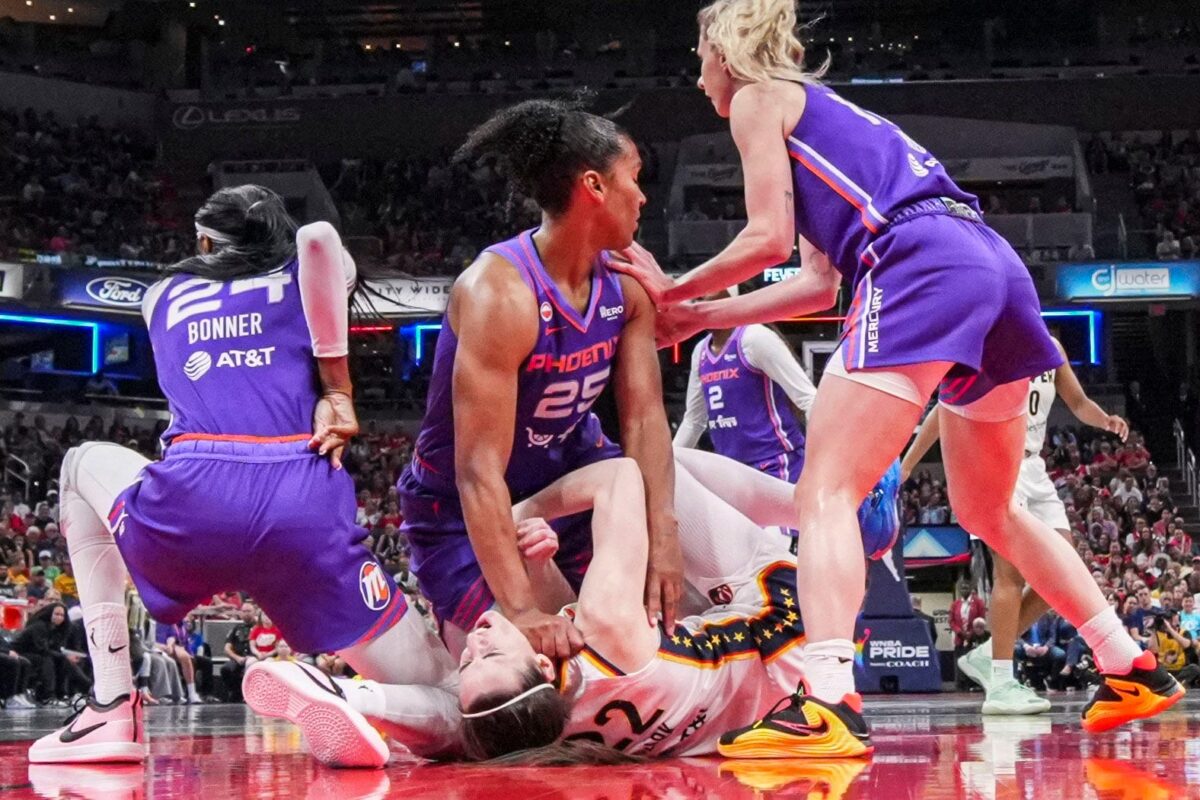
Ever since the May 24th matchup between the Indiana Fever and the Phoenix Mercury, where Alyssa Thomas pushed her fisted hand into Clark’s neck, it didn’t take long for the conversation to take on a life of its own. And according to Annie Costabile, that’s one of the reasons slowing the league’s growth.
“I think that discourse takes away from the greatness of the game because this game can’t just be a game,” Costabile said during a recent appearance on Yahoo Sports Daily. “These moments can’t just be tense moments between competitors because it always blows up into what we’re seeing now, which is, again, really ugly discourse and players at the center of it.
“When you think about Alyssa Thomas, this was a foul that should have been addressed. The league addressed it, and the world keeps moving. But now Alyssa Thomas is on the receiving end of racist comments, hateful comments on social media that it gets to a level it just shouldn’t ever get to. And for what, in defense of Caitlin Clark? That’s not something Caitlin Clark wants to see other people in the league going through, so it’s something that I keep hoping and praying levels off. But I haven’t seen that yet.”
Clark being in one of the race wars is nothing new. Back in 2024, many players came forward during their exit interviews after playoff exits and said they didn’t want to play in Indiana because of the treatment they got. It included stars like A’ja Wilson and even Alyssa Thomas. However, when it came to the 2024 first-overall pick’s attention, she was swift to get back to the “trolls, not fans” of the league.
“People should not be using my name to push those agendas. It’s disappointing. It’s not acceptable,” Caitlin Clark said back in 2024 during an interview with ESPN. “Treating every single woman in this league with the same amount of respect, I think, it’s just a basic human thing that everybody should do.”
However, the hard foul on Clark last Wednesday has turned everything upside down.
During the Indiana Fever’s 111-109 loss to the Phoenix Mercury, Alyssa Thomas made contact with Caitlin Clark’s throat during a loose-ball scramble, which was missed by the officials in real time. And while the WNBA stepped in and, after reviewing the incident, upgraded the play to a Flagrant 2 foul and a one-game suspension for Thomas, the conversation hardly stopped there.
The incident dominated social media, with debates ranging from the officiating decision to player safety and the broader discussions that frequently emerge whenever Clark is involved in a high-profile moment. However, as the conversation escalated, Thomas also became a focal point of significant online backlash.
Imago
Phoenix Mercury forward Alyssa Thomas (25) scrambles to get up over Indiana Fever guard Caitlin Clark (22) on Wednesday, June 24, 2026, during a game at Gainbridge Fieldhouse in Indianapolis. The Phoenix Mercury defeated the Indiana Fever, 111-109.
So it is that shift — from basketball to everything surrounding it — that continues to distract from the sport.
Some fans believe Clark has been subjected to excessive physical play as her profile continues to grow, while others argue the WNBA has always been a physical league and that the matter should have ended once the league reviewed the play and issued its disciplinary decision.
Yet the conversation has continued to spill well beyond the game itself, and that’s precisely the issue. When an on-court basketball play evolves into a much broader online debate, the game itself risks getting overshadowed. And certainly, Caitlin Clark is not one to promote it.