
Caitlin Clark left Iowa with 3,951 points, but her scoring record was only part of what followed her to Indiana. In her first WNBA season, the Fever averaged 17,035 fans at home, while her regular-season games averaged 1.2 million television viewers. Now, as the league continues to grow, one Indiana professor believes the phenomenon behind Clark’s popularity resembles something seen in the music industry.
Watch What’s Trending Now!
Dr. Ryan Brewer, an associate professor of finance at Indiana University Columbus, pointed to a staggering jump in the WNBA’s digital audience to explain Clark’s appeal.
As The Indianapolis Star reported, the league’s official social media accounts rose from 373 million video views in late 2023 to 1.96 billion in 2024, Clark’s rookie season. IndyStar reported a 436% increase, though those totals yield approximately 425.5%. The WNBA’s own recap used a baseline of 378 million views and a 2024 total of nearly 2 billion.
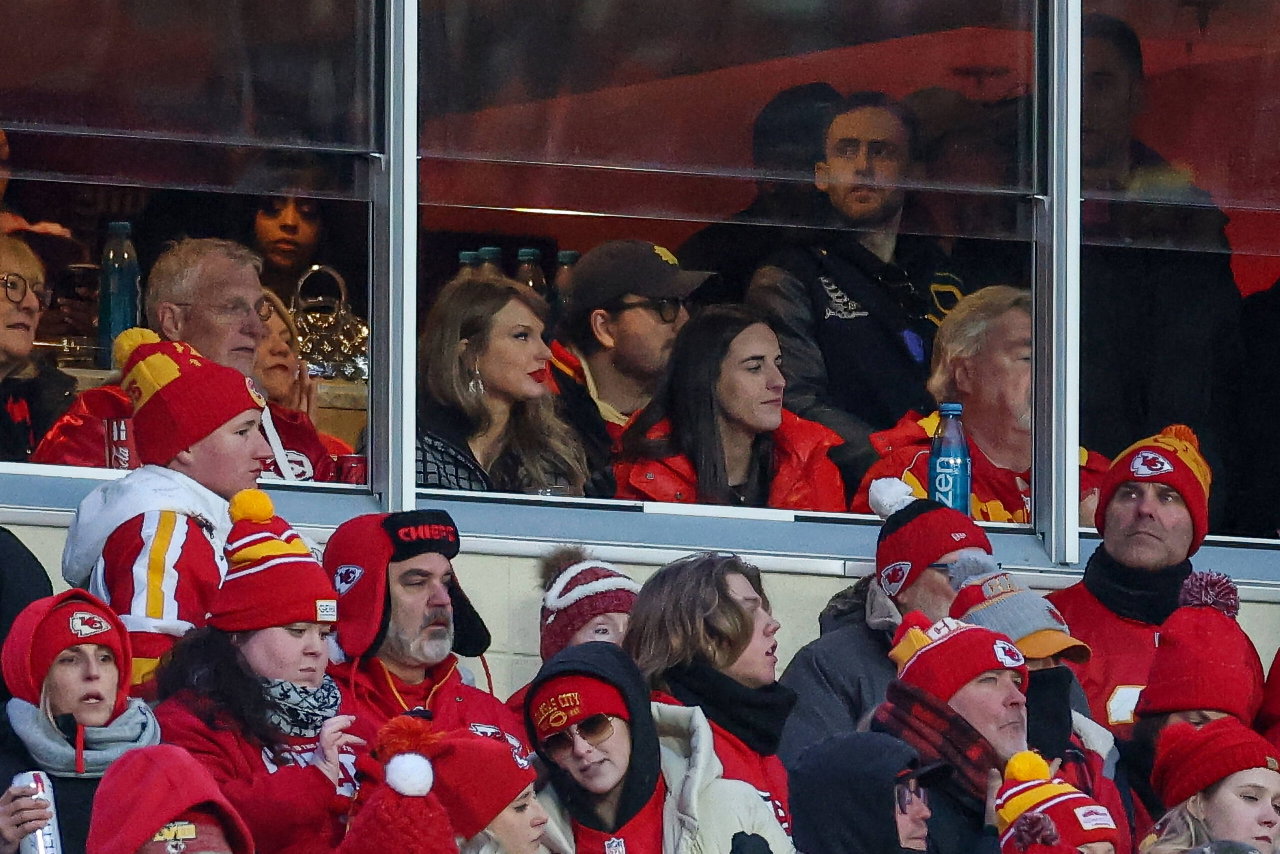
“So, 1.96 billion views? That’s telling. People are fascinated by Clark,” Brewer told IndyStar. “It’s kind of what I would say is a Taylor Swift effect. Is Taylor Swift really that much better than Miley Cyrus or Dua Lipa?”
“So, Taylor Swift has done something that has captivated people, and it’s hard to really get into what is differentiating Caitlin Clark from the rest of the WNBA, because there are a lot of other great players in the WNBA.”
Brewer’s comparison gets at the challenge of explaining why certain stars command attention beyond what their on-field or on-court performance alone might suggest. Caitlin Clark’s deep three-pointers, playmaking, and record-setting college career helped build a devoted following before she even entered the league. And then, when she arrived as the No. 1 pick, alongside a highly anticipated rookie class featuring her college arch-rival Angel Reese, she gave her audience a new stage.
Her final season at Iowa included two defining milestones. On March 3, 2024, Clark passed Pete Maravich’s 3,667-point mark to become the NCAA Division I career scoring leader among men and women. She finished with 3,951 points after Iowa’s loss to South Carolina in the national championship game on April 7.
That following translated into packed arenas and larger television audiences. Indiana averaged 17,035 fans across its 20 regular-season home games in 2024. According to Brewer’s analysis, reported by IndyStar, Clark’s regular-season games also averaged 1.2 million television viewers, 199% more than games without her.
IndyStar published Brewer’s latest assessment on October 13, 2026. His study, titled “The Structural Transformation of WNBA Media & Consumer Economics in the pre- and post-Caitlin Clark Era,” examined how Clark’s arrival changed the league’s media reach and consumer activity.
Brewer had already studied her economic impact after her rookie season at IndyStar’s request. In a report published on December 3, 2024, he estimated that Clark generated more than $36 million in economic activity for Indianapolis alone.
His estimates extended to the WNBA as a whole. Brewer attributed 26.5% of the league’s economic activity during the 2024 season to Clark, including attendance, merchandise sales, and television. He also calculated that she drove one in every six tickets sold at a WNBA arena that season.
The report also credited Clark with a 300% increase in television viewership and put the Fever’s share of the league’s broadcast value at 45%. League merchandise sales rose 500%, with Clark leading player sales and Angel Reese ranking second.
Those are the figures that underline why Clark’s influence has become such a significant part of the conversation about the league’s commercial growth.
Yet the WNBA’s increased visibility has brought a more complicated conversation with it. While the league has benefited from unprecedented attention, some of that spotlight has shifted away from basketball and toward cultural and political disputes surrounding its players and fans.
On Tuesday, former ESPN anchor Elle Duncan revisited that tension during a conversation with Baker Machado at Front Office Sports’ Tuned In summit. Duncan called the WNBA a “toxic” space to cover, arguing that people who do not genuinely care about the league have increasingly used its platform to fuel division.
“It’s a disingenuous space that the people that are talking about the most are not fans and don’t care,” Duncan said. “They are literally there as opportunists to be divisive. And it’s working. That’s why it’s toxic because I love it and hate it all at the same time.”
Whether or not one agrees with Duncan’s assessment, the numbers from the 2026 season behind Clark’s popularity offer another perspective on the league’s growth. As the Fever’s 2026 season came to an end, Brewer noted that Indiana’s social media reach remained well ahead of that of other WNBA teams, particularly when Clark was featured.
According to the professor, WNBA games without Clark generated around 3 million to 5 million viral views, compared with 20 million to 45 million for games in which she played. That gap, Brewer argued, underscores just how much of the league’s digital attention remains tied to one player.
“Caitlin Clark generates 800% more viral views across all digital media modalities when her plays and highlights are featured. This is a worldwide number, and it stood out,” Brewer added.
The Fever’s television audience offered another measure of that reach. According to IndyStar, all 44 of Indiana’s regular-season games received national broadcast distribution in 2026, with games regularly averaging between 2 million and 2.7 million viewers. The August 23 matchup against the Chicago Sky drew 3.31 million.
The 24-year-old star guard has undoubtedly helped introduce the league to a much larger audience, but Brewer’s “Taylor Swift effect” comparison offers one way to understand that extraordinary pull. However, as Duncan’s criticism illustrates, greater visibility can also bring scrutiny and division that threaten to overshadow the game itself.
The challenge now is not simply to attract more attention, but to ensure that the interest surrounding Clark and the WNBA continues to translate into sustained engagement with the league and its many stars.