
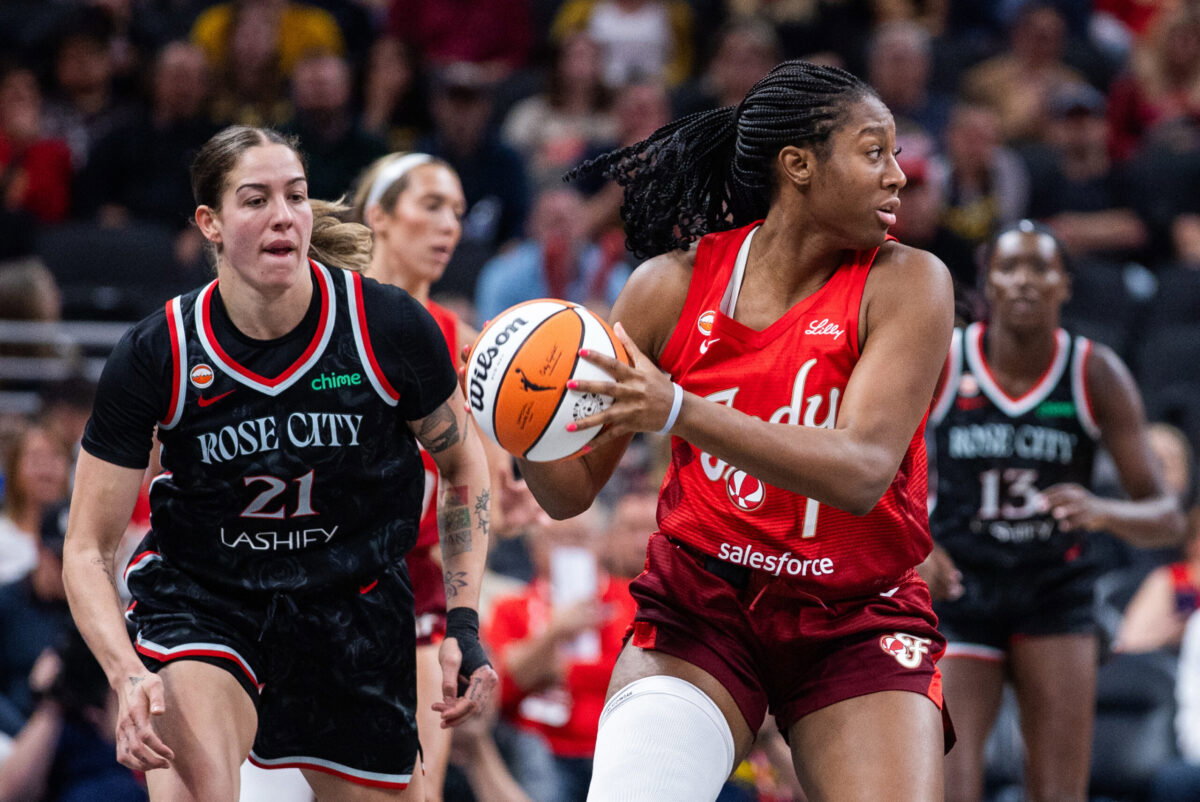
An Indiana Fever offense that used to scare the daylights out of anyone was flattened by a team that arrived in the league just yesterday. The Portland Fire defeated the Fever by 16 points in a season-worst game for Caitlin Clark and Co. Portland’s coach Alex Sarama tactically outcoached Stephanie White that day. And then, there was Megan Gustafson, who largely subdued Indiana’s Aliyah Boston.
Watch What’s Trending Now!
Boston could not stop Gustafson on defense as she went a perfect 8-8. But the Fever forward is now looking to brush off that uncharacteristic performance from the team and bounce back strongly.
“Sometimes that’s just how the cookie crumbles,” Boston said on her ‘Post Moves’ podcast. “I know it’s early in the season and we’re 4-4, but sometimes you just take that one on the chin. It’s one of those where you’re like, ‘Okay, we look at it, go back to the drawing board, and we just have to play better.’ That was our conversation immediately after the game.
“We just have to be better. There’s no excuse for that. There’s no adjustment that can help us in that situation.”
It all comes down to execution for the Indian Fever, as tactical tweaks only go so far. The 18 turnovers (gave up 52 paint points), a season-low 26 rebounds or the 9 offensive rebounds conceded largely came down to effort.
Caitlin Clark had a 6-point, 6-assist game. Raven Johnson fouled out in just 10 minutes. It was a game worth forgetting.
Stephanie White, Kelsey Mitchell and Sophie Cunningham echoed that they have to just leave the game behind. Mitchell also mentioned that this adversity will test their culture and even aid them in the long term.
The extended break between the games will help them reset as well. In addition, the squad had a long team meeting to discuss their dismal performance and hopefully for the Fever fans, the results will be visible in the game against the Dream.
Aliyah Boston identifies the defensive fix that changes everything for the Fever
The Indiana Fever are the highest-scoring offense in the league with 91.8 points per game. They are hurting opponents with their speed. That clearly shows where the problem is, the defense. They concede 89 points a game, which ranks 13th in the league, while letting opponents score 47% from the field. For Aliyah Boston, the team has improved in this break while pointing out the central aspect that is affecting the defense.
“Yeah, I have,” Boston said on Wednesday when asked if she has seen any improvement in defense. “I think the biggest part for us is our communication. We have to communicate early and often. Sometimes someone is there, but they haven’t said they’re there, so other people jump in to help and end up in positions they’re not supposed to be in.
“It’s just about making sure that we’re communicating. I think that’s the biggest piece for us.”
Caitlin Clark had a target on her back in both of the last two games. The opponents went at Clark, forcing isolations. Clark is an acceptable defender, but this was just too much for her current skill set. The help the defense brought in was scarce as teammates could not keep Clark out of trouble. In a couple of plays, the player was left alone while others just guarded the perimeter.
That is a clear communication gap for the Fever. The team has increased its switches on the pick-and-roll over last year and many of them are still nursing some injuries. If they manage to perfect their system and the personnel roles, this defensive system can still work.
They succeeded against the likes of Storm and once against the Valkyries, too. Ultimately, it is also about perfecting the system against that particular opponent and coach Stephanie White could be more dynamic as they head deeper into the season.