
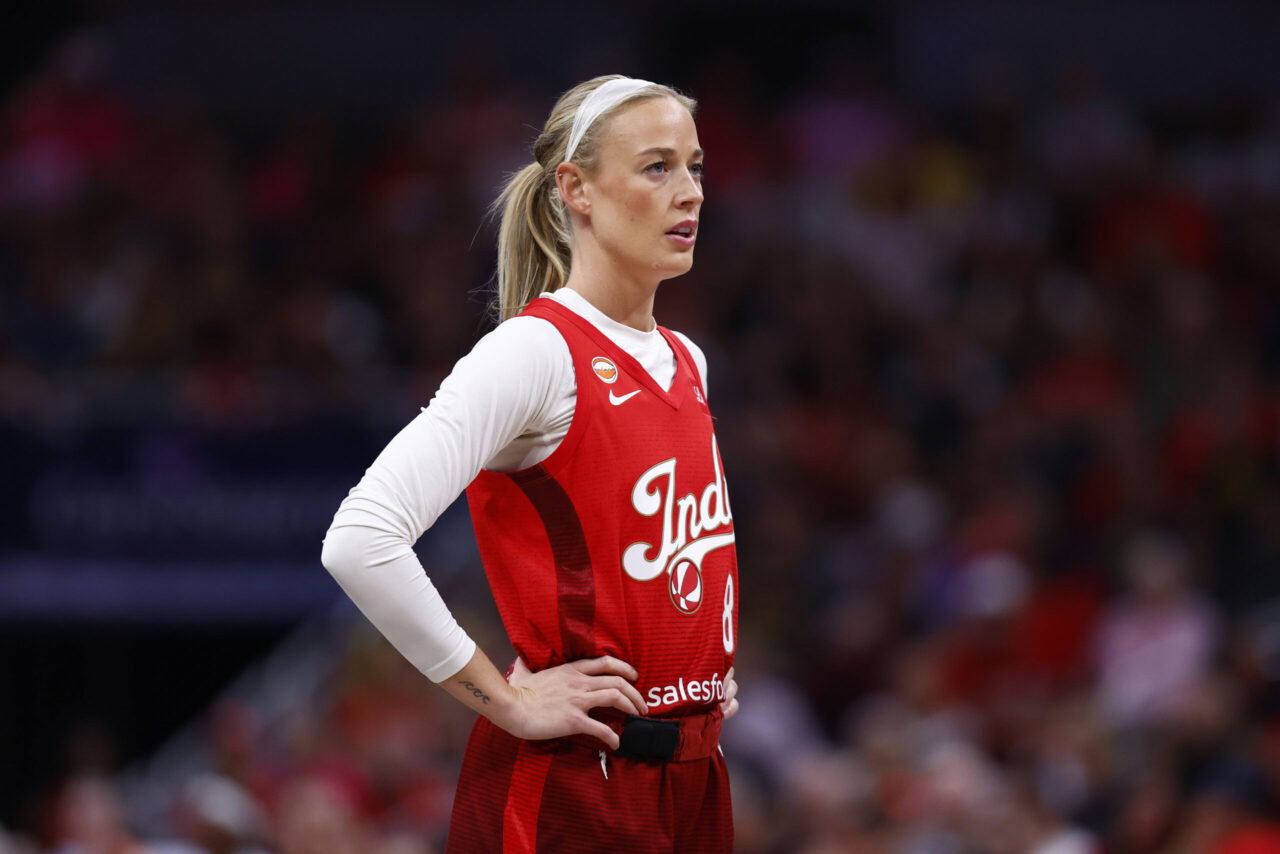
The coaching approach for male and female basketball players has come under scrutiny, with NBA trainer Drew Hanlen questioning whether female athletes are pushed hard enough to reach their potential. He believes coaches often hold back rather than challenge them as aggressively as their male counterparts. Sophie Cunningham agreed with Hanlen’s assessment, adding that women’s basketball needs a coaching culture built around accountability rather than protection from criticism.
Watch What’s Trending Now!
“Bring back hard coaching,” Cunningham said during a conversation with Hanlen on an upcoming episode of their No Hesitation podcast. The segment was clipped and posted to X.
“That is why all of us pros are where we are, because we had coaches who truly cared about us and loved us and saw our full potential. But with that, they didn’t let us slip… If we weren’t going hard enough, or we weren’t doing that, they were on our a**… You can’t always listen to their tone. You have to listen to the message… I do think that coaches are too soft on athletes nowadays… Maybe it’s the parents, maybe it’s the athletes who can’t take it, but then y’all shouldn’t be in the sport because if your coach is on you, that means they see something in you.”
Cunningham’s argument wasn’t just that coaches need to change, but that athletes need to take responsibility for their development and learn to accept criticism if they want to reach their full potential. Her words were prompted by her co-host, who had begun the conversation as the two discussed the future of women’s basketball.
Hanlen, a renowned NBA trainer, talked about his own experience. When he trained with some elite female athletes, Hanlen recalled being told that his clients had never been pushed or challenged to the same extent before working with him.
“You’re still a hooper. I don’t care if you’re a guy or a girl. I’m going to train you to my fullest capabilities,” Hanlen remembered telling them.
“Where I think that a lot of times coaches aren’t as hard on girls because they’re like, ’emotionally, they can’t take it or physically they can’t take it.’ No, coach them up because if you do, it’s gonna help improve their game and it’s gonna let them separate themselves from everybody else.”
Hanlen’s background brings credibility to his view. After a solid career at Belmont, which saw the school reach two NCAA tournaments and Hanlen earn First Team All-Conference honors, he transitioned to training athletes. As the founder of Pure Sweat Basketball, he worked out with several NBA stars, including Bradley Beal, Tyrese Haliburton, and Jayson Tatum, who was still in high school.
After he expressed his views, Cunningham backed that approach, drawing on her own experience as a player. She credited coaches who cared about her development and recognized her potential, but highlighted that their support came with accountability.
“They see your full potential and where you could be, and it takes a village to get there,” Cunningham said.
“Athletes take the ownership too; it’s okay for some to chew your a** a little bit. That’s part of it, because that’s what makes athletes great.”
Cunningham continued that in the WNBA, she has carved out a solid career as a defensive specialist for both the Phoenix Mercury and the Indiana Fever after being selected in the second round of the 2019 WNBA draft.
She is currently a free agent following the Fever’s elimination from the 2026 playoffs, and her next stop in the WNBA seems unclear.
Ultimately, Cunningham’s message is that demanding coaching is not a lack of support. Athletes need coaches who recognize their potential and push them beyond their comfort zones, but they also need to be willing to embrace that challenge. Regardless of how her message is received, the Fever guard is highlighting that coaches need a willingness to say what their athletes are not always willing to hear.