
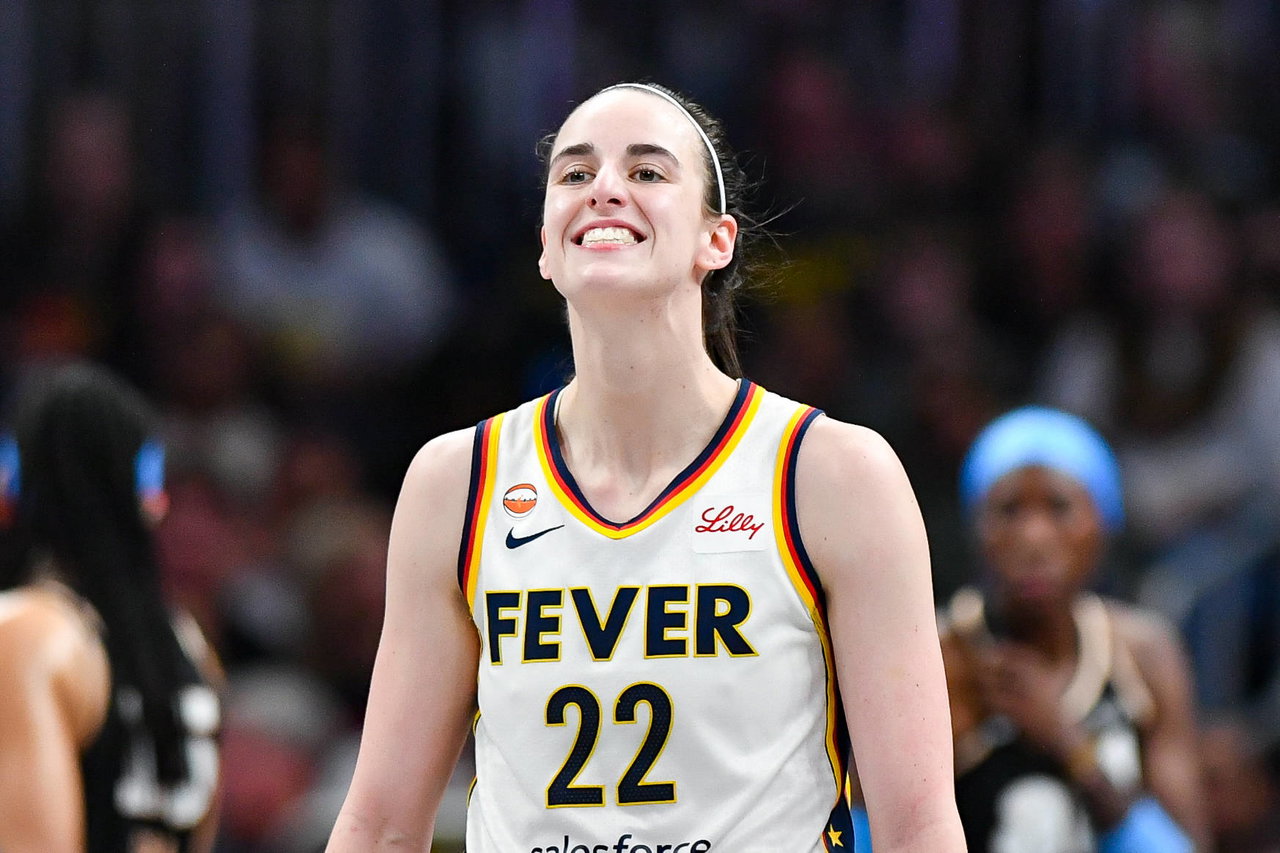
It’s no secret that Caitlin Clark enjoys unparalleled popularity and limelight, not just in the WNBA but in the basketball universe. Every aspect of her on-court and off-court developments is a focal point for the media and the internet. For WNBA analyst and former TV host Joy Taylor, this is precisely where the narrative has turned “toxic” for the WNBA as a league.
Watch What’s Trending Now!
“I find it to be embarrassing that we as sports fans are continuing to argue about things that don’t make sense. So when it comes to the WNBA, it’s become, it has become a toxic space. It’s become a very unserious place when we’re talking about the type of conversations that we’re having,” Taylor said on her podcast, The Daily Play, on August 19.
“We’re talking about Caitlin Clark as if she was going to walk into the league and be the best player in the league before she ever even steps foot in the WNBA. And it’s insulting to the idea that there is a professional league where women have been playing at the highest level in the world for decades at a time, winning championships, putting up numbers.”
Yet, Clark has lived up to the hype in many ways. Indiana Fever are the only WNBA team with all 44 of their games getting broadcast on national television. Fever’s August 16, 2026, game against the Atlanta Dream became the most-watched WNBA game in cable television history, averaging 2.6 million viewers and peaking at 4 million.
This was the third Fever game in the last two weeks to average more than 2.5 million viewers on ESPN. The 12 most-viewed WNBA games in history now all feature Caitlin Clark, a fact difficult to ignore.
Unfortunately, despite these viewership numbers and Caitlin Clark becoming the fastest WNBA player to reach 600 assists in just 72 games on July 12, 2026, the conversation around Clark has been about hard contacts, officiating inconsistency, player safety, and more.
On June 24, the official missed calling a foul on Alyssa Thomas when she made hard contact with Caitlin Clark’s throat. Despite the league later upgrading the call to a flagrant foul 2, Thomas received immense online backlash, including life threats, and all eyes were on Clark to say something.
While she did condemn the behaviour online over a week after the foul in an interview, the discourse barely shifted. Then came Clark’s teammate Sophie Cunningham’s comments on trans athletes in women’s sports on July 21.
Despite Clark trying to remain neutral, the WNBA media once again looked to Clark to give her take on the entire issue. When the 24-year-old finally said that the league should be the one solving such issues, analysts like Stephen A. Smith and NBC veteran Megyn Kelly expressed their issues.
“If you’re Caitlin Clark, there are contemporaries in the league taking hits because of the narratives and perceptions put out there that drastically favor you. You have to help quell that noise,” Smith said on his show in early August.
And it’s this approach of putting Caitlin Clark on a pedestal since the beginning that Taylor finds ‘toxic,’ and she isn’t the only one. Sports anchor Elle Duncan used this exact word to describe the overall coverage around the WNBA, including the Indiana Fever star.
“Right now, the WNBA is the most toxic space to cover, and that’s incredibly frustrating and sad,” Duncan said on WHYY’s Sports In America podcast. However, Taylor also feels that things will change in the future.
“There’s going to be some ignorance. There’s going to be an adjustment period. And while I do think it’s toxic right now, I think overall, big picture, it is positive.”