
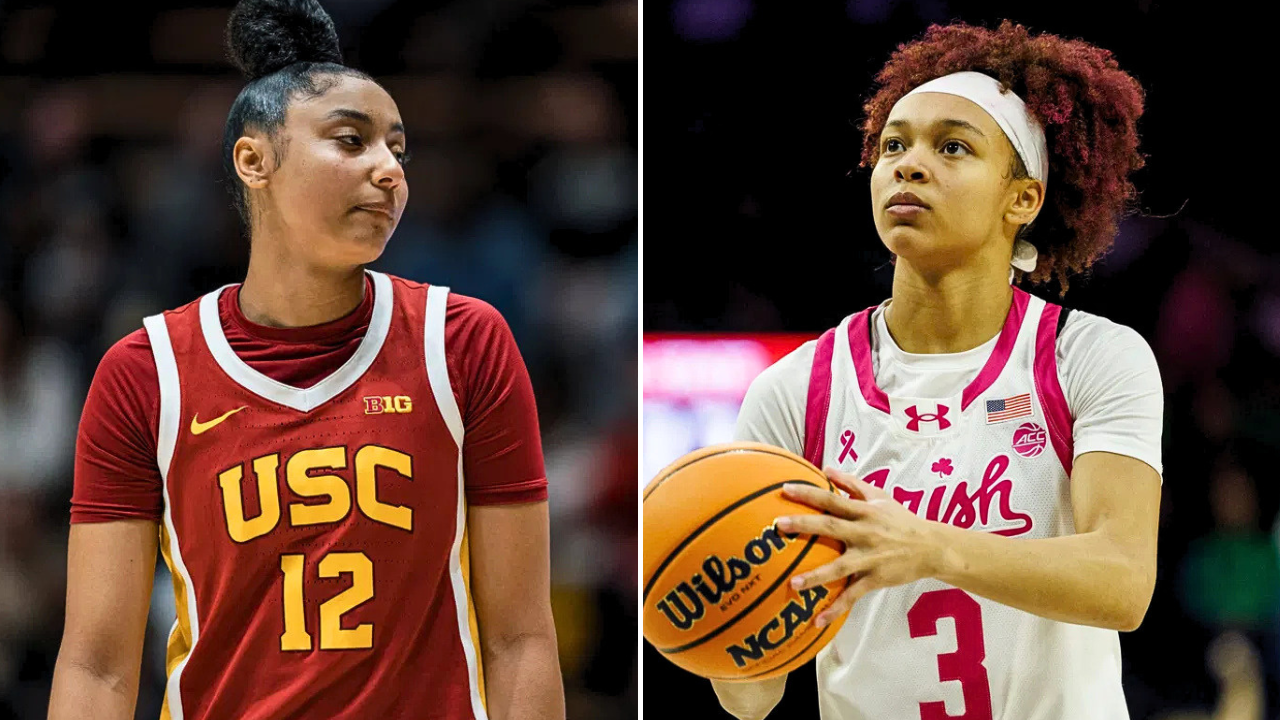
A team that started 9-9 will pick first. A playoff team will pick third. And the No. 1 pick might come with the biggest question mark in the league.
Watch What’s Trending Now!
Welcome to the 2027 draft cycle.
The Toronto Tempo won Sunday’s lottery with 32.9% odds, tied with Houston for the best shot. They got there by going 2-24 after that 9-9 start. The Washington Mystics made the playoffs with the youngest roster in the league and still pick third, thanks to a pick swap with Chicago from the Ariel Atkins trade. Chicago gets No. 11 back.
Here’s the twist: Toronto won the lottery, but nobody knows who they’ll be picking from.
Under the new five-year eligibility rules, all of the top five projected picks have at least one more year of college available. Players can wait until 10 days before the draft to declare. Toronto’s GM admitted it “may come down to the wire.” Caitlin Clark and Paige Bueckers were locks to turn pro. This year, the player everyone has at No. 1 is a lock only if she says so.
We checked four mocks (CBS, Bleacher Report, The Athletic and NBC Sports). They agree on exactly one thing: JuJu Watkins at No. 1. After that, it’s chaos. Here are our picks.
1. Toronto Tempo: JuJu Watkins, USC (G, 6’2″)
No real debate here. Watkins missed 588 days after tearing her ACL, and she’s back looking like the best player in the class. She’s scoring around 25 a game, averaging 3.7 steals, and scouts love her help defense.
Toronto is loaded with guards (Mabrey, Sykes, Allemand, Rice), so you could argue they need size more. We don’t buy it. You take the player who can become an MVP and sort out the roster later. She still tries to do too much alone, as she did against South Carolina, and her three-point shot is a question. But nobody else has her ceiling on both ends.
2. Houston Comets: Hannah Hidalgo, Notre Dame (G, 5’6″)
Houston has a new owner, a new city and a new name, and it needs a face. Hidalgo fits: 28.3 points, 7.5 rebounds and 4.8 steals early this season, with the same motor that set a single-season steals record. New markets fall for players like that.
The big question is her shot: 34%, 40% and 25% from three in her first three seasons. This year she’s back at 40% and hitting well off the dribble. The other question is whether she can run an offense at WNBA speed, since scouts say her passing rarely goes beyond basic reads. If she can’t be a full-time point guard, she’s an elite defender who scores, which is great but not a franchise-changer. We’re betting her competitiveness closes that gap.
3. Washington Mystics: Madison Booker, Texas (F, 6’1″)
Booker is No. 2 in three of the four mocks, so this is a win for Washington. She’s only here because we went with Hidalgo in Houston. In a draft without Watkins, she’d be a legitimate No. 1. She has the cleanest midrange game in the class and hit nearly 48% of her pull-up twos last season. Her reported 6’5.5″ wingspan lets her guard multiple positions.
The Mystics are building around Citron, Iriafen, and Austin, and their offense was one of the weaker ones last year. Booker gives them a shot creator who fits their defense. A point guard is the stated need, but when the talent gap is this big, you take the best player and fix the guard spot in free agency.
4. Seattle Storm: Mikaylah Williams, LSU (G/W, 6’0″)
Seattle’s ugly season still left real pieces in Malonga and Fam. What the Storm lack is shooting. They were 13th in three-point percentage at 31.8%. Williams has shot above 40% on contested catch-and-shoot threes in each of the last two seasons, and she’s averaging 19 points and 5.5 assists on 68% true shooting.
The knock is defense. She’s not a great athlete and her effort comes and goes. But Malonga and Fam can cover for a perimeter player, which is the best place to hide that flaw. We think she’s one of the best offensive players in the class, and Seattle needs someone who can shoot. She could also reunite with former LSU teammate Flau’jae Johnson.
5. Portland Fire: S’Mya Nichols, Kansas (G, 6’0″)
This is our first big split with the field. CBS and Bleacher Report both have her at 11. CBS points to a tough start to her senior year, and B/R cites her thin résumé against elite teams. We think that undersells her. Her career free-throw rate is .721, she led the country in attempts last season, and she turns it over rarely. Portland struggled with both getting to the line and turnovers in 2026.
The Fire also shoot nearly 30 threes a game, so a player who gets to the line makes the offense less dependent on variance. She pairs well with Carla Leite as another downhill creator. The concerns are real: only 246 threes in 102 games, mediocre defense, and little exposure to top competition. One evaluator called her the class’s “wildcard.” We’ll take the risk, because drawing fouls translates.
6. Los Angeles Sparks: Clara Strack, Kentucky (C, 6’5″)
The Sparks had one of the league’s worst defenses last year, and Strack gives them a big who protects the rim. She’s averaging 18.4 points, 9.6 rebounds and 3.8 blocks through five games and is 8-for-21 from three. If that shot is even half real, she’s a different kind of player.
The Cameron Brink comparison cuts both ways. Brink’s future in L.A. is uncertain, so Strack could be insurance or a successor. The worry is that she has no single elite offensive skill and hasn’t been as good on perimeter switches as Brink was. We still like her here because the Sparks need size and defense, and her shot might stretch the floor.
7. Los Angeles Sparks: MiLaysia Fulwiley, LSU (G, 5’10”)
This is the riskiest pick on the board. Fulwiley was arrested over the weekend and faces multiple charges, including aggravated battery. She has publicly denied striking a police officer. Her slot could move a lot depending on what develops.
On talent alone, she has one of the best handles in the sport, elite athleticism and a defensive profile that includes secondary rim protection from a guard under six feet. The flaws are real: she plays out of control, and she shot just 39% at the rim in half-court sets against high-major teams last year. L.A. is rebuilding with a new GM and no coach, so it can afford the swing. If the off-court situation turns, she falls. If it clears, seven is too low.
8. New York Liberty: Oluchi Okananwa, Maryland (G, 5’10”)
New York has firepower. What it lacked in two straight Finals losses was toughness, and Leonie Fiebich said as much after the last playoff exit. Okananwa is the toughness pick. Her offensive rebound rate last year was in the 95th percentile nationally, which is absurd for a guard, and she’s an elite point-of-attack defender.
The offense is the question. Her jumper is poor and she isn’t a strong passer. But her half-court rim finishing jumped from 45% to 61%, and she gets to the line. The DiJonai Carrington comparison is fair. With no head coach in place, a plug-and-play defender is worth more than a project.
9. Dallas Wings: Tessa Johnson, South Carolina (G, 6’0″)
Here’s our other big split. All four mocks have Johnson fifth or sixth, and her 28-point game against USC will only help. She’s a career 43.9% three-point shooter, which gives her one of the safest floors in the class. But her ceiling worries us: only 43 off-the-dribble threes in her college career, a poor handle and a slight frame.
At nine, we’re comfortable with that bet. Dallas runs three-guard lineups, and with Bueckers’ and Fudd’s injury histories, depth matters. A shooter who can play off the ball fits next to them.
10. Indiana Fever: Chloe Kitts, South Carolina (F, 6’2″)
Kitts is another ACL return who hasn’t missed a beat: 13 points and 10.2 rebounds on nearly 53% shooting for the No. 1 team in the country. She isn’t flashy, but she’s the connective forward every roster wants. She has great help instincts, plays physical and crashes the glass.
Indiana needs frontcourt depth behind Aliyah Boston, and the team has reportedly been without a GM since a firing last month. Kitts doesn’t take threes, but she shot 51% on two-point jumpers as a junior, so the range could grow. Her ceiling is a long-term role player, and that’s what contenders need.
11. Chicago Sky: Talaysia Cooper, Ole Miss (W, 6’0″)
Chicago has back-to-back picks and needs young athletes on the perimeter after the Angel Reese trade. Cooper is the best athletic wing on the board here. She has length, quickness and the tools to be a versatile defender.
The risk is offense. Her season has been wild: 2-for-10 in one game, then 29 points with seven threes in the next. She takes a lot of threes with shaky mechanics and shoots 64% from the line for her career. She also looks slower after adding muscle. With two picks, this is the right kind of swing.
12. Chicago Sky: Kymora Johnson, Virginia (PG, 5’7″)
This pairs with Cooper because Chicago needs a point guard for the future. Its youngest floor general last season was 34-year-old Natasha Cloud. Johnson has been in the 99th percentile in assist rate in all three college seasons, and she showed up big in Virginia’s Sweet 16 run. She’s shooting 61.9% from three this year. That will drop, but she hasn’t shot below 36% since her freshman year.
The red flag is rim pressure. Only 19.5% of her half-court attempts came at the rim last year, and she finished at 47%. At 5’7″, that will be tougher in the W. But a pick-and-roll guard who shoots threes first is a modern profile, and we’ll take the steady hand at the one.
13. Dallas Wings: Khamil Pierre, NC State (F, senior)
After a guard at nine, Dallas gets frontcourt help. Pierre was the seventh-best rebounder in the country last year at 11.9 a game. That has dipped to 8.4 this season, but it’s a small sample. She plays with a motor that’s usually worth betting on and can put the ball on the floor at her size.
The shooting is the question. She’s 1-for-6 from three and isn’t a floor spacer. But Dallas needs players who can rebound and guard, and Pierre does both.
14. Golden State Valkyries: Sarah Cisse, France (F, 6’2″)
Cisse is the most variable prospect on the board, and some mocks have her as high as seventh. We have her here because she’s a draft-and-stash. That means Golden State drafts her, holds her rights and lets her keep developing in France instead of using a roster spot now. She’s 19, was MVP of the U20 EuroBasket after leading France to gold, and has started strong in the French league.
She’s raw. She’s mostly a paint scorer, she needs a reliable jumper, and she’s been feasting on weaker competition. But her lateral quickness and vertical athleticism are special. The Valkyries won the title on defense, and they’ve been tough on young players, so stashing her is the cleanest way to get a high-ceiling defender.
15. Minnesota Lynx: Addy Brown, UCLA (F, 6’2″)
The last pick of the first round should be someone who contributes without needing to be a star. Brown is a jack-of-all-trades forward: a good passer and rebounder who makes enough jumpers to space the floor. She transferred from Iowa State to the title-defending Bruins this year.
Minnesota had one of the league’s weakest defensive rebounding teams, and with Napheesa Collier’s free agency uncertain, frontcourt depth matters. Brown keeps the ball moving with quick decisions and would play well next to a playmaker like Olivia Miles. It’s a low-risk, defined role at the end of the round.