
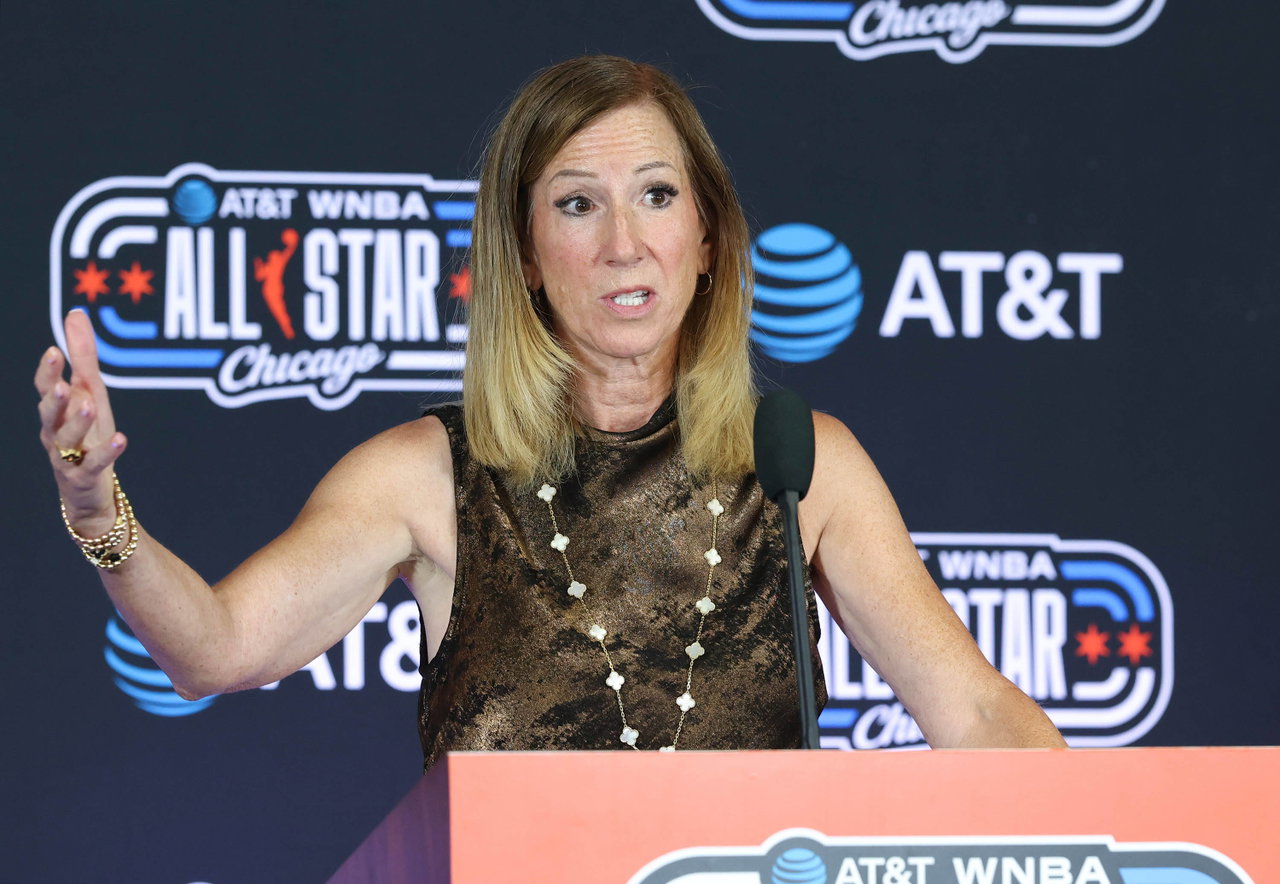
The last time All-Star Weekend was held in Chicago, four years ago, Commissioner Cathy Engelbert, a Collingswood, New Jersey native, recalled the event being noticeably smaller. But this time around, Chicago had become the centre of the WNBA’s biggest celebration. The backdrop to all of this is a league experiencing its fastest growth in three decades. Players arrived for autograph sessions, community events, and All-Star festivities, yet the bright lights of the weekend did little to pull attention away from what had shadowed the league for weeks.
Watch What’s Trending Now!
If anything, matters reached a new flashpoint as discussions about race, gender and sexuality dominated headlines ahead of Saturday’s All-Star Game. Players continued to voice frustration with Engelbert and league leadership over what they describe as inadequate protection from social media harassment and divisive commentary. While the commissioner noted that the weekend has been the “largest, most immersive, and most accessible” in its history, she also dedicated a substantial portion of her news conference to addressing the growing concerns.
ESPN’s Kendra Andrews shared a key part of Engelbert’s message on X: “What too many players across the WNBA have experienced is unacceptable. The racism, the misogyny, the homophobia, harassment and threats directed to our players has no place in sport or anywhere else. This is their workplace. The WNBA is built on inclusion and respect, and those values have defined this league for 30 years. It will continue to define us for the next 30.”
The reckoning didn’t begin at the podium in Chicago. It began Tuesday night, on a video call that the players’ union itself requested.
Engelbert met virtually with the WNBPA’s executive committee and its Justice, Equity, Diversity and Inclusion Committee to discuss what more the league could do to shield players from online abuse. The league and the union followed up with a joint statement Wednesday describing an “honest and meaningful conversation about the recent increase in racist, hateful, and abusive messages directed at players,” adding that the discussion “underscored the importance of addressing issues early through proactive communication and strengthening the league-union relationship.”
WNBPA secretary Elizabeth Williams, speaking to reporters at shootaround the next day, said the core issue was less about new policy and more about basic reassurance: “The biggest thing was communication,” she said. “Communication from Cathy and the league side being a little more consistent, so we feel more comfortable.”
The league pointed to steps already underway: the “No Space for Hate” platform introduced last season, which includes AI-driven tools players can use to filter hateful comments before they ever see them, and a security office that opens an investigation whenever harassment escalates. Additional measures discussed on the call included pushing for greater accountability from social media companies and building more direct lines of communication with law enforcement.
Engelbert struck a similar note in Chicago. “The league has a variety of security measures and protocols in place to help the players. But we know there’s more work to do, and we’ll continue to work together,” she said. “We’ll continue to have those important conversations. A lot of listening and making investments to make sure every player feels as safe and supported as possible.”
“We need to continue to create a competitive environment where they can compete aggressively without unnecessary rough play, investing in enhanced security personnel and protocols,” she added. “We have charter travel now. We offer mental health resources. We’re leveraging technology, strengthening our policies, taking action to combat online hate, harassment and threats.”
The clearest flashpoint of the season (even though there’s so much more) traces back to a single play.
The Thomas incident, corrected, maybe.
On June 24, Phoenix Mercury forward Alyssa Thomas made contact with her fist to the throat of Indiana Fever guard Caitlin Clark during a game Phoenix went on to win, 111-109. No foul was called in real time, but the league office reviewed the play afterward, upgraded it to a Flagrant-2 foul, suspended Thomas for one game and fined her $1,000 for what the WNBA’s review called “recklessly making contact with her fist” on Clark. Thomas, who is Black and in her 12th WNBA season, has maintained the contact was accidental.
What followed the ruling, by her account, was far worse than the punishment itself. Thomas said she began receiving death threats and a wave of online vitriol, and that some of her Mercury teammates were targeted as well. For days, she said, the league stayed quiet. “We still have yet to hear anything yet from Cathy. It’s no surprise. You can see what’s being said on social media,” Thomas said. “It’s unfortunate, but as usual, she remains silent. That’s unfortunate when our lives are being threatened.”
The league eventually responded with a statement attributed to Engelbert: “The WNBA vehemently condemns any and all forms of hate. The safety and well-being of everyone in our community is always the league’s top priority… what she and her teammates have experienced is completely unacceptable and not representative of the WNBA community.”
Thomas declined to share specifics of the threats or forward the messages she’d received, though a number of the attacks were left visible on social media for anyone to find.
“Now we’re being painted as thugs and there’s death threats out on us,” she said. “It’s really unacceptable, and something that needs to change in this league.” Yet, racial abuse aimed at players wasn’t limited to Thomas.
Race entered the conversation again through an unrelated sideline moment: Toronto Tempo coach Sandy Brondello was suspended one game after referring to Atlanta Dream forward Angel Reese as a “protected species” during a broadcast, after Reese drew a foul on Toronto’s Nyara Sabally. Brondello, an Australian former player with two WNBA titles to her name, later explained the phrase is common in Australian sports shorthand for frustration at a lack of foul calls — but acknowledged that in an American context, it carries a dehumanizing connotation that can read as derogatory toward Black players. She apologized, and Reese said she accepted it, crediting the league’s quick response.
Clark, for her part, has tried repeatedly to steer attention back to the game itself, with limited success. “It’s basketball,” she said in a recent interview. “When I walk out of the locker room I shouldn’t be fearful of what the conversation is going to be. It’s emotionally exhausting. It’s draining. It makes your shoulders tense because people don’t want to talk about the basketball. They just want to stir it up and make something else.”
Las Vegas Aces guard Chelsea Gray shared a screenshot of a racist message sent to her after a game, captioning it, “People act like we just make this s— up. And the audacity to tell us as athletes to ‘shut up and dribble.'” Her post led to the sender being identified and fired from his job at Hilton Grand Vacations, one of the rare instances where online harassment produced a real-world consequence.
Former Fever forward Brianna Turner, now with the Aces, said on social media this week that Indiana had fired a male employee last season over sexual harassment, and that players on the team were discouraged from discussing it. Turner’s comments came as she publicly defended transgender athletes, days after Fever teammate-turned-rival Sophie Cunningham addressed the topic in an ESPN interview.
“I got a lot of negative feedback about me hating trans. And I’m like, ‘I never once said that,'” Cunningham said. “I think that I am here to extend love. But I also think with that love is truth, being honest. And I want to protect young girls in a locker room, or young girls in sport who shouldn’t have to go against biological men.”
Natasha Cloud, who had previously said Engelbert wasn’t doing enough for players, softened that position somewhat this week. “There’s only so much that the league can do because people are going to be miserable and they’re going to continue to be hateful human beings,” the Sky guard said after practice. “We can find these IP addresses. We can make sure that bans are banned for life from certain arenas, certain teams, certain leagues.”
Questions about player safety weren’t the only difficult ones Engelbert faced in Chicago. With her contract set to expire after the 2026 season, she was also asked whether she expected to remain commissioner next year. Rather than directly addressing her future, Engelbert pivoted to the league’s recent growth.
“I will just continue to do my job… make sure we listen to the players, communicate with the players,” she said, praising the WNBA’s momentum but stopping short of confirming whether she intends to seek or has been offered a new deal.
Her non-committal response came amid continued speculation over her long-term future, even as NBA commissioner Adam Silver recently said the league would have “ongoing discussions” about her role.
For a league marking 30 years, Chicago may have hosted the WNBA’s biggest celebration yet. But by the time the weekend ended, it was equally clear that some of the league’s biggest challenges were still waiting to be solved.