
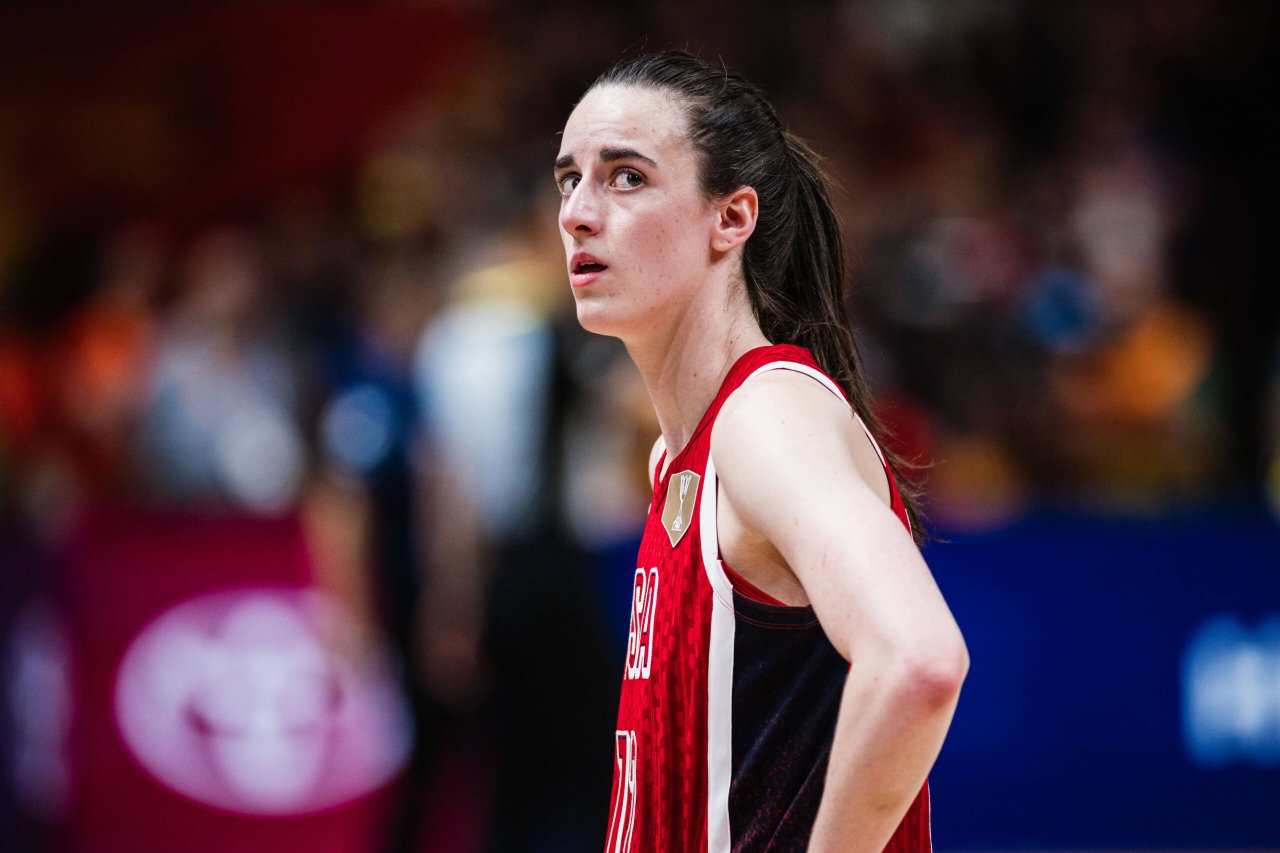
Caitlin Clark and parts of her fanbase being accused of crossing the line is hardly new. In her first three WNBA seasons, Clark has undoubtedly emerged as one of the faces of the league, but her immense popularity has also made her a polarizing figure, with debates around her often spilling into discussions of fan behavior. However, Rita Panahi and John Hinderaker have pushed back strongly against one such claim from former ESPN anchor Cari Champion.
Watch What’s Trending Now!
“The WNBA and former ESPN anchor Carrie Champion has attacked Caitlin Clark’s fanbase… She also claims the WNBA is looking the other way because Clark brings new business. God forbid that, because this is a league that has made losses every year it’s operated… She called Caitlin Clark an avatar for people who want to spread hate. What is behind this latest attack, and why does the WNBA attract such uniquely stupid commentary?” Rita Panahi said on the Rita Panahi Show on September 21.
Panahi’s take resonated with John Hinderaker, President of the Center of the American Experiment, who agreed with her and joined in with his sarcastic take while grinning: “For some reason, can’t seem to accept that Caitlin Clark is a popular figure.”
Panahi and Hinderaker’s comments came in response to former ESPN anchor Cari Champion’s recent criticism of parts of Clark’s fanbase, which she accused of engaging in hateful and inappropriate behavior.
“She brings in this new fan base. And what this fan base does is bring in more business. And the WNBA has needed this business. So they look the other way when this fan base is wholly inappropriate to other players who are just doing their job. Uh, they look the other way when the fan base reacts to critique of Caitlin Clark.”
This isn’t the first time Clark’s supporters have been accused of exactly this. Back in June 2024, during Clark’s rookie season, Connecticut Sun guard DiJonai Carrington had criticized the fanbase bluntly as well, while later also calling out some of the league’s “new fans.”
This was after the Sept. 22, 2024, incident where fans accused Carrington of intentionally catching Clark in the eye, while others focused on her long nails, with the backlash spilling onto social media and eventually into the stands. At a subsequent Sun-Fever game, some fans reportedly mocked Carrington over the incident, including one wearing a “Ban nails” shirt and displaying fake acrylic nails.
The controversy continued even after Clark herself said the contact was “not intentional by any means,” while Carrington likewise maintained that she was simply trying to make a play on the ball.
Then, this year, on June 24, Phoenix Mercury forward Alyssa Thomas made contact with Clark’s throat during a loose-ball scramble; no foul was called in the moment, but the WNBA later reviewed the play, upgraded it to a flagrant foul 2, and suspended Thomas one game.
In the days that followed, Thomas said she received death threats and racial slurs from online accounts, abuse Clark condemned without hedging in a statement before practice. “The harassment, the hate, none of that is OK,” Clark said, extending the same standard to teammates, coaches, and opponents alike.
As Clark’s profile continues to expand, so too will the debate surrounding her, with supporters and critics continuing to shape the conversation around the league’s biggest star. And a player can only do so much to control the narrative surrounding her.