
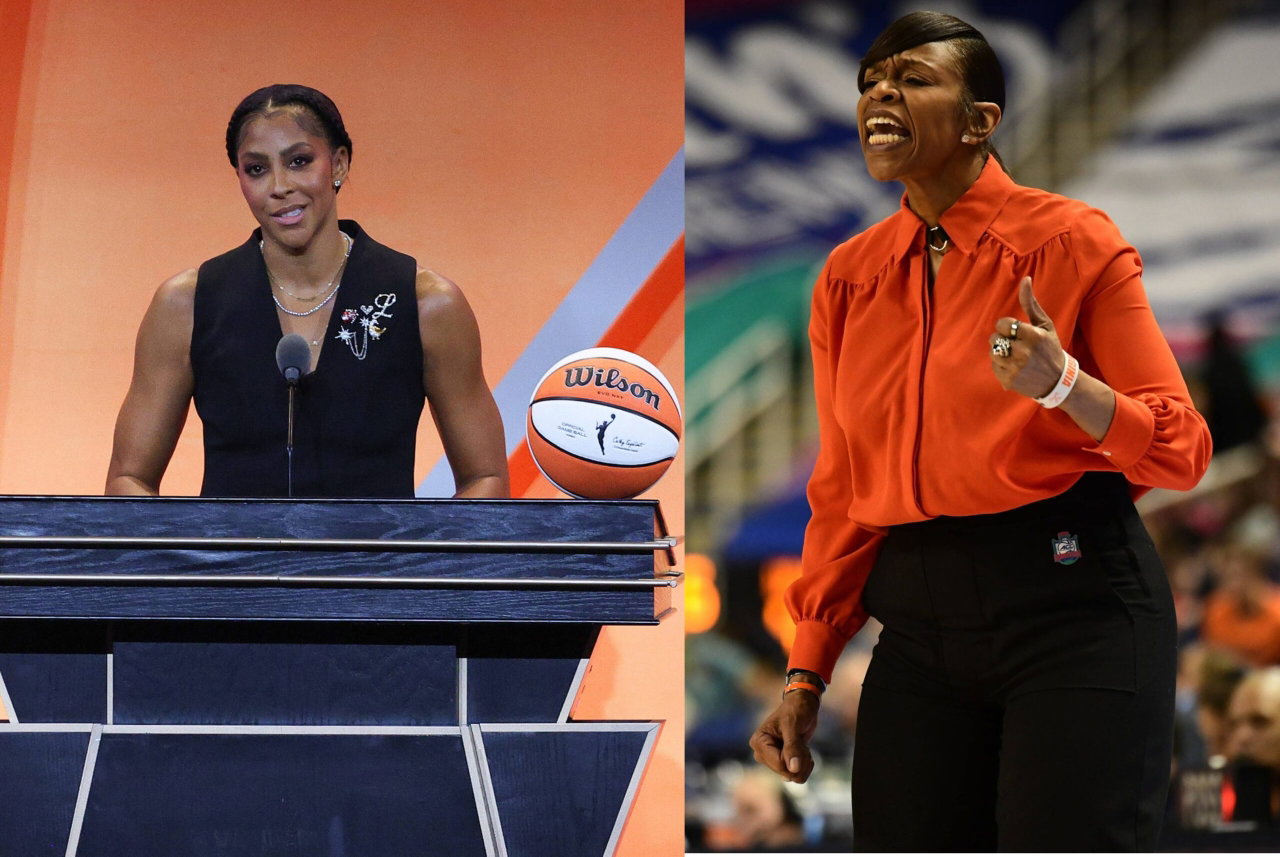
“The most toxic space to cover” – that is how sports anchor Elle Duncan described the WNBA back in August, and four-time WNBA Champion Tina Thompson has outright refuted this claim. The 51-year-old, who spent 17 seasons in the WNBA, believes that there are problems that exist with the current WNBA, but they are personal and not a league-wide attempt to malign players.
Recently, the Post Moves podcast hosted a WNBA Finals live show featuring Candace Parker and Tina Thompson. The topic of how the WNBA is covered in modern media came up, and Thompson did not mince her words.
“There was a clip of an interview by Elle Duncan. And she was talking about her love for the game, but in this kind of moment or this state, there’s a level of toxicity that’s going on and how people are responding to what real people that are part of this game say. I think just in general – not just in the WNBA, but in the world – we are way too sensitive.”
“How the fans, or the people out there in social media land respond, I think is ridiculous,” she added. “And it’s probably why I’m not on social media that much…How many baskets have you scored in a WNBA final, or a playoff, or a game in general? Zero. So it’s bizarre to me.”
Elle Duncan’s argument was around the fact that the WNBA placed too much pressure on a young Caitlin Clark who had just entered the league back in 2024 and was already touted as the face of the WNBA. She backed this with the argument that the WNBA fanbase supports this toxicity because of how passionate they are about the game. They want to see their team win, and nothing else matters.
But most of these fans are people who have never played a professional basketball game in their lives. They are either sitting at home or in the stands supporting their team, but almost none of them know what it is like to face a crowd of 17,000 people after you miss a clutch shot in the dying minutes of a playoff game. Both Parker and Thompson are keenly aware of that feeling.
Parker takes the conversation a step further. She analyzes how WNBA media coverage, not from fans, can be something that players can use to elevate their own game.
“With sports media, how can I take what I came into and try to make it better? And to me, as a player, the biggest thing is that I hated watching a game and the commentators lying to me…So I think when I’m analysing and talking, the growth comes, and you grow with not everything being right…I think attacking character is one thing, which I think is off-limits, but posing questions to growth, to me, is a way to elevate it.”
Former WNBA stars like Sue Bird, Lisa Leslie, Rebecca Lobo, and even Nneka Ogwumike are now part of the WNBA broadcast world. They host and appear on shows that analyse games and teams. Insights from such personalities can definitely provide the kind of support young, developing players need to improve their game, just as Parker said.
Tina Thompson then went on to double down on her initial take.
Tina Thompson thinks the WNBA needs to be less emotional
This season has seen one of the most intense cases of an on-court emotional outburst. During Game 2 of the Indiana Fever and Las Vegas Aces playoff series, Aces star A’ja Wilson stepped up to a fan who was sitting courtside, screaming at her after she made contact with Fever guard Sophie Cunningham. But what Wilson said later just amplifies Thompson’s point.
“I mean, honestly, I have my days. I have my moment because I’m human,” said Wilson.
And this is the sentiment that Tina Thompson attempted to convey later on in the Post Moves live show.
“As WNBA players, commentators, fans, or whatever, we have to stop being so emotional,” added Thompson. “You can love like you’re a player. It doesn’t mean that they’re not without fault…As long as your opinion is not rooted in malice, accept it. Move on. Disagree. Go to something else. I don’t want to hear you talking about my mom.”
There have been several reported cases of abuse directed at WNBA players in the last few seasons. From Chelsea Gray receiving hateful DMs to Natasha Cloud being subjected to slurs. Even players like Alyssa Thomas and Courtney Williams have spoken up about the abuse they face every day from disgruntled fans.
WNBPA President Nneka Ogwumike even spoke about this in an interview with Fortune Magazine recently, and her assessment is concerning.
“It’s not a safe place for athletes.”
But on the other hand, there are commentators who know the sport and have witnessed or even played in the league firsthand. Both Tina Thompson and Candace Parker trust that feedback from such sources is essential for player growth.