
USA Today via Reuters
Apr 5, 2016; Indianapolis, IN, USA; Connecticut Huskies forward Breanna Stewart (30) gestures to fans after defeating the Syracuse Orange 82-51 at Bankers Life Fieldhouse. Mandatory Credit: Brian Spurlock-USA TODAY Sports
USA Today via Reuters
Apr 5, 2016; Indianapolis, IN, USA; Connecticut Huskies forward Breanna Stewart (30) gestures to fans after defeating the Syracuse Orange 82-51 at Bankers Life Fieldhouse. Mandatory Credit: Brian Spurlock-USA TODAY Sports
Under the bright lights of the UConn Huskies’ dominant NCAA Tournament opener, WNBA superstar Breanna Stewart sat courtside, not just watching history unfold, but fresh off creating some of her own.
Watch What’s Trending Now!
Sitting in front of the 2027 five-star recruit Eva Long, who was on an official visit in Storrs as the Huskies rolled past UTSA 90-52, Stewart found herself in a very different spotlight. Midway through the game, an in-game interview with ESPN’s Holly Rowe turned the attention to what she and the WNBPA had just accomplished: A CBA deal that promises to change the face of women’s basketball for years to come.
“We walked out of the room proud, holding our heads high and knowing that the EC [Executive Committee], our staff, and the league really came to an agreement and a CBA that is going to be historical,” she said when asked about changing the course of history for female athletes. “It’s going to create generational wealth, hopefully, but really the opportunity for wealth for all players in the league and for those that had came before us.”
That belief didn’t come easy. These negotiations demanded trade-offs, persistence, and, as Breanna Stewart put it, a refusal to settle.
“It’s really hard because when you wanna have a transformational CBA like we did. There’s a lot of things that needed to be fixed, that needed to be better,” she added. “But I thought that our team did an incredible job negotiating and really never giving up until we got exactly what we wanted.”
Stewie pulled up to watch her Huskies take on the tourney 🐺🔥@sportsiren catches up with her on WNBA CBA negotiations, the next wave of UConn stars and a surprise Marta Xargay appearance 🥳 pic.twitter.com/Rduly6zwtQ
— espnW (@espnW) March 21, 2026
That last line perfectly captures the scale of what the Women’s National Basketball Players Association just secured. Because this isn’t just another agreement. It’s a financial reset for women athletes.
The new seven-year CBA, set to run from 2026 through 2032, introduces the first comprehensive revenue-sharing model in women’s professional sports. Players will now receive 20% of league revenue, something Stewart emphasized as a true partnership between players and the league.
“We’re getting 20 percent of all revenue… we’re a partnership, we’re a collaboration,” she said. “When it’s good for the WNBA, it’s good for the players and vice versa.”
The agreement signals a long-overdue shift in how the WNBA values its players.
With a revamped economic structure built around revenue sharing and rising salary scales, the deal is projected to deliver more than $1 billion in player salaries and benefits over its duration, which marks a significant step forward not just for the league but for the broader landscape of women’s professional sports.
Inside the $1B CBA deal that Breanna Stewart and the WNBPA fought to secure
The WNBPA and the WNBA spent over a year at the negotiating table, where they missed multiple deadlines while trying to find a common ground. The talks came very close to disrupting the league’s offseason schedule ahead of the 2026 campaign. But in the end, both sides didn’t just reach an agreement; they reshaped the league’s economic future.
The most immediate change comes through a massive financial jump.
The salary cap will rise from $1.5 million to $7 million in 2026, with projections pushing it past $11 million by 2032. That growth directly impacts player earnings across the board, with average salaries expected to climb to around $583,000 initially and cross the $1 million mark by the end of the deal.
Imago
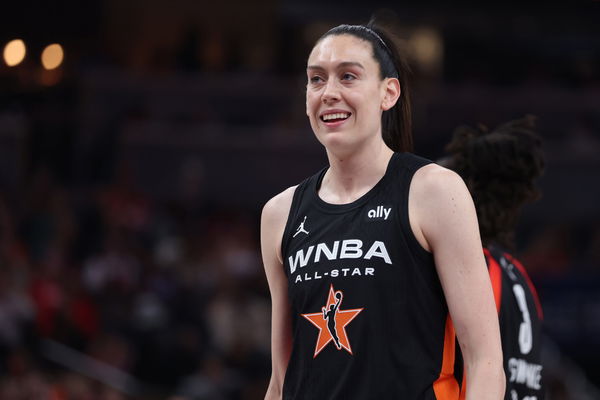
Jul 19, 2025; Indianapolis, IN, USA; Team Collier forward Breanna Stewart (30) reacts in the fourth quarter against Team Clark during the 2025 WNBA All Star Game at Gainbridge Fieldhouse. Mandatory Credit: Trevor Ruszkowski-Imagn Images
Moreover, top-tier talent will benefit from this deal almost instantly, with maximum contracts starting at $1.4 million and projected to reach $2.4 million in the coming years.
But the new CBA doesn’t just cater to stars. Minimum salaries will rise into the $270,000–$300,000 range, while even incoming rookies are set to see a major bump, including a projected $500,000 salary for the No. 1 overall pick.
At the center of it all is a new revenue-sharing model, one that gives players a direct 20% share of league revenue. It’s a structural shift that ties player earnings to the league’s growth, creating long-term upside that simply didn’t exist before.
Beyond salaries, the agreement also focuses heavily on player experience. From league-wide charter travel and improved facilities to enhanced retirement benefits and recognition payments for former players, the deal reflects a broader investment in both current and past athletes.
In many ways, this isn’t just about bigger numbers; it’s about a league finally aligning its growth with players like Breanna Stewart driving it.
Written by

Edited by

Shreya Singh