
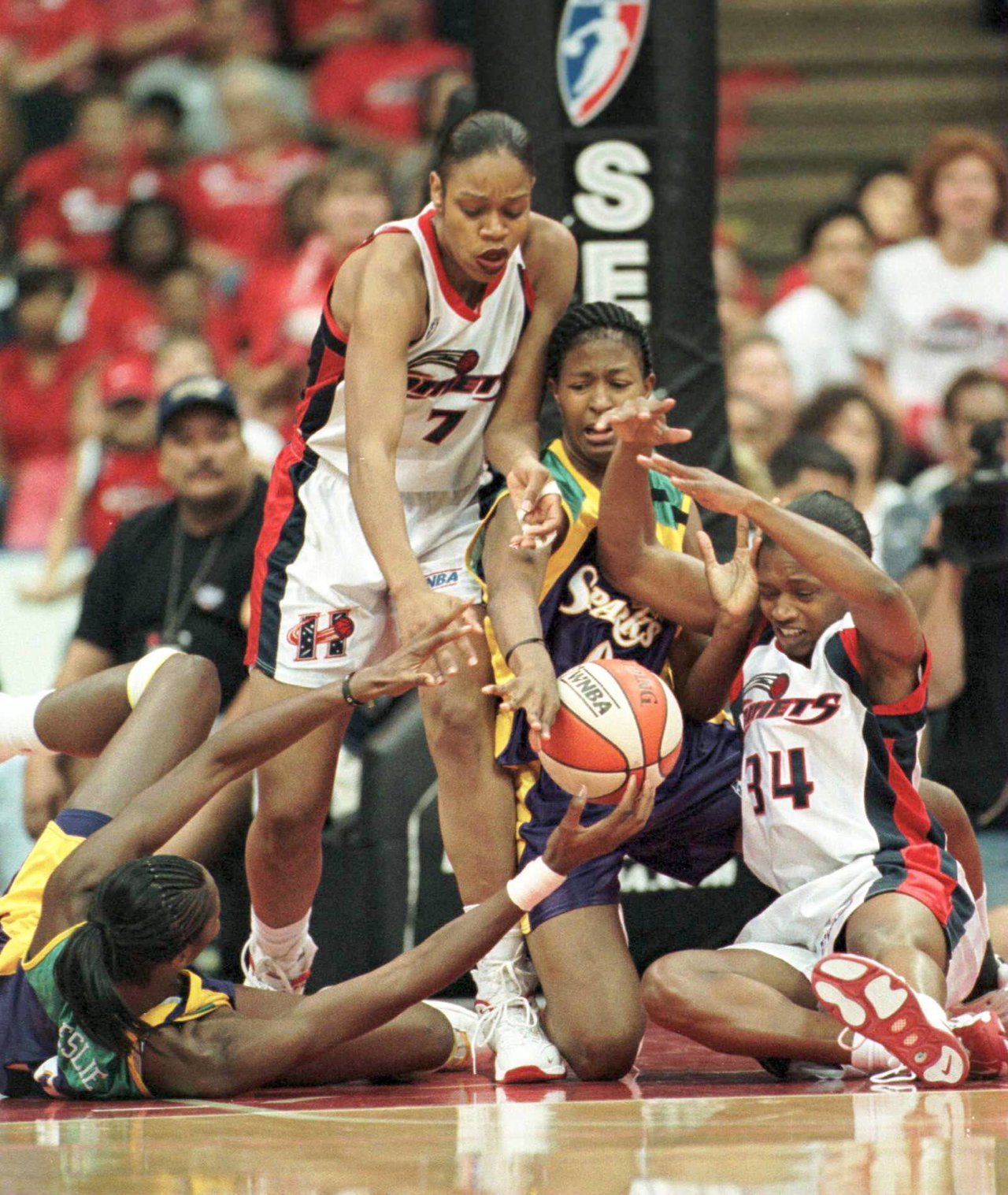
The WNBA wants a bigger audience, greater commercial success, and the recognition that comes with being a major sports league. And, of course, to a large extent, the league has enjoyed a great deal of this commercial success over the past few seasons. One aspect that has, however, struggled to keep pace with this growth is the willingness of some within the WNBA community to accept the increased scrutiny that comes with greater visibility. This was precisely what WNBA legend Tina Thompson criticized while speaking on Wednesday’s episode of the Post Moves podcast with Candace Parker.
Watch What’s Trending Now!
Thompson’s criticism of the WNBA’s emotional reactions to opposing opinions has now found support from broadcaster Robin Lundberg, who believes the league must stop expecting special treatment as it grows. Lundberg echoed the same sentiment, describing Thompson’s comments as refreshing and aligning himself with the broader argument that the league must embrace greater scrutiny.
“We got some refreshing words from a WNBA legend, Tina Thompson, who said a lot of what I’ve been saying, and maybe that’s why I find her comments to be so on point,” Lundberg said in a video he shared on YouTube. “As far as things not done with malice… you’re talking about genuine constructive criticism, … things that come with being a big girl league. It is not a secret club. It is not a Ferrari. It is not a sisterhood.”
“And along with the big audience comes more attention, which is a great thing, and comes more scrutiny. And that’s just something everybody is going to have to deal with as this thing grows. And you can’t keep it the way it used to be. You have to welcome the others into the tent and into the fold, you know, the sports fans who have come along to watch and consume the WNBA,” he added.
Tina Thompson’s statement also drew attention to the differences between how WNBA players respond to criticism and how their counterparts in other major sports leagues, particularly the NBA and the NFL, are expected to handle it. For Thompson, the WNBA cannot expect to enjoy the same level of recognition and commercial success as these leagues without also accepting the scrutiny and criticism that come with their status.
“As WNBA players, commentators, fans or whatever, we have to stop being so emotional… if you’re going to compare one of our greats to one of their greats (NBA, NFL), then those guys receive a lot of backlash and things being said about them. They’re not emotional about it. They’re not offended. People are allowed to have an opinion,” she said.
Speaking of this comparison, Lundberg pointed to LeBron James’ handling of a courtside heckler during his regular-season debut with the Philadelphia 76ers on Tuesday. After being subjected to loud chants of “We don’t want you!”, a jab at James’ offseason admission that he had considered joining the New York Knicks, the veteran reportedly exchanged words with a fan who appeared to take aim at his time on the West Coast with the Los Angeles Lakers.
“Ain’t nothing soft in the Midwest,” LeBron fired back. “I don’t know what the f*** you talking about. I’m not from the West Coast. I’m from Ohio, baby. I’m not a Midwest kid, I’m an Ohio baby. F*** is you talking about?”
The exchange unfolded without escalating into a major confrontation, and the game continued. That is in direct contrast with the reaction displayed by A’ja Wilson during Game 2 of the Las Vegas Aces’ first-round playoff series against the Indiana Fever. After a courtside fan appeared to direct a comment at her following a physical play involving Sophie Cunningham, Wilson confronted the spectator, shouting and pointing at the fan before her teammates intervened and held her back.
The point, as Lundberg and Thompson argue, is that heckling, jeering, and aggressive banter from fans are familiar features of professional sports, particularly in a league like the WNBA that has grown immensely and attracted considerable mainstream attention and revenue.
While malicious personal attacks should not be encouraged or amplified, players must find ways to handle legitimate criticism and ordinary sporting banter without allowing such exchanges to distract them from the game. As the WNBA continues to grow, learning to navigate that scrutiny is part of the reality that comes with becoming a major sports league.