
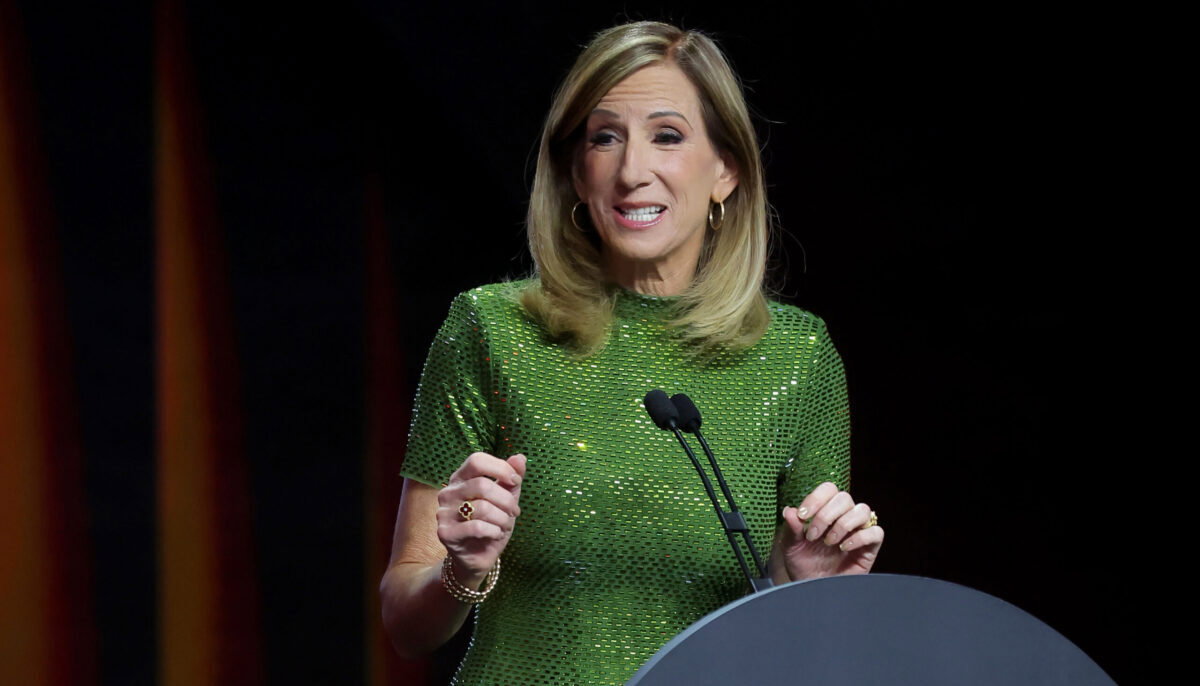
Did the WNBA accidentally give away a piece of its future too cheaply? Four years ago, WNBA commisioner Cathy Engelbert led a deal that saw the league sell a 16% equity stake for $75 million in a bid to raise capital. At the time, it appeared to be a reasonable move for an organization in need of financial backing. But with the WNBA’s growth trajectory since then, that transaction is beginning to feel like a significant undervaluation.
Watch What’s Trending Now!
Not everyone involved sees it that way, however, at least not from the buying side of the deal. Former WNBA star and investor Swin Cash, who was part of the group that acquired that equity stake, offered her perspective on the controversy that has since surrounded the transaction. When asked whether the capital investment has perhaps placed constraints on the league’s autonomy, particularly over the past two years, she pushed back thoughtfully. “I don’t think anybody has a globe or a ball to say whether it’s right or wrong. I think that you can look at it and say that the investment has helped tremendously in different ways,” she said.
For Swin Cash, framing the deal purely through a business lens misses the more important point. What matters to her is the intent behind it and the tangible value it unlocked. “I don’t give it too much thought from a business standpoint. Cathy Engelbert and the league have been very intentional about growing the game. I think we have to give some credit to that. And the WNBA is hitting right now when it’s supposed to,” she said.
Even when examined through a business lens, it’s a normal thing to inject capital in a business to grow it. As Cash also said “That’s part of investment, right? You take capital. As a business owner myself, we understand what it is to take funding or to have partners. You sit and make those decisions every day. But you always make them from a place of wanting to grow the business. And I think that was a decision that was made,” she said.
So for Swin Cash, the deal should be viewed less as a mistake and more as a necessary growing pain in the construction of a rapidly expanding enterprise. And there is real substance to that argument. The $75 million raised served as a critical bridge fund for stabilizing the league in the aftermath of the pandemic. It also financed the kind of long-term business transformation that has contributed directly to the growth everyone is now celebrating.
Reports have since emerged that the Cathy Engelbert and the league are now actively exploring options to buy back that 16% stake. That in itself suggests that the league itself may now view the arrangement differently in light of how dramatically its value has grown. And perhaps they are right to want that equity back. But Cash’s perspective deserves equal weight in that conversation. The investment played a crucial role in helping the league reach its current moment. And sometimes, the best deals are the ones that look expensive only after they’ve already done their job.
Former WNBA Star Swin Cash Views WNBA Investment Decision As Showing Young Women “What’s Possible”
For Swin Cash, her investment in the WNBA has a significance that goes well beyond equity stakes. It is, in her eyes, a symbol of new possibilities for the generation of women coming into the league. “When I think about it as an investor, it shows these next level of players that are coming into the league that’ll have more money and make more money in a couple of years than I made my whole entire WNBA career,” she said. “It shows that they can sit at these tables and have investments.”
Cash describes the WNBA investment as “one of the best investments she has ever made.” And it’s one she is genuinely thankful for. But beyond the financial outcome, what she values most is the access it represents. “A lot of times for women, especially for me, women and women of color, to have an opportunity to sit at some of these tables and have opportunities like this, I don’t take it for granted,” she said.
What Cash believes this moment is communicating to the world is that there is no ceiling on what women in this sport can aspire to, financially or otherwise. As she said, “People are realizing that WNBA players are not only here to do brand deals. They’re here to have equity deals, they’re here to be involved and sit at different positions,” she said.
In short, for Cash, there’s now a redefinition of what a WNBA player’s relationship with the business of basketball can look like. And that for her is every bit as valuable as the financial value of the investment she made.