
Getty
Steph Chambers/Getty Images
Getty
Steph Chambers/Getty Images
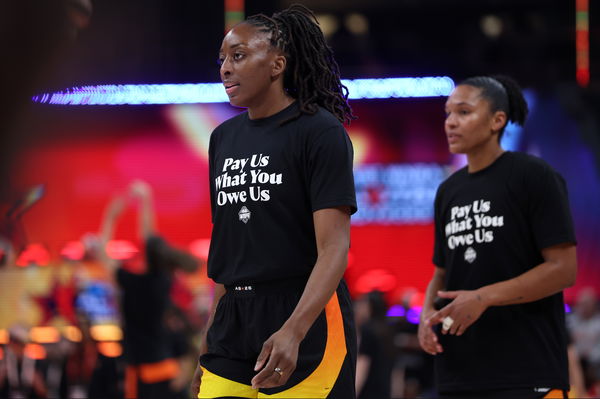
The WNBA and the WNBPA have been in CBA talks for a few months now, and with the 2026 season set to begin on May 8, they are still nowhere near meeting eye-to-eye. Still, the players’ union has remained firm on its ground. They want better pay, one that reflects the league’s rapid growth. But as each day passes, the possibility of disruptions to the upcoming season has become increasingly real.


After nearly six weeks without any movement except an in-person meeting, the league finally delivered a counterproposal to the WNBPA on Friday night. And though it included some adjustments, it did very little to close the gap on the core issue that is driving this standoff – revenue sharing.
Watch What’s Trending Now!
As per the latest updates, the WNBA proposed an offer that still keeps revenue sharing below 15% of total league revenue. And that’s not even close to what the players are demanding. In their last proposal, the union sought closer to 30% of the gross revenue, along with a significantly higher team salary cap.
So while the league has given the much-awaited proposal, there has been no formal word yet from the WNBPA on whether this latest offer moves the needle or simply widens the divide further. Their leadership is expected to review the proposal internally before determining its next step, whether that means accepting elements of the framework or preparing another counter. But amid all of this chaos, according to multiple sources familiar with the situation, the growing concern isn’t just about how far apart these two parties remain. It’s about time.
“The 2026 WNBA season is slated to begin on May 8. In order to do so, the league would have to conduct an expansion draft for the Toronto Tempo and the Portland Fire, free agency, and a standard collegiate draft. Multiple sources have expressed a growing concern to FOS that if a… https://t.co/zvBfxdkqgJ
— Vanshay Murdock 🎥🎥 (@vanshaym) February 7, 2026
They claim that if a deal is not reached within the first two weeks of February, several key league operations, including an expansion draft for the Toronto Tempo and the Portland Fire, free agency where more than 100 players in the league will look to hit the market, and a collegiate draft, could be pushed off schedule, which would force the league to delay its season.
Even though the players are not willing to budge on their demands, they have been clear about wanting a season without any further escalation.
“I know our players 100% want to play this year,” WNBPA president Nneka Ogwumike recently said in an interview with AP News. “We want a season.”
The players hold the power to call for a strike if they think the league is being unfair to them. However, they are not looking to shut the league down.
“Having the strike on the table is something that we’re very much aware of, but there are so many more conversations that have to happen. We’re not just going to say, ‘Hey, today’s the day.’ I think that’s what we’re demonstrating right now, negotiating in good faith,” she added.
Though this is a good sign that the union is negotiating with patience rather than panic, wanting a season and agreeing on the terms are two very different things. With the revenue gap still significant and the calendar steadily moving forward, the question remains: Will they find common ground in time?
Inside the WNBA proposal that has yet to close the gap
The league’s earlier offer included a max base salary slightly above $1 million and an average salary of roughly $465,000, which was a sharp increase from the 2025 figures of approximately $249,244 (max) and $102,000 (average). However, those numbers didn’t feel fair to the players’ union, and they have maintained their stance that pay must better reflect the league’s accelerating commercial growth, new media deals, expansion momentum, and rising franchise valuations.
Besides revenue sharing, housing remains another major point.
Imago
Jul 19, 2025; Indianapolis, IN, USA; Team Collier forward Nneka Ogwumike (3) looks on before the 2025 WNBA All Star Game at Gainbridge Fieldhouse. Mandatory Credit: Trevor Ruszkowski-Imagn Images
The league has also reengaged with the union’s push for team-provided housing, but that doesn’t come without its limited form. Under the current proposal:
Developmental roster spots (two per team) would include housing access and benefits.
One-bedroom apartments would be offered to players at the proposed minimum salary and those with zero years of service, but only for the first three years of the agreement.
Beginning in 2029, that one-bedroom provision would be removed.
Players earning above the proposed minimum would not qualify for team-provided one-bedroom housing.
The league has also previously agreed to several non-economic changes that included a pregnant player trade consent clause, elimination of marijuana testing, increased performance bonuses, higher 401(k) contributions, and a $3,000-per-year-of-service recognition payment for certain retired players. However, it’s unclear whether the WNBA’s counterproposal included any additional adjustments in those areas beyond what had already been discussed.
For now, until both sides begin to narrow their divide, these negotiations will continue under a cloud of uncertainty.
Written by

Edited by

Deepali Verma