Imago
Credits: IMAGO
Imago
Credits: IMAGO
Imago
Credits: IMAGO
Imago
Credits: IMAGO
The WNBA and the WNBPA are officially out of extensions. “We are not coming to an agreement by tomorrow, I can tell you that,” WNBPA vice-president Breanna Stewart said on Thursday, after practice at Unrivaled via ESPN. The two sides will enter a state of status quo rather than an immediate strike or a lockout, and continue the negotiations. “We’re just going to continue to negotiate in good faith,” Stewart said. However, the WNBPA has started to put even more pressure on the WNBA with its latest decision regarding infrastructure.
Watch What’s Trending Now!
Even without a renewal, a lockout is not something the WNBPA is immediately looking at. Stewart said calling a strike is “not something that we’re going to do right this second, but we have that in our back pocket.” In the background, they have already started preparing for the worst. The WNBPA announced that they are establishing various ‘Player Hubs’ across the country and internationally.
According to the association, the hubs will create a global network of facilities giving players offseason access to courts, weight rooms, and recovery spaces. “We reached out to facilities across the country and around the world, and the response has been overwhelming,” said Jayne Appel Marinelli, SVP, Player Relations, WNBPA.
In the case of a lockout, the players will lose access to the franchise facilities until the situation is resolved. They won’t be able to practice and stay in shape, potentially regressing in their game. To avoid this, the WNBPA is providing top-tier facilities, even for international players.
“We’ll be adding even more locations because so many have stepped up and said they want to help. These facilities are valuing our players, opening their doors, and saying, ‘We’ve got you.’ That kind of support means everything to our members,” Marinelli said. “These Hubs are about standing together and making sure every player has what they need to stay ready and keep doing what they love.”


According to Sports Business Journal, universities like Stanford, Cal-Berkeley, and UNLV are welcoming WNBA players with a red carpet. The Bay Club Network has fitness centers in Oregon, Washington, and California, and it will also offer employment opportunities during any possible lockout/strike. For international players, the union said there will be numerous hubs, including The Embassy, a high-end performance training facility in Málaga, Spain.
Imago
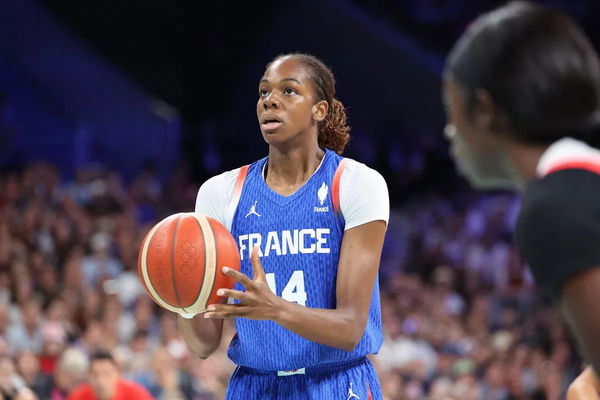
Dominique MALONGA (France) Women basketball, Canada vs France , Women s preliminary round during the Olympic Games, Olym
The practice facilities in the WNBA, or the lack thereof, are a central point of concern for the players in the new CBA. The WNBPA has proposed a series of requirements for teams involving their facilities, including private practice facility access and various locker room and training spaces. However, the league hasn’t yet agreed to those standards (as of a month ago).
This move is also a subtle negotiation tactic to get the new WNBA facilities in a better shape. This infrastructure move isn’t just about preparation, it directly impacts the balance of leverage at the bargaining table, where the league’s lockout stance has recently come into sharper focus.
WNBA Weakened After Its Lockout Stance Becomes Public
It has been well more than a year since the WNBPA opted out of this past CBA. The two parties have still not agreed on a new one. The negotiations have spiralled via multiple proposals and tactics. But the players have held firm through the uncertainty and difficult situations. At this stage, the momentum has swung noticeably toward the WNBPA, placing the league in a far more pressured negotiating position than before.
“Sources told ESPN that the WNBA has not been considering a lockout. League sources believe both sides will get a deal done and there will be a 2026 season,” wrote Kendra Andrews.
Negotiation is all about leverage. The current sticking point is the consideration of gross or net revenue. Net revenue is described as revenue after removing expenses, whereas gross revenue is revenue before subtracting expenses. According to the WNBA, calculating the expenses is essential in the CBA projections. While the WNBPA believes it’s not their purview to consider the expenses because that is essentially out of their control.
WNBPA is proposing a 30% revenue share. According to ESPN, the WNBA projects it will lose them $700 million over the proposed CBA. The WNBPA disagrees due to this calculation discrepancy. In this standstill, the WNBA had the ability to impose a lockout on the WNBPA because it would result in major losses for the players. Now that the players and the public know that a lockout from the league is very unlikely, the WNBPA becomes even more confident.
On the other hand, they are getting ready for a strike by preparing their facilities. It is another advantage for the players to force the WNBA’s hand and get a favorable CBA. The WNBA season generally starts in May, and the league would want to get things done well before that. It still has the expansion draft, the rookie, and the biggest free agency in its history to manage. Urgency is needed to have a fairly normal season.
Related Newsletters