
Bodybuilding legend Arnold Schwarzenegger was someone who regularly performed behind-the-neck shoulder presses. Schwarzenegger did it not because it looked impressive but because he wanted to grow his deltoids. However, over the decades, the exercise got such a bad rap that people in gyms across the globe have virtually stopped doing it.


The most prevalent train of thought that led to such an outcome was that behind-the-neck shoulder presses cause injury. These injuries include impingement of the shoulder joint, wear and tear, muscle pulls, and several others. However, Arnold Schwarzenegger has scientific evidence that it’s not a dangerous movement.
Watch What’s Trending Now!
“Behind-the-neck presses activate more muscle fibers in your shoulders, making them better at making your shoulders pop,” Arnold Schwarzenegger wrote in his newsletter, highlighting a PubMed study. The Austrian Oak said his best friend and fellow Mr. Olympia Franco Columbu and “many others,” did the exercise regularly.
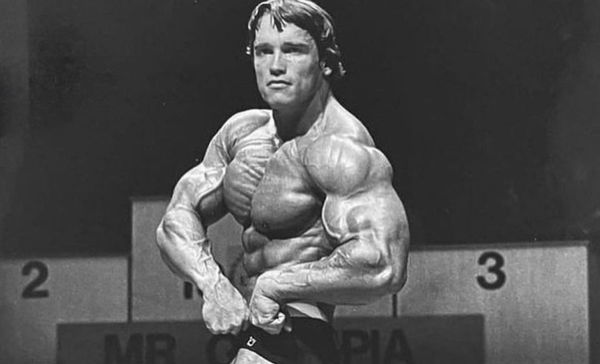
Arnold Schwarzenegger explained that the study compared behind-the-neck and front-shoulder presses. They found that the villainized variation wasn’t “inherently” dangerous. “For participants with normal trunk stability and ideal shoulder ROM, overhead pressing is a safe exercise (for the shoulder and spine) when performed either in-front of or behind the head,” quoted Schwarzenegger.
However, it wasn’t a great exercise for people with compromised range of motion, trunk stability, and/or chronic after-effects of a previous shoulder injury. But, if that’s the case, one should instead focus on improving their shoulder mobility. Performing either variation with incorrect form and limited mobility will result in injury.
Arnold Schwarzenegger, on the other hand, had excellent shoulder mobility, so he regularly performed the movement to pump up his shoulders. Even then, there was another crucial precaution that Schwarzenegger always took.
Arnold Schwarzenegger didn’t press too heavy
Whether it’s a photo or a video, every instance of Arnold Schwarzenegger doing behind-the-neck shoulder presses showed him pumping lighter weights. The seven-time Mr. Olympia never used heavy weights despite having excellent shoulder mobility. That’s because going too heavy would comprise two important aspects.

Using extremely heavy weights on behind-the-neck shoulder presses would compromise trunk stability. An unstable lift increases the chance of injury. Besides stability, using too much weight would also over-extend the shoulders. Over-extending a joint may lead to severe injury in the short and long term.
So, while the behind-the-neck shoulder presses may be misunderstood, they must be performed correctly to ensure injury-free lifting. It is such vigil that ensured that Arnold Schwarzenegger and his fellow Golden Era legends used it as a tool to grow and didn’t indulge in ego-lifting.
Written by

Edited by

Abhishek Manikandan