
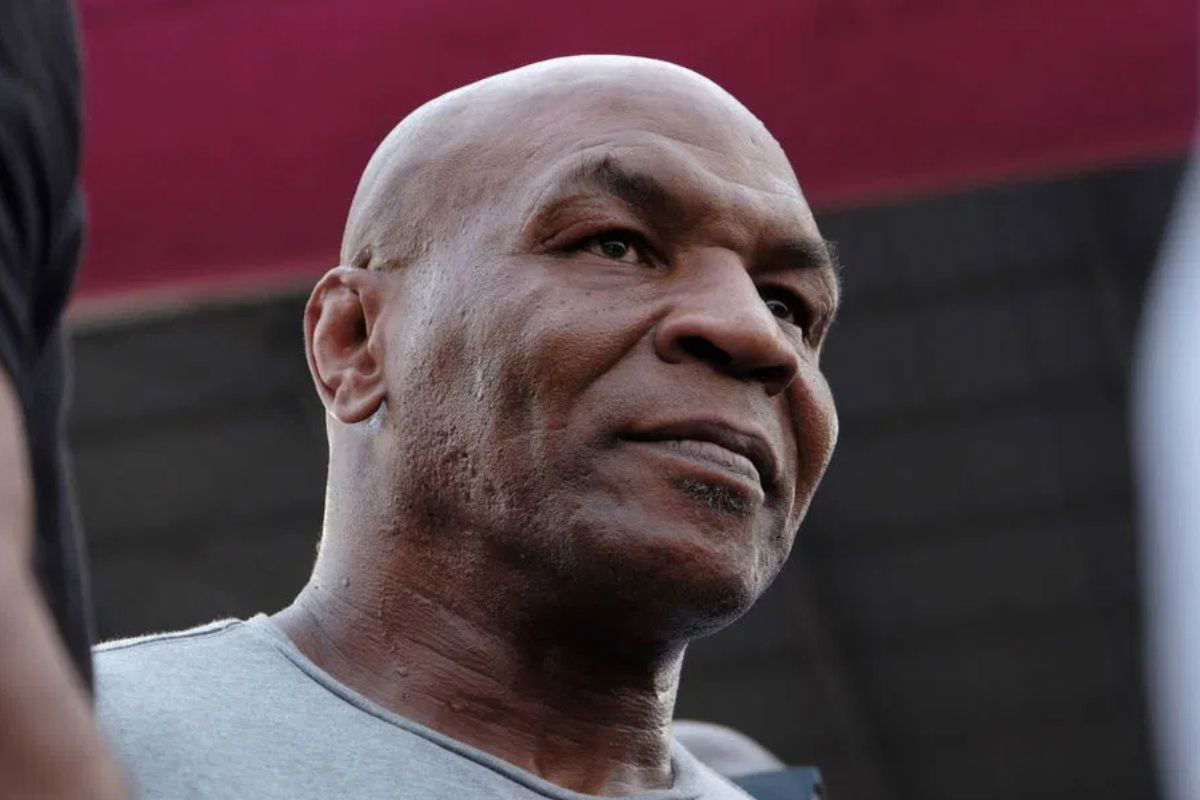
Till Buster Douglas busted his aura and the myth surrounding him, there was a time when it was said that fighters would lose the fight just from a stare from Mike Tyson. His piercing look would take their souls out of their bodies, sending a cold shiver down their spine even before they threw the first punch. The era saw Tyson become the “Baddest Man on the Planet.”
Watch What’s Trending Now!
Given the trajectory his career took after the loss to Douglas, particularly as the spotlight turned on his personal life, including the prison term, leading to a comeback and final retirement, a question always lingered. Was Mike Tyson always the vile, ruthless man most saw him as, which he also likely projected? Or is there a different story that shaped him into the heavyweight champion most feared and sometimes loathed? During a May 2015 interview with GQ, Tyson reflected on those early years. His comments will surprise some, since, contrary to his popular image, his youth was consumed by fear.
“I was abused any way a human being can be abused as a kid,” Tyson said. “So, I don’t know, I’ve been bullied all the time. It has a profound effect on me, being bullied. I wish it didn’t, but it had a real profound effect. I’m kind of…I’m a really sensitive guy, and I’m…How can I explain this? For being bullied, I could be really, really malevolent, you know? I don’t even like to talk like that, but yeah, being bullied, it…I got…”
“Being bullied, you contract a really disgusting terminal cancer in you. It’s something you never forget; you just never forget it. It’s any way. Brutally beaten, attacked, or any way anybody could be bullied, robbed, or taken advantage of. I used to…I used to want that to stop.”
Tyson’s pain stemmed from his difficult upbringing. Abandoned by his biological father, the future heavyweight champion of the world had grown up in a household where he had lived alongside his siblings, his mother and Jimmy Kirkpatrick, the man he initially misunderstood as his father.
Imago
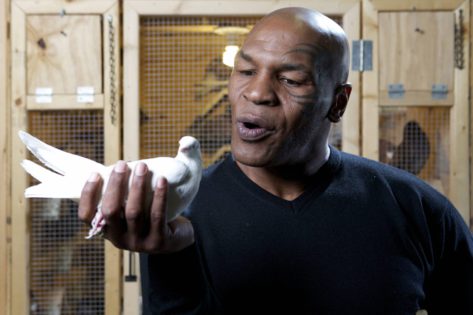
Mike Tyson at home in Las Vegas with his racing pigeons, Tyson s Las Vegas home features three coops which are easily mobile allowing him to move the coops outside freeing his pigeons for flight., Las Vegas Nevada USA PUBLICATIONxINxGERxSUIxAUTxONLY Copyright: JaredxMcMillen 4217700002
Beyond the instability of his immediate family, the crime-filled neighborhood where they lived often left Tyson vulnerable to bullying.
As the popular story goes, his first act of violence came when he picked a fight with a much older kid, who had killed one of his beloved pigeons. Years of intimidation and lack of a father figure led Tyson to a life of crime, where he often found himself in and out of correctional homes meant for juveniles.
It wasn’t until Bobby Steward, who, after noticing Tyson’s talent for fighting, recommended his name to famed trainer and boxing savant Cus D’Amato, that the course of young Tyson’s life changed. Yet, as the former champion narrated, the situation changed little when it came to bullying.
However, the time he spent at D’Amato’s Catskill Gym made him realize that much of that fear of bullying was his own making. That realization eventually changed his perspective.
“So if someone were to bully me, now I don’t think there’s nothing wrong with stabbing him and shooting him,” he added. “So I came up in that kind of world. You know those guys bigger and stronger than you.”
It’s likely Tyson, after undergoing training at Catskill, had built a fearsome persona as a defense mechanism to ward off anyone who thought they could bully him.
Even so, it’s worth noting that Tyson may not be the only fighter who went through a difficult childhood before building a legacy that continues to motivate and inspire.
Like Mike Tyson, another champion who fought his way out of the darkness
A case that closely resembles that of Iron Mike is that of former light heavyweight champion and Boxing Hall of Famer Mathew Saad Muhammad.
Born Maxwell Antonio Loach, who later became Matthew Franklin, before embracing Islam and becoming known as Saad Muhammad, the boxer had to endure a childhood in which he lived in an orphanage after his aunt told his elder brother to abandon him in a park. The future champion then lived in foster homes before a family adopted him.
The Philadelphian tragically passed away in a hospital in 2014 after living for years as a homeless person and in shelters. Alongside Eddie Mustafa Muhammad, Dwight Muhammad Qawi, and Michael Spinks, Saad Muhammad was part of a generation that defined the golden era of the light heavyweight division.
Long ago, Seneca had famously said, “Fire is the test of gold; adversity, of strong men.”
While years of difficulty and hardships took away a normal childhood from them, they forged strength in men like Mike Tyson, Mathew Saad Muhammad, and many others who found the fights inside a ring a much easier test compared to what they had endured as children.