
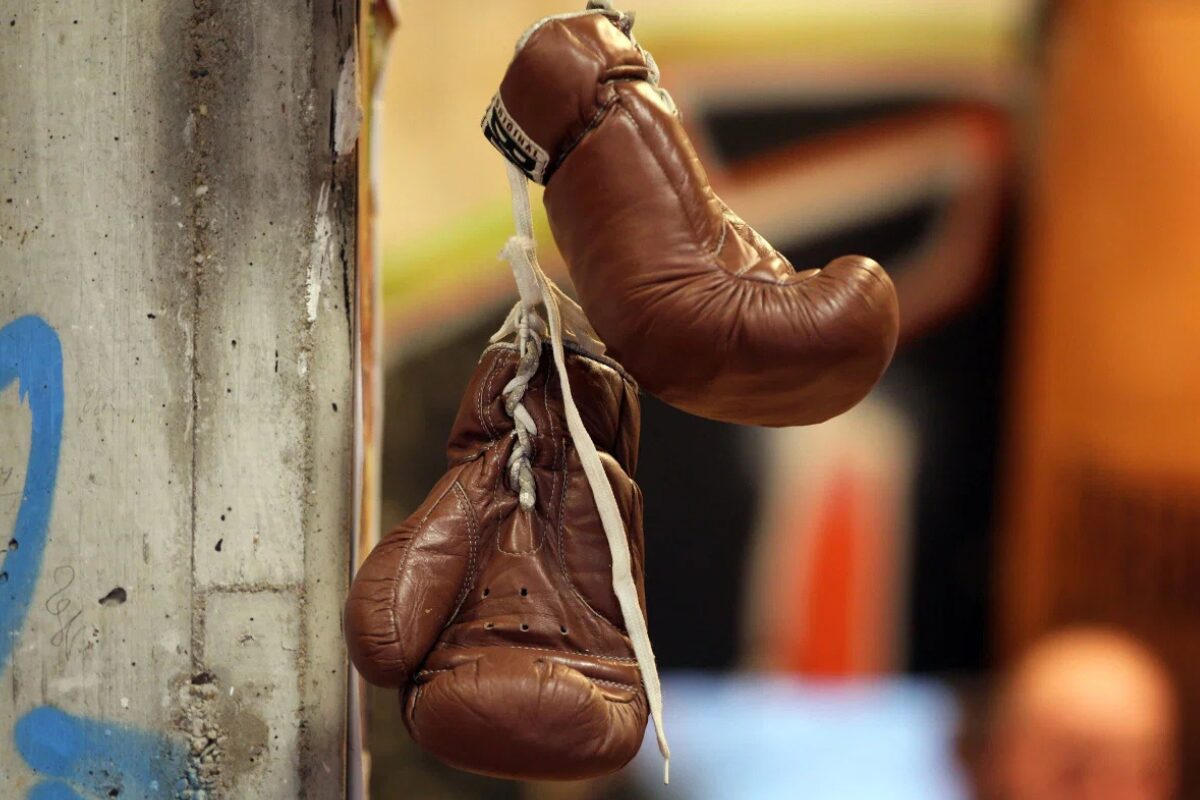
On September 19, Cachanilla Promotions’ fight night at Parque Vicente Guerrero in Mexicali ended on a tragic note after 26-year-old Arturo “Lobito” Torres collapsed in the ring. Reports now confirm that the young fighter, who fought Gilberto García Lizárraga in the main card of the event, has passed away. He died following a brain injury he reportedly suffered during the fight.
Watch What’s Trending Now!
“Tonight we here at Supreme Boxing along with all of the boxing community is in mourning following the death of Arturo Torres. Rest in Peace,” read a statement from Torres’ promoters. “The incident took place on September 19th during an event organized by Cachanilla Promotions at Vicente Guerrero Park.”
“Torres faced García in a match that ended with a 7th-round knockout. After the fight, ‘Lobito’ remained in the ring before collapsing. He received medical attention and was subsequently transported to the Mexicali General Hospital for treatment, where he (succumbed) to his injuries earlier today.”
The event organizers also issued a statement mourning the young fighter.
Footage shared by a user on social media showed Torres collapsing in the ring. As the referee tried to break the clinch with Lizarraga, a towel was thrown in, signaling that the fight should be stopped. The referee was holding Torres when he lost control and fell on canvas. Soon, people who appeared to be from the fighter’s corner rushed towards him to help.
According to a BoxingScene report, following an emergency surgery to treat a blood clot in his brain, doctors placed Torres in a medically induced coma. Initially, it appeared the young fighter was recovering as his brother shared an update.
“It went well; the surgery was a complete success. He’ll be asleep for a couple of days, not because he can’t wake up but to prevent him from straining himself to do something and hurting himself in the process,” Angel Torres reportedly said.
“He was convulsing on top of the ring; he was unconscious the whole way during transport, then they put him in an induced coma, but right now he’s already stable.”
Sadly, that recovery did not last, as Arturo’s condition worsened. Reports suggest that the Mexicali Amateur Boxing League has arranged for an event to raise funds for Torres’ grieving family.
On social media, tributes poured in as news about Torres’ death circulated. Some, however, expressed their unhappiness with the ways things have been shaping up in boxing.
Only last month, the boxing world was left mourning after it learned that Prichard Conlan, who had spent a prolonged period in a vegetative state following the brain injury he suffered in a fight back in 2015, had passed away.
Arturo Torres remembered as boxing faces renewed scrutiny
“Rest in peace, champion. You died fighting for a dream. Respect, strength, and resignation for his family,” wrote former welterweight champion Yordenis Ugas. His words couldn’t have been more fitting. Torres was only 19 when he laced up professionally for the first time. After a win streak, his trajectory witnessed losses and draws. Yet, he continued, trying to put his career back on course.
Beyond Ugas’ tribute, however, the conversation took a different turn as several users expressed their disappointment with the sport.
“I’ve never liked boxing, nor will I ever like it; beating each other to a pulp for money, I don’t see the sense in it,” one user stated. While subjective, that view resonates with many.
A fan, meanwhile, offered a more nuanced take. “A lot of people don’t understand that boxing isn’t the same as MMA—boxing is a constant punishment, really f**king brutal to the body; it’s about grinding you down, not explosive like the UFC. The body suffers terrible damage; in MMA they knock you out with one hit, here it’s hundreds of hits until you fall,” they wrote.
The comments stem from the way boxing and MMA fights unfold. In mixed martial arts, unlike boxing, fighters can leverage body parts like the back and neck to dominate an opponent. As a result, the whole body becomes a target. That runs contrary to boxing, where the head is the primary target.
The targeted hits on the head were notably the reason why, in amateur boxing, the use of headgear was discarded. Fighters felt that because the opponent was wearing headgear, he was safe, so they would hit with more intensity. Later studies revealed fighters who wore headgear sustained more injuries.
A user raised a common concern. “They must increase the protection protocols in the corner and thoroughly analyze the effects of received blows to adjust the times when a fight should be stopped. If a fighter receives more than a certain number of blows to the head, it must be stopped; don’t tell him, “Hang in there, you can do it.”
The problem with those sentiments is that it’s very difficult for anyone to judge. In most cases, the corner goes with the fighter’s self-assessment. The desire to win the fight, particularly when the fighter is trying to rebound from setbacks, can create a willingness to endure the punishment and somehow secure a victory.
As a result, match officials and organizers can find themselves in a difficult position, given that their focus remains on making the fight more entertaining. Stopping a fight that could have otherwise continued can make the atmosphere dull.
“This is why it’s so bizarre that YouTubers that don’t have any boxing skills make so much money than this hard-working boxers who REALLY put their lives on the line every time they go in the ring.” That’s a more recent conversation and likely points at people like Jake Paul or Tommy Fury.
With crossover and influencer boxing gaining more traction through dedicated promotions like Misfits, it has become much easier for anyone to lace up and fight, earning reasonable figures.
In comparison, many upcoming prospects who want to make it big in the professional ranks struggle to keep up with the expenses.
The whole discussion surrounding Arturo Torres shifted the focus to the sport instead of the fighter. It’s now fairly well known how boxing exacts a price from some of the competitors. In 2019, the year when Torres debuted, a report from CNN suggested that roughly 13 boxers die in the ring every year, on average.
Whether that is true or whether the number of the cases has surged since remains a matter of debate.
What matters more now is that young Torres’ memory should not get mixed up in this discussion. He passed away doing what he loved. Had he lived, he could have put his career back on track and extended it to title contention.
Sadly, that is not going to happen. Let’s pray for Torres, that he rests in peace and that his family finds strength in this difficult period.