More on Daytona 500
Mark Martin Confesses ‘Scary’ Charlotte Dream After Dale Jr’s Announcement on NASCAR Cup Series Return
Hall-of-famer Mark Martin confesses a scary dream of a return to NASCAR amidst rumors of Dale Jr's return to the Cup.

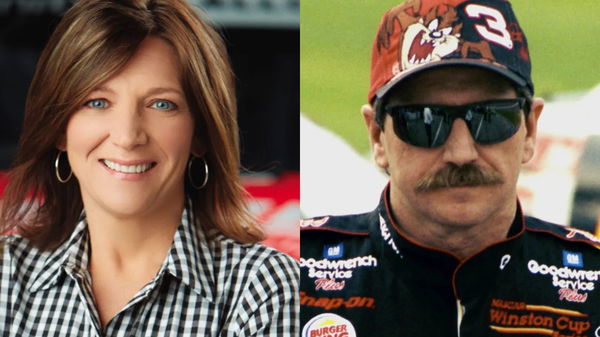
Dale Earnhardt’s Hidden Side Comes to Light in Daughter Kelley’s Heartwarming Admission
Kelley Earnhardt Miller walks down a pleasant memory lane about her father, who showed rare moments of love
Denny Hamlin’s Emotional Off-Season Message Comes Full Circle as Michael Jordan’s 23XI Conquers NASCAR’s Biggest Fortress
Denny Hamlin requested a favor from his team for his best friend, Michael Jordan, and they were more than happy to deliver on it.
Ryan Blaney Recalls the Jaw-Dropping Thunderbirds Ride That Went Wrong at 30,000 Feet
Ryan Blaney was able to experience the exhilarating speed and maneuvers of the USAF Thunderbirds a decade ago, but it was too much for him.
NASCAR’s 2026 Gamble Pays Off as FOX Sports Shuts Critics With Record-Breaking Daytona 500 Viewership
Record-breaking 2026 Daytona 500 viewership proves NASCAR’s scheduling gamble paid off as FOX Sports delivers its best numbers in years.
NASCAR Veteran Comes in Support of Cleetus McFarland After Dale Jr.’s Harsh Daytona Verdict
Cleetus McFarland gets strong support from Kenny Wallace after Dale Earnhardt Jr’s tough Daytona critique, sparking a fresh debate.
Denny Hamlin’s 23XI Employee Warns NASCAR Garage With A Bold Confession After Daytona 500 Win
Fresh off their Daytona 500 triumph, a 23XI Racing voice makes a powerful confession that could shake up the NASCAR Cup Series garage.
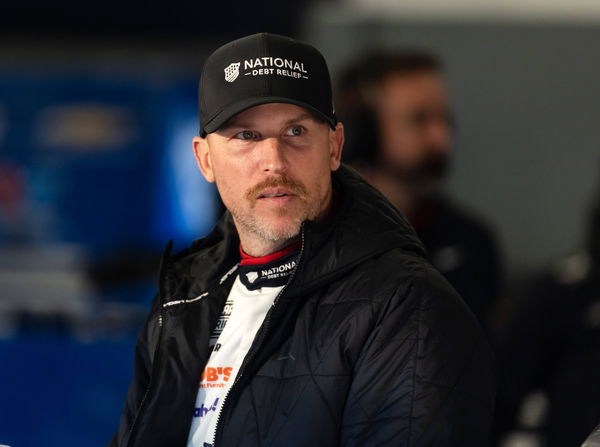
“We’re Not Really Racing”: Ryan Blaney Doubles Down on His Toyota Rant Days After Controversial Daytona 500 Move
After a fuel-seaving frenzy in Daytona got on Ryan Blaney's nerves, the Penske driver reiterated his frustration.
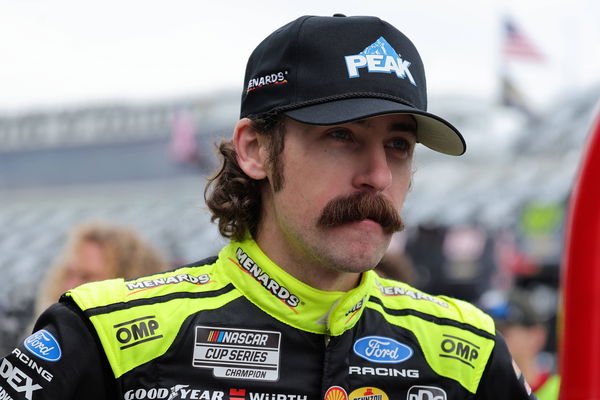
NASCAR Veteran Left Stunned as Jim France Steals Daytona 500 Spotlight With Unexpected Victory Lane Gesture
After seeing Jim France's jaw-dropping gesture in Daytona, a seasoned veteran of NASCAR expressed his surprise and joy.
“Shame on All of You”: NASCAR Veteran Stands Up for Natalie Decker as Daytona 500 Fallout Turns Ugly
Kenny Wallace sides with Natalie Decker after a she faces immense backlash on social media following her Daytona 500 crash.
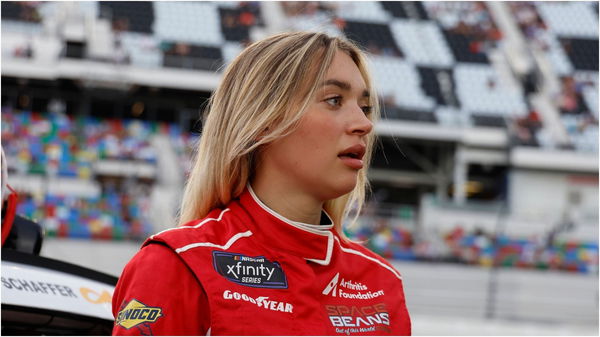
Dale Jr. Proposes to Revive Long-Buried NASCAR Points System to End Daytona’s Fuel-Saving Drama
After another show of fuel-saving techniques in Daytona, Dale Earnhardt Jr. digs up a past solution for the present problem.
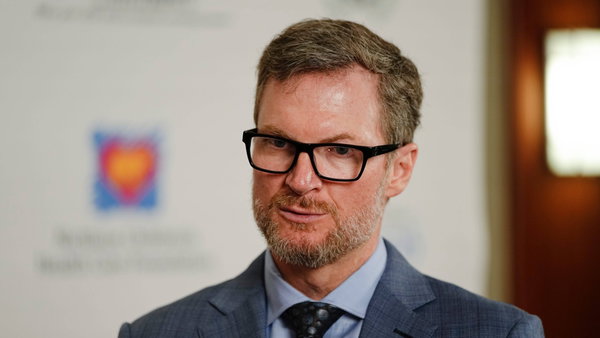
NASCAR Asks Daytona 500 Intruder to Surender as Daniel Suarez’s Security Breach Sparks Concerns
After a fan breached security during Daniel Suarez’s Daytona 500 interview, NASCAR moved swiftly, intensifying focus on accountability.
About Daytona 500
What is the Daytona 500?
For any NASCAR fan, the Daytona 500 race holds a special place in their hearts. The most prestigious race in the Cup Series, a win at the revered race bestows limitless repute and honor to its victor. Often referred to as the unofficial "birthplace of speed", Daytona Beach, where the race has been held for over six decades, has a long and storied history. Currently, it features on the NASCAR Cup Series schedule as one of the four crown-jewel races and also features the highest winning prize among all Cup races.

Imago
Daytona International Speedway plays host to the NASCAR, Motorsport, USA Cup Series for the Daytona 500 in Daytona Beach, FL, USA. Daytona Beach United States of America - ZUMAc04_ 20230219_zaf_c04_386 Copyright: xWalterxGxArcexSrxActionxSportsxPx
Origins of the Daytona 500
While many stories about the origin of Daytona races date back to 1903 when two men challenged each other to a race to decide whose horseless carriage was the fastest, the sturdy stock car race at the iconic location came into being in 1959, courtesy of NASCAR founder Bill France Sr. And on February 22, in front of 41,000 people, the revered race planted its seed to mega-stardom. The inaugural race was the only instance when both hard top and convertible vehicles were allowed to race. Since then, the Daytona 500 has been much-awaited by stock car racing fans every year.

And while the Daytona Beach, Florida location is already iconic, the track that hosts the Daytona 500 race is just as well-thought out and executed. Wanting to give fans an edge-of-the-seat thriller, Bill Frances Sr brainstormed alongside engineers to create a track that would have the highest banking, allowing cars to reach topmost speed. And soon the prospect presented itself in the form of a tri-oval with 31 degrees banking at turns and 18 degrees at the start/finish lines. With 2.5 mile in length, today, the race lasts 500 miles/200 laps.
The first-ever Daytona 500, called the 1959 First 500 Mile NASCAR International Sweepstakes at Daytona back then, saw 59 cars competing. The winning purse of the inaugural race had a steep value of $53, 050, out of which Lee Petty took home $19,050 for his victory while the runner-up Beauchamp secured $7,650.
Why is the Daytona 500 called ‘The Great American Race’
As one of the most iconic spectator sports events in America, the Daytona 500 definitely takes the cake when it comes to being NASCAR's crème de la crème. Throughout history, the event has often been compared to the Super-Bowl, the crown jewel of the NFL. However, many NASCAR enthusiasts haven't been too keen about that description and have placed the crown-jewel race way above the Super Bowl.
The Daytona 500 has also been synonymous with the President's Day weekend in every NASCAR fan's heart. From 1968 to 2011, the race was held on President's Day weekend every year. However, NASCAR decided to change that in 2012 with news of an NFL schedule revamp doing the rounds. As per reports, NFL was planning to expand its 18-game regular season and as per the new roster, the Super Bowl was to be held on the same day as the Daytona 500. Sensing a dent on viewership numbers, the stock car racing organization move the race. However, as the NFL season-expansion plans failed to reach fruition, the Daytona 500 was moved to its original calendar spot. Now, that's definitely a win-win!
While the winning purse of the Daytona 500 is already a stuff of legends, sitting atop with the largest return, the trophy being awarded to the victors isn't any less prized either. Called the Harley J Earl trophy, the prize has been named after legendary automobile designer, Harley Earl, who was also a close friend of Bill France Sr and a General Motors executive back in the day. Earl is most significantly known for being the Father of the Corvette. He has also been credited for designing the Firebird I prototype. The Daytona 500 race is full of prestige and perks for sure.
One other aspect that the race victor gets to experience is their car being showcased at the Daytona 500 experience, for one year in its race-winning condition. For the uninitiated, the Daytona 500 Experience is a museum and gallery situated next to the Daytona International Speedway.

Imago
Teilnehmerfeld der Daytona 500, v.li.: Martin Truex Jr., Tony Stewart, Kurt Busch, Jimmie Johnson, David Ragan, Dale Earnhardt Jr., Clint Bowyer, Carl Edwards, Brian Vickers und David Stremme - (ZUMAse4)
Highlights of the Daytona 500
The inaugural Daytona 500 race in 1959 was won by Richard Petty's father, the legendary Lee Petty. The patriarch of the NASCAR royalty family clinched victory driving a 1959 Oldsmobile for Newton Chappell at the inaugural event outperforming Johnny Beauchamp. Charley Griffith, representing Red Bank, finished P3, while Cotton Owens and Joe Weatherly wrapped up the Top-5 positions.

Lee Petty's son isn't much far behind on the Daytona 500 record book either. With seven wins, Richard Petty sits atop the most-wins list at the venue. What makes his feat even more legendary is the fact that Petty managed to clinch four of those titles in a single decade, in 1971, 1973, 1974 and 1979. The rest of his victories came in 1964, 1966 and 1981.
While the initial years of the Daytona 500 didn't see much vehicle policing, it soon became apparent that certain rules and restrictions would have to be put in place. One of the biggest instances of a change came in 1988 when former stock car racing driver and NASCAR Hall of Famer Bobby Allison's car went airborne and hit the catch fence at 200 mph at Talladega in May, the previous year. As a result, restrictor plates were made mandatory in hopes that they would stunt speed, which in turn would stop vehicles from going airborne.
Speaking of Bobby Allison, he also became the oldest driver to win the race at 50 years, 2 months and 11 days, in 1988. On the other hand, Trevor Bayne is the youngest Daytona 500 winner. Bayne was 20 years and 1 day old when he won the event in 2011.
Another revamp that hit NASCAR and the Daytona 500 was during the 50th anniversary of the Daytona 500 race, when 'Cars of Tomorrow' debuted for the first time in the stock car racing circuit. While the name might throw some people off, 'Cars of Tomorrow' simply entailed that the same roll cage, frame and body would be used in all kinds of race tracks as opposed to how crew members would need to build different cars for different tracks like superspeedways, road courses and short tracks.
The Daytona 500, being such a grand event, has often been associated with high-profile names. In a bid to make the event even more exciting, every year, the organizers bring in popular figures to serve as a Grand Marshal. While 'Captain America' famed Chris Evans graced the event in 2014, Nicholas cage stopped by in 2007. Even former US presidents Donald Trump and George W Busch served as the event's grand marshal in 2020 and 2004, respectively.
Qualifying Format of the Daytona 500
Currently, the Daytona 500 sees 40 cars competing, out of which 36 sports belong to drivers whose teams have their own charters. The rest of the 4 spots, which are referred to as open cars and constitute teams that do not own a charter.
In its 65 year history, the Daytona 500 has had many revamps to its qualifying format. From two timed laps, the better of two laps, to the average of two laps, the crown jewel race has explored several avenues to decide its starting grid. However, what stuck and is currently in place is a two-race qualifying. The first race is a single-car qualifying where each driver takes up one lap. The Top 10 drivers from that round advance to the second round where their order in the main event starting grid is determined. The single-car runs decide the front row of the Daytona 500. They also decide the lineup for the qualifying races also referred to as "the duels". The starting grid is eventually decided on the basis of the duels.
The Black Sunday of the Daytona 500
The Daytona 500 was perhaps one of Dale Earnhardt's greatest achievements. After chasing an elusive win at the track for about two decades of his career, the driver finally succeeded in finish P1 in 1998. However, just three years later, the same race would claim his life. It all happened on February 18, 2001, when the driver was competing in the final lap of the race. The driver slammed head-first into the retaining wall after contact with Ken Schrader and Sterling Marlin. The driver had suffered from a basilar skull fracture and had died instantly upon contact. Earnardt's death triggered a wave of safety improvements in stock cars and are seen even today.

Imago
US PRESSWIRE Sports-Historical Unknown date Daytona Beach, FL, USA: FILE PHOTO NASCAR, Motorsport, USA Winston Cup Series driver Dale Earnhardt Sr 3 waits in his car in the garage area at the Daytona International Speedway. Daytona Beach Florida UNITED STATES, EDITORIAL USE ONLY PUBLICATIONxINxGERxSUIxAUTxONLY Copyright: xUSAxTODAYxSportsx 5145564
Image Credits - Imago
The changes of the name of the Daytona 500
The Daytona 500 has seen a plethora of name changes till date. While the first-ever edition of the race was called the 1959 First 500 Mile NASCAR International Sweepstakes at Daytona, the name was changed the very next year to the Inaugural 500 Mile International Sweepstakes. The race, then, went on to be known as the Daytona 500 by STP from 1991 to 1993. On the year of Dale Earnhardt's passing in 2001, it was known as the Daytona 500 by Dodge. In 2007, a new name was coined yet again and this time, the race was called Daytona 500 by Toyota. From 1961 to 1990, 1994 to 2000 and from 2002 to 2006, the race was called Daytona 500 and since 2008, that's the very name that has stuck around.