Reuters
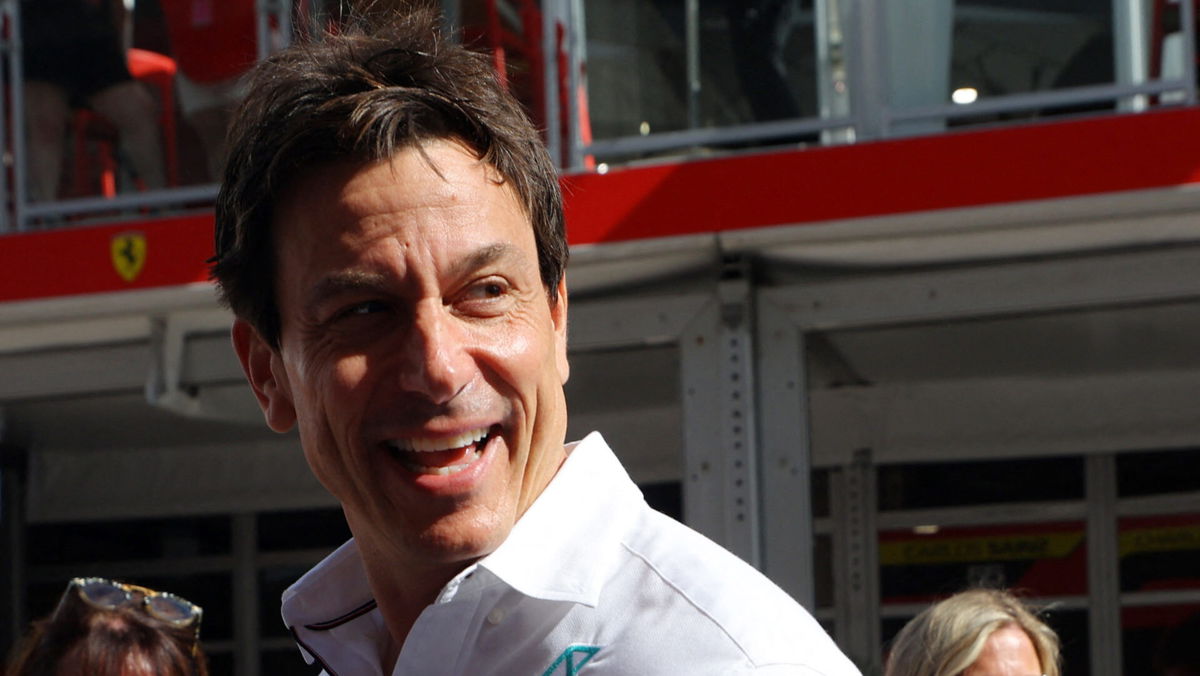
Formula One F1 – United States Grand Prix – Circuit of the Americas, Austin, Texas, U.S. – October 22, 2023 Mercedes team principal Toto Wolff is pictured ahead of the race REUTERS/Brian Snyder
Reuters
Formula One F1 – United States Grand Prix – Circuit of the Americas, Austin, Texas, U.S. – October 22, 2023 Mercedes team principal Toto Wolff is pictured ahead of the race REUTERS/Brian Snyder
Reuters
Formula One F1 – United States Grand Prix – Circuit of the Americas, Austin, Texas, U.S. – October 22, 2023 Mercedes team principal Toto Wolff is pictured ahead of the race REUTERS/Brian Snyder
Reuters
Formula One F1 – United States Grand Prix – Circuit of the Americas, Austin, Texas, U.S. – October 22, 2023 Mercedes team principal Toto Wolff is pictured ahead of the race REUTERS/Brian Snyder
Now, as you know, Formula 1 is heading into one of its biggest technical shake-ups in decades. And somehow, in classic F1 fashion, controversy has arrived before the new cars even hit the track. From 2026 onward, F1 will ditch DRS, introduce active aerodynamics, and completely rethink how power units are built and regulated. And Mercedes might have already found a hack.
Watch What’s Trending Now!
One of the significant changes centers on the internal combustion engine. The FIA has lowered the compression ratio limit from 18:1 to 16:1 to rein in performance and efficiency. But in recent days, whispers of a loophole spotted by Mercedes (and even Red Bull) have set off alarm bells across the paddock. Now, rival teams are set to protest, and Toto Wolff’s Mercedes has found itself right in the middle of the storm.
F1 news: The loophole everyone’s arguing about
Here’s where things get spicy. The 2026 regulations are very specific about how engine compression ratios are measured. According to the rulebook, the compression ratio must be verified at ambient temperature. Basically, when the engine is cold. On paper, that sounds airtight.
But once the car is actually on track, everything changes. Internal temperatures inside the power unit skyrocket, and that’s where teams may be finding room to get creative. The theory is simple: design an engine that measures a legal 16:1 compression ratio when cold. However, once it’s fully up to temperature, it effectively operates at a higher ratio, possibly creeping close to today’s levels.
The potential reward? Around 15 horsepower, which in modern F1 terms is enormous. That kind of gain could be worth roughly three-tenths of a second per lap. And this could mean the difference between pole position and the midfield on many tracks.


🚨 | The FIA now faces a dilemma: ban the Mercedes system and risk sidelining four teams, or approve it and trigger protests and possible disqualifications.
A reported compromise would allow Mercedes-powered teams to race with a non-compliant engine, provided they return to… pic.twitter.com/vgML5zSKoL
— Race+ (@racepluscom) December 22, 2025
Unsurprisingly, this raised eyebrows across the paddock. French outlet L’Équipe reported that the FIA quickly called an urgent meeting with power unit manufacturers to decide whether this interpretation is actually legal and more importantly, whether it respects the spirit of the 2026 regulations.
And if the FIA gives it the green light? Expect fireworks. Ferrari (of course), along with Honda and Audi, is reportedly prepared to protest immediately. This has forced stewards to issue a formal ruling before the new cars even roll out for testing. But why does this matter so much?
Reuters
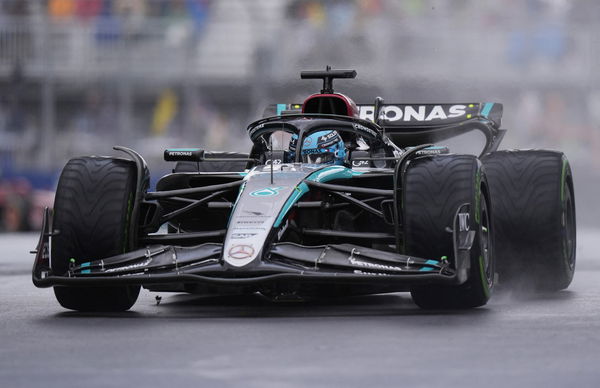
Formula One F1 – Canadian Grand Prix – Circuit Gilles Villeneuve, Montreal, Canada – June 7, 2024 Mercedes’ George Russell during practice REUTERS/Mathieu Belanger
Because 12 of the 22 cars on the 2026 grid will be powered by Mercedes or Ford/Red Bull engines. If this loophole stands, it could tilt the competitive balance before the season even begins, directly undercutting the FIA’s goal of closer racing in the new era.
On the other hand, a compromise would allow Mercedes-powered teams to race with a non-compliant engine, provided they return to compliance in 2027. However, this is a solution that other teams oppose. In other words, this isn’t just a technical debate. It’s a potential pecking-order setter.
Mercedes turns up the volume
Continuing with F1 news, while the paddock argues over loopholes and legality, Mercedes is doing something far more deliberate: letting the engine speak for itself. The team recently dropped a teaser of its 2026 power unit sound on social media, giving fans an early sensory glimpse into the next era.
For a fanbase that still remembers Mercedes obliterating the field at the start of the hybrid era in 2014, the message was subtle but clear: don’t count us out. Mercedes wasn’t alone in playing the sound card. Honda also shared a teaser of its 2026 engine, signaling that power unit development is well underway across the grid.
Still, given Mercedes’ history of nailing regulation resets, every small hint coming out of Brackley is being dissected under a microscope. Adding to the intrigue is the optimism coming from inside the garage. Mercedes driver Kimi Antonelli, just 19 years old, has already had a close-up look at the 2026 project and likes what he sees.
“I’ve done a lot of simulations, but you know, it’s still early to say how the car will perform the first time I get on the track. So, I have to say that I’m excited. I can’t wait to start with the 2026 car because I saw the car evolve in the wind tunnel, I went to see the engine project, and it all seems very promising,” Antonelli said.
The timing of all this is no coincidence. The 2026 campaign officially begins with a closed-door test in Barcelona from January 26–30. This will be followed by two public testing sessions in Bahrain from February 11–13 and February 18–20. Mercedes, notably, is still one of three teams (along with Williams and McLaren) yet to announce its official car launch date.
Between the engine teaser and the regulatory drama, Mercedes is making one thing clear: it intends to be at the center of F1’s next era — whether rivals like it or not.