Reuters
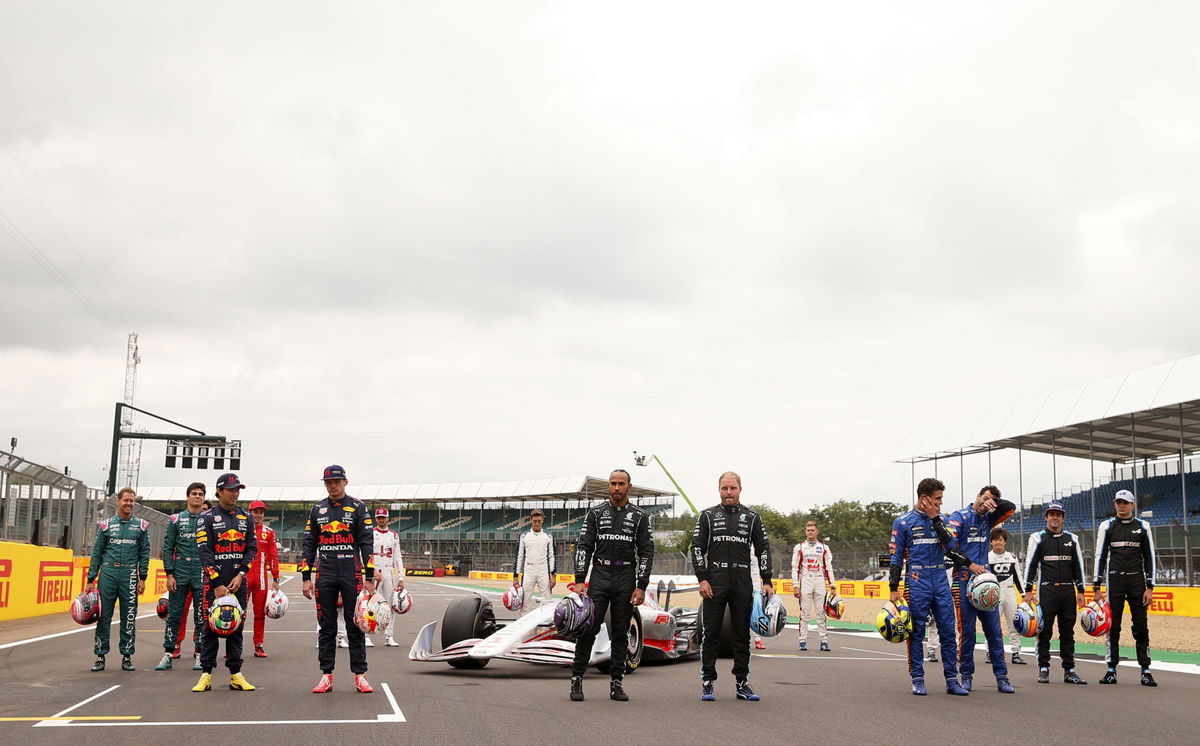
Formula One F1 – British Grand Prix – Silverstone Circuit, Silverstone, Britain – July 15, 2021 (L – R) Alpine’s Esteban Ocon and Fernando Alonso, McLaren’s Daniel Ricciardo and Lando Norris, Mercedes’ Lewis Hamilton and Valtteri Bottas, Red Bull’s Max Verstappen and Sergio Perez and Aston Martin’s Lance Stroll and Sebastian Vettel pose during a promotional photoshoot for the unveiling of the new 2022 F1 car REUTERS/Andrew Couldridge
Reuters
Formula One F1 – British Grand Prix – Silverstone Circuit, Silverstone, Britain – July 15, 2021 (L – R) Alpine’s Esteban Ocon and Fernando Alonso, McLaren’s Daniel Ricciardo and Lando Norris, Mercedes’ Lewis Hamilton and Valtteri Bottas, Red Bull’s Max Verstappen and Sergio Perez and Aston Martin’s Lance Stroll and Sebastian Vettel pose during a promotional photoshoot for the unveiling of the new 2022 F1 car REUTERS/Andrew Couldridge
The coming generation of Formula 1 cars will be the most revolutionary and most ambitious yet. The whole car gets a new trim, and by trim, literally a trim. Because the new car is refined in every possible way on the surface, be it the wings, the side, the body, it is very different.


But one thing that fans would’ve noticed is that along with being more ‘smooth on the eye’ (and hopefully for racing as well), the 2022 car looks bigger compared to the 2021 car.
Watch What’s Trending Now!
And this is because the new car only ‘looks’ bigger but it isn’t ‘actually’ bigger. Or in other words, aesthetically, the car appears bigger.
Reuters
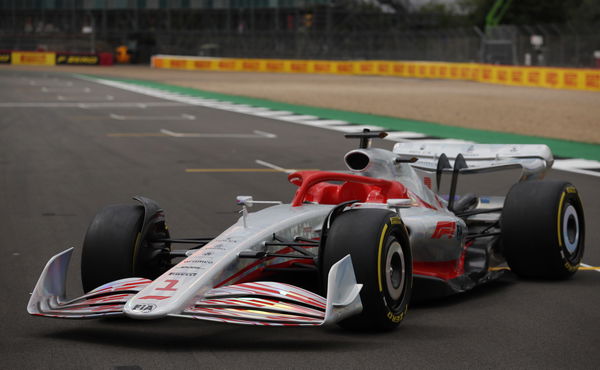
Formula One F1 – British Grand Prix – Silverstone Circuit, Silverstone, Britain – July 15, 2021 The new 2022 F1 car is unveiled during a promotional photoshoot REUTERS/Andrew Couldridge
So now one would wonder, “Well, why does it appear bigger anyway?”
That is primarily because of the new 18-inch wheels that replace the outgoing 13-inch wheels. The new wheels will be 9% taller with an increased diameter of 720 mm from 660 mm.
Also, with the aggressive styling of the new car and almost all its body components that are designed and positioned in a way to improve the aerodynamic performance as well as reduce the dirty air for the driver who is behind, the new car appears bigger.
But in reality, on paper, there’s not much of a difference.
Yet there’s one element of the car that is increasing massively in 2022.
Formula 1 cars continue to get heavier
Since 2009, every year the F1 cars have increased in weight and we’ve come a long way since.
In 2009, the weight of the car was 609 kg but now, in 2022 it will be 792 kg. That is a massive increase for an 11 year time period because the difference between the 2009 and 1998 car was a mere 5 kg.
But if you consider the difference between the 2022 and the 2021 car, it is massive as well. The 2021 car weighed 751 kg and in the coming season, there is a 39 kg increase.
Now, this is again down to the bigger and wider wheels, primarily. But the other factors that have contributed to this increase are safety measures in the new car.
In 2026, we will see another big change in F1 cars. But will the coming generation of F1 cars become smaller this time?
According to Ross Brawn, the cars could get smaller, but they won’t necessarily be lighter.“We think with the spec that’s evolving for ’26 there’ll be a very real chance of having a more compact car,” he said.
Also Read: The Closest Finishes in Formula 1 History Including Two Battles of Lewis Hamilton
