Imago
NASCAR, Motorsport, USA Coke Zero Sugar 400 Aug 23, 2025 Daytona Beach, Florida, USA Drivers get the green flag to start the Coke Zero Sugar 400 at Daytona International Speedway. Daytona Beach Daytona International Speedway Florida USA, EDITORIAL USE ONLY PUBLICATIONxINxGERxSUIxAUTxONLY Copyright: xMikexWattersx 20250823_tbs_sk4_324
Imago
NASCAR, Motorsport, USA Coke Zero Sugar 400 Aug 23, 2025 Daytona Beach, Florida, USA Drivers get the green flag to start the Coke Zero Sugar 400 at Daytona International Speedway. Daytona Beach Daytona International Speedway Florida USA, EDITORIAL USE ONLY PUBLICATIONxINxGERxSUIxAUTxONLY Copyright: xMikexWattersx 20250823_tbs_sk4_324
62 days more before the crown jewel of NASCAR roars back to life at Daytona International Speedway. For more than six decades, the NASCAR Daytona 500 has been the sport’s ultimate proving ground. It’s a place where legends are made, careers are defined, and history is written at 200 mph. From Richard Petty’s dominance to Dale Earnhardt’s emotional 1998 triumph, Daytona carries a weight unlike any other race. But the upcoming excitement is paired with unease.
Watch What’s Trending Now!
Fans are buzzing not just about contenders and storylines, but primarily about the safety. They question today, that despite all the significant improvements in safety, is NASCAR doing enough to stay ahead of any hidden risks?
NASCAR Daytona 500 return raises safety concerns
If you take a look back at NASCAR’s early years, then you’ll find that safety was often an afterthought rather than a priority. You had drivers racing without full-face helmets, proper fire suppression systems, or energy-absorbing barriers. Then, the tracks, too, were lined with concrete walls, cars were built more for speed than survival, and the culture leaned heavily on toughness over caution.
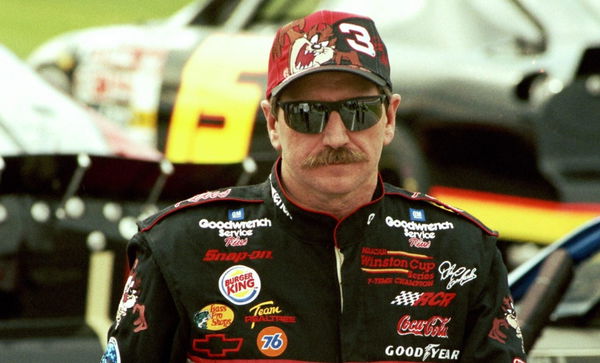
Wrecks were brutal (to put it in a simple way), injuries were common, and fatalities (while never normalized) were grimly accepted as part of the sport’s risk. However, that mindset was shattered on February 18, 2001. On the final lap of the NASCAR Daytona 500, Dale Earnhardt Sr. crashed in Turn 4. What initially looked like a ‘routine’ superspeedway accident turned fatal, as the seven-time champion succumbed to basilar skull fractures.
The loss of NASCAR’s biggest icon sent shockwaves through motorsports and forced the industry into an uncomfortable but necessary reckoning. Earnhardt’s death became the catalyst for sweeping change. NASCAR accelerated the development and mandatory use of the HANS device, reinforced seat and belt systems, improved cockpit padding, and introduced the SAFER (Steel and Foam Energy Reduction) Barrier at major tracks, including Daytona.
USA Today via Reuters
Mark J. Rebilas-USA TODAY Sports
Car designs evolved to better manage impact forces, and data-driven crash analysis became central to safety planning. The result was a measurable reduction in life-threatening injuries over the following decades. Yet safety in NASCAR has never been a finished project. As cars get faster and competition tighter, new concerns continue to surface.
And that’s where today’s debate begins. Because fans are once again asking hard questions. On Reddit, a simple but chilling prompt has sparked intense discussion: What’s the biggest safety flaw in NASCAR right now that could be responsible for a fatal crash?
The answers reveal a community that remembers the past and refuses to ignore warning signs in the present.
Fans spell out NASCAR’s most alarming safety gaps
As the 2026 Daytona 500 inches closer, the responses to the aforementioned Reddit question weren’t dramatic hypotheticals. They were grounded fears, rooted in history and in what fans see every single weekend. Pit road topped the list almost unanimously. One fan put it bluntly: “100%. We have crew guys running out on pit road with cars at highway speeds driving just a couple feet away.”
While NASCAR does enforce pit road speed limits, they vary by track. Superspeedways like Daytona and Talladega are capped at 55 mph, intermediates around 45 mph, and short tracks near 30 mph. Even at those limits, the margin for error is razor-thin when crew members step into traffic. One mistimed release or a car getting pinched, and the consequences could be catastrophic.
That concern only grows at tracks like Daytona and Talladega. As another fan pointed out, “Exposed pit roads at Daytona and Talladega. One day they’ll be an accident coming out of turn 4 while green flag stops are taking place, or going across the trioval similar to Steve Park’s accident, either of them will be catastrophic.”
During the 2001 NASCAR Daytona 500, Park was one of eighteen cars involved in a crash that happened on Lap 173. He escaped unhurt. And it was during the same race that, on the final lap, Dale Earnhardt suffered the fatal crash. Fans are concerned that while Park escaped unharmed, another driver might not be as lucky.
Another recurring theme was aggressive driving. “Jacka– driving from drivers that don’t fear for their safety like they used to,” a fan explained. And their concern is justified. The 2025 season offered examples, including Carson Hocevar’s overly aggressive moves at Atlanta that drew the ire of Kyle Busch. From a safety standpoint, desperation blocks and late dives into tight packs increase the odds of massive, unpredictable wrecks.
Then came the darkest fear: roof-first impacts into the catch fence. “My biggest fear is a car getting over or through a catch fence and going into the stands. We’ve been close several times. I hope it never happens.”
And history has shown how terrifying such crashes can be. Russell Phillips’ fatal 1995 crash at Charlotte, where his body became entangled and was mutilated by the track’s steel catch fence and light fixtures, remains one of NASCAR’s most horrifying reminders of what can go wrong.
Finally, fans questioned the single-lug wheel system. “With the number of wheels that have fallen off since the introduction of this car it’s amazing to me that one hasn’t ended up in the stands yet,” said a fan.
Since its 2021 introduction, wheels coming loose have become alarmingly common. As recently as the March 2025 Pennzoil 400, Kyle Busch’s No. 8 Chevrolet lost a right-rear wheel and slammed the wall. The unsettling thought? One of those wheels hasn’t reached the grandstands. Yet (thankfully and hope it doesn’t in the future too).
For fans, these aren’t complaints. They’re warnings. Let’s hope NASCAR’s listening.