
Imago
Credit-Imagn Images
Imago
Credit-Imagn Images
Essentials Inside The Story
- A rare public rebuttal puts the league on the defensive.
- Player complaints, analytics, and league data collide.
- Why this injury debate isn’t going away anytime soon.
The NBA rarely responds directly to media criticism. When it does, it usually means the league feels cornered. That’s exactly what happened after Golden State Warriors head coach Steve Kerr raised alarm bells about the NBA’s pace, schedule, and rising injury concerns, comments that gained traction following early-season injuries to stars like Giannis Antetokounmpo and Stephen Curry.
Watch What’s Trending Now!
When an analysis by The Athletic’s John Hollinger added the NBA Cup to the discussion, the league stepped in with an unusually forceful rebuttal.
The NBA insists the schedule is not to blame. Kerr, however, sees a very different reality on the ground.
Steve Kerr sounds the alarm on pace and wear-and-tear
Kerr’s concern goes beyond bad luck or isolated injuries. He believes the modern NBA is pushing players closer to the edge. According to Kerr, today’s game moves faster than ever. Tracking data supports that claim.
The league is playing at its quickest pace in decades, with players covering more ground at higher speeds than at any point since player tracking began in 2013.
That pace, Kerr argues, comes with a cost. Teams play almost every other night. Practices disappear. Recovery windows shrink. During one recent Warriors road stretch, Kerr said his team went more than a week without a full practice while playing nonstop across multiple cities.
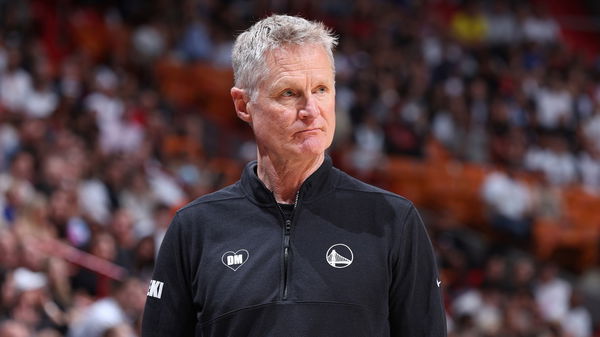
Then came the injuries. In a short span, several stars suffered soft-tissue issues in their groins, calves, and hamstrings. Kerr pointed to the pattern, not just the names.
“The wear and tear, the speed, the pace, the mileage,” he said, all factor in. Kerr has long pushed for a shorter season. He believes fewer games would allow better recovery and reduce injuries. He also admits the financial reality makes that solution unlikely.
The NBA Cup Enters the Conversation
John Hollinger added another layer to the debate. In The Athletic, he questioned whether the NBA Cup created early-season scheduling strain.
Hollinger did not argue that the league added games. Instead, he focused on how games were arranged. Some teams faced awkward travel patterns, including one-game homestands sandwiched between road trips. Others logged heavy early workloads before the end of December.
The Athletic’s suggestion that an increase in games missed by star players is related to the early-season schedule is inaccurate and misleading. https://t.co/vaZbT9p1pV
Here are the facts: pic.twitter.com/OMhCqrjVz5
— NBA Communications (@NBAPR) December 11, 2025
Hollinger suggested that, although the total number of games remained the same, the rhythm felt harsher. He also noted a visible uptick in early soft-tissue injuries, raising the question of whether schedule distribution, not volume, played a role.
That suggestion drew the league’s attention.
The NBA responded quickly and publicly. League spokesperson Mike Bass called the claims “inaccurate and misleading.” He pointed to league-wide numbers to support the rebuttal.
Through the first 42 days of the season, the NBA played 308 games. Last season, the number was 307. According to the league, those totals match pre–NBA Cup years as well. From the NBA’s view, the Cup did not create a denser schedule.
The league also pushed back on injury claims. Bass stated that injuries forcing star players to miss games are at a six-year low and have decreased by more than 25 percent year over year.
He added that many star absences stem from injuries suffered late last season, not from the current schedule.
The message was clear: the data does not support the blame.
Why the Debate Isn’t Settled
Independent injury tracking complicates the picture. Soft-tissue injuries, especially calf strains, have increased early this season. The number of games missed due to calf issues has risen sharply compared to the same point last year.
Teams are also keeping players out longer as a precaution, which inflates the number of games missed, even when injury counts remain flat.
Last season matters too. The 2024–25 campaign already set modern records for games lost to injury. This season has tracked close to that pace early on. In that context, the NBA may not be facing a new injury crisis but rather an ongoing one.
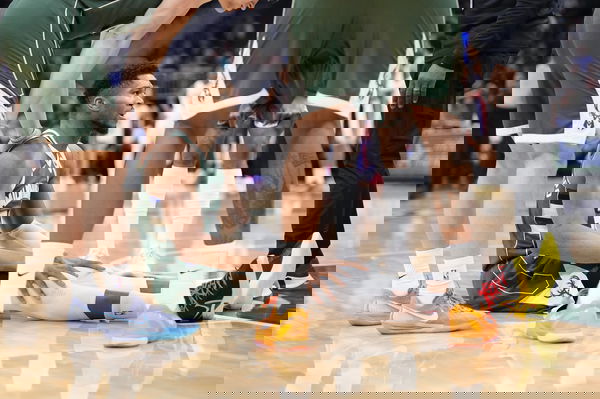
Imago
Dec 3, 2025; Milwaukee, Wisconsin, USA; Milwaukee Bucks forward Giannis Antetokounmpo (34) goes down with an injury against the Detroit Pistons in the first half at Fiserv Forum. Mandatory Credit: Michael McLoone-Imagn Images
Star availability has also plummeted. Even if the league counts fewer “new” star injuries, fans still see stars sitting. That perception fuels frustration, regardless of how the data is framed.
Where the Truth Likely Sits
The NBA likely wins the argument on raw totals. The schedule has not been updated with games, and league-wide density appears to be stable.
Kerr and Hollinger, however, make a strong case for workload reality. Travel patterns, practice time, and game intensity matter. A schedule can feel harsher even if totals stay the same.
One point is not up for debate. The game is faster. Players sprint more, cut harder, and defend more space than ever before. Physical demand accumulates quickly over an 82-game season.
The NBA Cup may not be the villain. The schedule may not be broken. But the league’s margin for error keeps shrinking.
And as long as stars keep missing time, this debate isn’t going anywhere.
Written by

Edited by

Tanay Sahai