
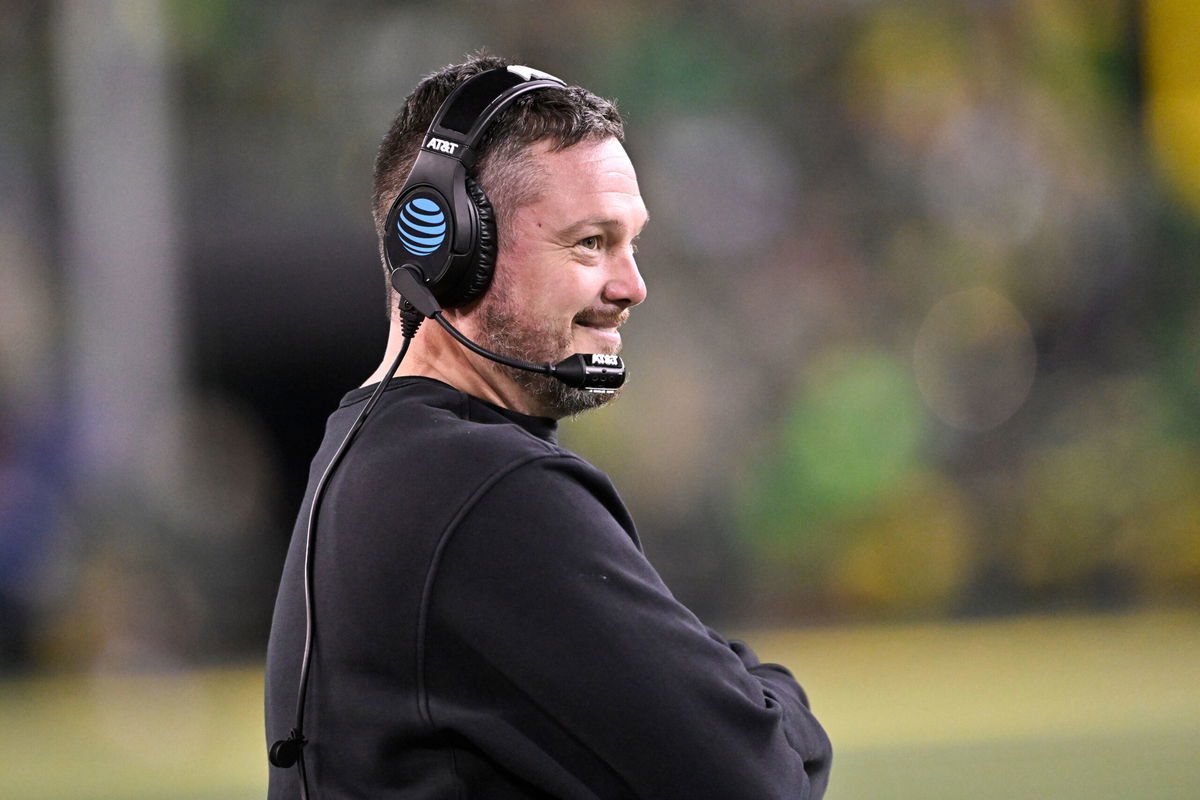
Dan Lanning’s Oregon program has filed a lawsuit against former defensive back Dakoda Fields, saying he still owes money after leaving the team for SEC powerhouse Oklahoma. According to court documents filed on May 15 in Lane County Circuit Court, Fields signed an agreement with Oregon when he decided to transfer to the University of Oklahoma, now a member of the SEC. It is rare to see a school take a former player to court instead of handling a dispute quietly behind closed doors.
Watch What’s Trending Now!
Under that agreement, he was supposed to pay the university $39,882.30 in exchange for being released from his contract with the team.
The lawsuit says both sides later agreed on a special deal that would lower the amount Fields had to pay. Oregon agreed to reduce the payment by $10,000 if Fields paid the money by April 20. This meant he would only need to pay $29,882.30 if the payment arrived before the deadline. However, the university claims Fields did not send the payment on time, so the discount no longer applied.

Now at OU, Fields is getting sued by his former school over nearly $30,000. Fields was supposed to pay Oregon by April 20. Will be interesting to see how this plays out.

NEW: Oregon is suing former football player Dakoda Fields for alleged breach of contract. @DailyEmerald 1st. #GoDucks oregonlive.com/ducks/2026/05/…
According to the court filing, Fields eventually paid $29,882.30 to Oregon, but the university says that amount was not enough because the payment was late. Oregon argues that because he missed the deadline, he still owes the extra $10,000 that was originally removed as part of the discount agreement. The university is now asking the court to make Fields pay the remaining amount.
The lawsuit also says Oregon wants more than just the unpaid $10,000. The university is asking for interest on the money as well as legal costs connected to the case. In the court documents, Oregon stated: “Pursuant to section 7 of the Contract, the University is entitled to reimbursement of its attorney fees, costs, and disbursements plus statutory interest of 9% from April 21, 2026, until paid.”
This means the university believes Fields should also cover attorney fees and pay 9% yearly interest until the full amount is paid. In simple terms, each month that the bill sits unpaid, the total keeps growing. What started as a five‑figure dispute could quietly become much more expensive over time.
The exact type of contract involved has not been publicly released. However, the agreement was likely tied to a revenue-sharing or NIL-related deal between Fields and Oregon. NIL stands for “Name, Image, and Likeness,” which allows college athletes to earn money through sponsorships and other business opportunities. Oregon state law protects the details of these agreements, so many parts of the contract have not been made public.
Fields later transferred to the University of Oklahoma after the 2025 season, joining a program that now plays in the SEC. He spent two years at Oregon but appeared in only one game. His move in the middle of the season, during heavy talk about NIL money, made his exit stand out even before the lawsuit landed.
Back then, Oregon coach Dan Lanning sounded worn out by how quickly players can leave. “He didn’t come to work today. We haven’t talked to Dakoda,” Lanning said. “So, I guess that’s just the way it goes nowadays.” Those words now echo louder with the school taking him to court. On Monday, a spokesperson for Oregon Athletics declined to comment further when asked about the lawsuit.
Part of a Larger College Football Trend
For years, players could move to a new school with little public drama. Now, some universities treat rosters more like company payrolls. They write big “buyout” clauses into NIL and revenue‑sharing contracts, so leaving early can trigger a bill.
Take the recent fight between the University of Cincinnati and quarterback Brendan Sorsby. After he left for Texas Tech, Cincinnati sued him, saying his NIL deal included a $1 million buyout if he transferred early. On top of that, Sorsby has entered treatment for a gambling addiction, and an NCAA investigation has put his future on the field in doubt.
A similar showdown unfolded between quarterback Darian Mensah and Duke. When Mensah pushed to transfer to Miami, Duke went to court and pointed to a multiyear NIL contract that it said should keep him in place. After weeks of legal back‑and‑forth, both sides reached a settlement that cleared the way for Mensah to join the Hurricanes.
For Dakoda Fields, a $10,000 dispute now hangs over his move to the SEC. For everyone else, this fight shows how college football has turned into a business, contract by contract, where a missed deadline can follow a player long after he leaves the locker room.