

It’s quite shocking to see how fast a player’s life can crash from performing in a packed stadium to surviving alone on the streets. Something similar happened to a former Indiana Hoosiers RB, Sampson James, after his football career ended. He never received an NFL call, and his life took a sudden shift. From being a star athlete, James is now fighting homelessness.
Watch What’s Trending Now!
The sports world was shocked when reports said Sampson James had been without a home for about seven months. After failing to make it to the NFL, he went through serious family problems and lost stable housing. To survive day-to-day, he worked low-paying jobs at Home Depot and Red Robin.
Indiana Hoosiers reporter Jared Kelly shared the harsh reality of Sampson’s situation on X: a picture of Sampson sitting quietly on a public bench, with all of his belongings packed inside an old Indiana Crimson backpack.
“‘I feel like I’m prepared and ready to tackle whatever challenge that I have ahead of me. I don’t know what’s ahead of me, but I’m ready for it, you know. So I’m leaving the past in the past, and I’m ready to move forward in life.'” James told Kelly.
Sampson’s crisis shows just how steep the drop-off can be for elite student-athletes when their playing days are suddenly over. In the college sports realm, players live in a structured bubble where their housing, daily performance meals, medical care, and schedules are completely managed by the university itself. The only thing they need to focus on is getting better on the gridiron.

Former Indiana RB Sampson James has experienced homelessness for the last seven months. He’s worked at Red Robin and Home Depot to support himself. A GoFundMe was created to help Sampson get back on his feet: gofundme.com/f/help-sampson… #iufb
However, the exact second a player’s athletic eligibility runs out, that entire multi-million-dollar support system completely vanishes. For athletes like Sampson who do not get drafted into the pros or complete their degree, they are instantly pushed out into the real world without a lot of direction or guidance.
Thankfully, the local sports community and Hoosier fans completely refused to let one of their former heroes suffer in silence once his reality came to light.
Following the viral social media posts, a verified crowdfunding campaign called the GoFundMe for Sampson James was launched by organizer Jasper Steinmetz. The fundraiser quickly gained traction, rallying 150% of its progress within days to raise 15,543 dollars out of a $10,000 goal. This fundraiser is a direct, practical rescue mission.
Folks in the community are trying to help him. They are raising money to find him safe housing, provide basic needs like clothes and shoes, and connect him with career mentors to find stable employment.
Sampson was a star at Avon High School just outside Indianapolis. He rushed for 3,451 yards and scored 38 rushing touchdowns and 41 total touchdowns during his high school career.
The scouts constantly compared him to NFL superstar Ezekiel Elliott. He was rated as a consensus four-star recruit and ranked as the #10 best running back in the entire country. He originally committed to national powerhouse Ohio State, but in a twist that few saw coming, he flipped his commitment to stay home and play for the Indiana Hoosiers. By doing so, he became the highest-ranked running back recruit in IU history. It didn’t take him long to show his talent.
When starting running back Stevie Scott got injured, James jumped in and delivered a big performance against rival Purdue. He rushed around for 118 yards and scored an important touchdown to win the Old Oaken Bucket. But in 2020, his playing time dropped a lot. He barely saw the field and finished his season with just 96 rushing yards on 32 carries in six games.
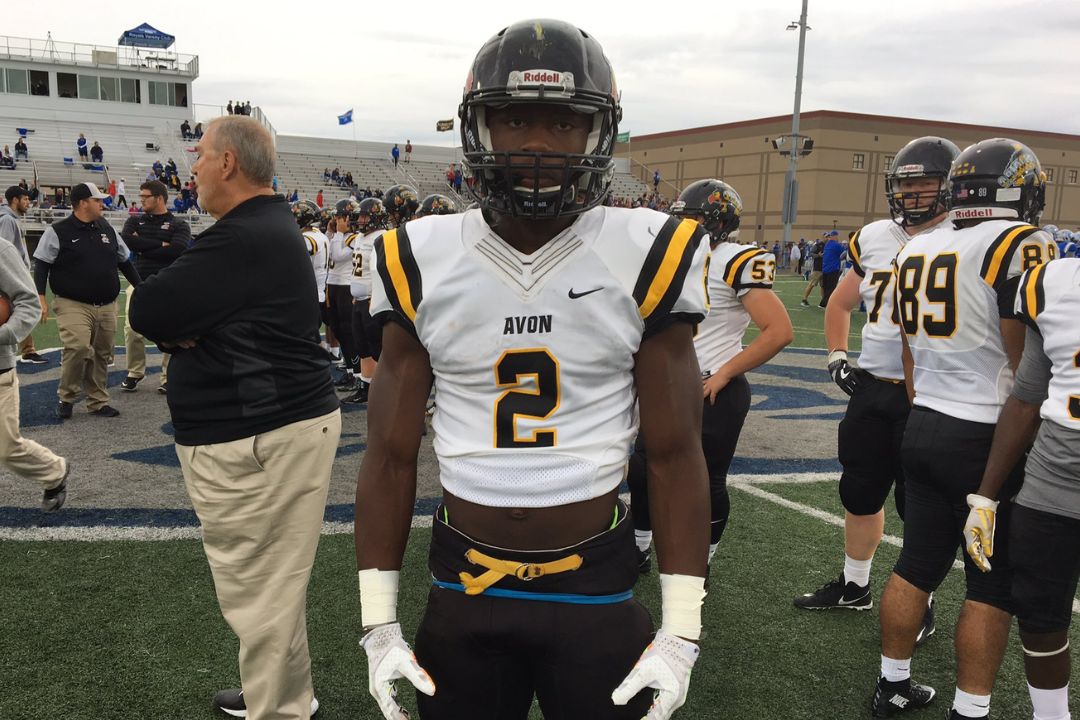
Imago
Credits: X
In 2021, James transferred to Purdue, looking for a fresh start. However, because he transferred late in August, he was ruled ineligible and couldn’t play that season. Things didn’t improve in 2022 either, as he stayed low on the depth chart and never appeared in a game. He then entered the transfer portal again in July 2022 without playing a snap for Purdue.
In 2023, James returned to Indiana as a walk-on, trying to restart his football career quietly. But in the end, his college eligibility ran out, and he did not make it to the NFL or any professional football league.
Sampson James’ story shows the consequences of committing to a sport and what happens if it doesn’t work out. His story also highlights the fact that these student-athletes are real people, not just entertainment for us on television screens. When their playing days end, many of them face serious problems in real life. It is good that the fans helped him quickly. But it also shows a bigger problem that needs attention. His story is a reminder that universities, athletic programs, and fans need to do more to help players when their football careers end and they transition into their normal lives.
However, this isn’t the first time a former football player has ended up homeless.
A vicious cycle?
The public is rallying around young players like Sampson James, but some older former players have faced even more tragic outcomes after their football careers ended.
Over time, Kevin suffered from depression and long-term physical pain from football injuries. Some experts believe he also showed signs of CTE, a brain condition caused by repeated hits to the head. This condition can affect memory, mood, and behavior, making daily life very hard. Sadly, without a proper safety net or help from the league, Kevin ended up living on the streets of Los Angeles.
Tragically, in January 2026, the 55-year-old former athlete was found dead at a homeless camp in South Los Angeles after suffering serious head and stab injuries. In the end, until sports organizations do more to help with housing and mental health, more former players could face similar struggles.