Imago
Image Credits: Imago
Imago
Image Credits: Imago
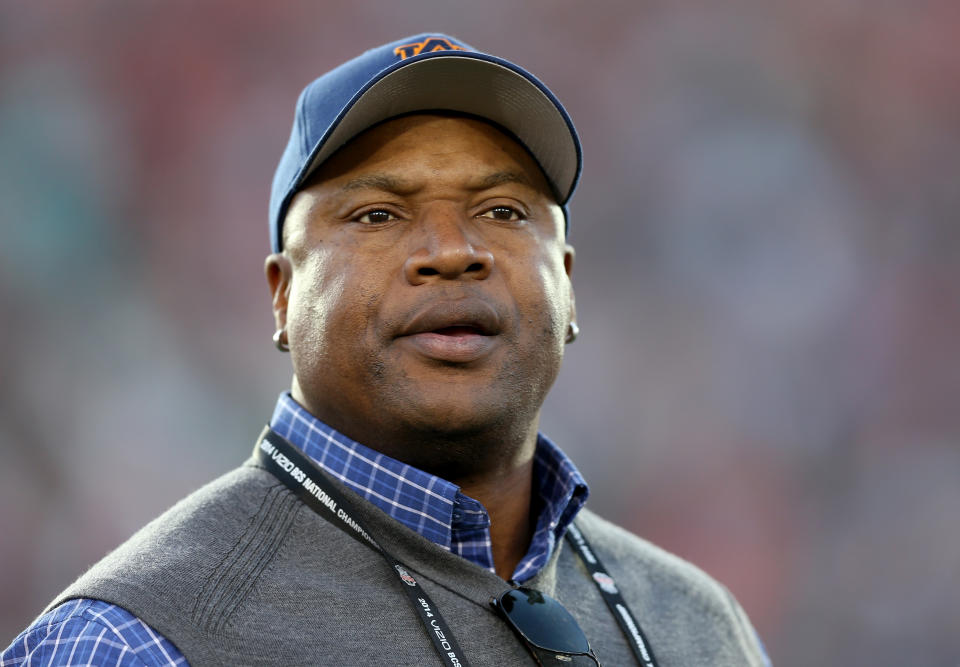
Before shortcuts, Bo Jackson did it the hard way during his time with the Auburn Tigers. Five seasons, 4,303 yards, 43 touchdowns, Jackson molded himself into the No. 1 pick in the 1986 NFL Draft, but nearly 30 years after stepping away from the sport, he is calling out the cracks and loopholes in modern college football. This is a sentiment now being echoed by coaching legends like Deion Sanders and drawing attention from lawmakers in Washington.
Watch What’s Trending Now!
“To be honest, I think it’s teaching young kids how to run away from their problems. Number two, it’s ruining college sports. You give me kids all this money, nobody have no financial sense,” Jackson said on The Big Podcast with Shaq. “You get pissed off because I yell at you for doing the dumb things on the field, so you’re gonna go enter the transport portal and take that money with you. No, it shouldn’t work like that.”
Jackson’s comments come in the wake of lawmakers proposing a framework or a policy, urging Congress to stabilize the state of college sports. His frustration stems from a dramatic shift in player mentality. In his era, the goal was to commit to a program and develop into NFL material over several years of eligibility in the same program to build themselves into NFL material. But with the NIL era coming in, they no longer care about development and only chase financial success.
Bo Jackson on NIL:
“It’s teaching young kids how to run away from their problems…It’s ruining college sports.”
Full episode ft. Bo Jackson & Barry Sanders: double check but https://t.co/s1v79jWUQw pic.twitter.com/6wXJ4evlrV
— The Big Podcast (@bigpodwithshaq) February 14, 2026
.png)
.png)
.png)
Under the current system, college football programs are restricted from paying an athlete directly. But does that stop players from transferring? No. The college football programs have the backs of booster-funded NIL funds. The pace of roster turnover in college football now outstrips even the NFL.
College football now moves faster than the NFL. Indiana’s championship roster featured 14 starters and key specialists who were portal imports, not homegrown recruits. The Philadelphia Eagles, on the other hand, won Super Bowl LIX by drafting and developing, adding just eight starters through trades or free agency.


The fact that Jackson points out how NIL is the weapon that is helping college football players run away from their problems reminds us of the latest legal cases. Both Tennessee’s Joey Aguilar and Ole Miss’ Trinidad Chambliss’s matters appear as if NIL makes staying in college more lucrative than a late-round NFL contract.
With NIL in play, if a player is not happy with the starting opportunities or coaching, he is free to leave. That’s why Jackson says that NIL is an escape route for college football players from facing their problems. In contrast, during Jackson’s time, transferring meant sitting out, losing momentum, or starting from scratch.
To bring more stability to college football, Senator Eric Schmitt has proposed a blueprint. It contains four pillars addressing different areas. Pillar One sets the stage by pushing for a single federal NIL rulebook, but Pillar Three dives into details, as it aims to reset NIL to its original mission, ending exploitation among college football athletes. The pillar fights for more transparency, tying deals to true market value, eliminating fake contracts.
Meanwhile, Colorado Buffaloes head coach Deion Sanders has joined the fight, demanding regulation in the college football landscape.
Deion Sanders’ push for fairness in college football amidst NIL chaos
College football’s latest era has turned into pure chaos, with tampering whispers everywhere, players breaking contracts and hopping to rival leagues, and a growing wave of legal battles challenging the NCAA eligibility rules. While Deion supports the financial stability NIL provides, Coach Prime demands a fair structure.
“I love it that the kids can be compensated, but there should be rules and guidelines for that compensation, to hold them accountable to that,” said Coach Prime.
The NIL era has created a clear incentive structure in college football, with players hopping programs to stretch their eligibility and maximize earnings. Carson Beck, in this, comes off as the biggest example. After five seasons at Georgia, Beck transferred to Miami and bagged a $4 million NIL package.
With this, the college football program that flexes the strongest financial muscle is also the one succeeding in the postseason race.
Back in 2024, CFP champion Ohio State had a NIL budget of around $35 million. Cut to 2026, the newly crowned national champion Indiana Hoosiers were in the “just under $20 million” NIL club. With legends and current coaches raising their voices against NIL, how will college football tread the chaotic trail?
Related Newsletters