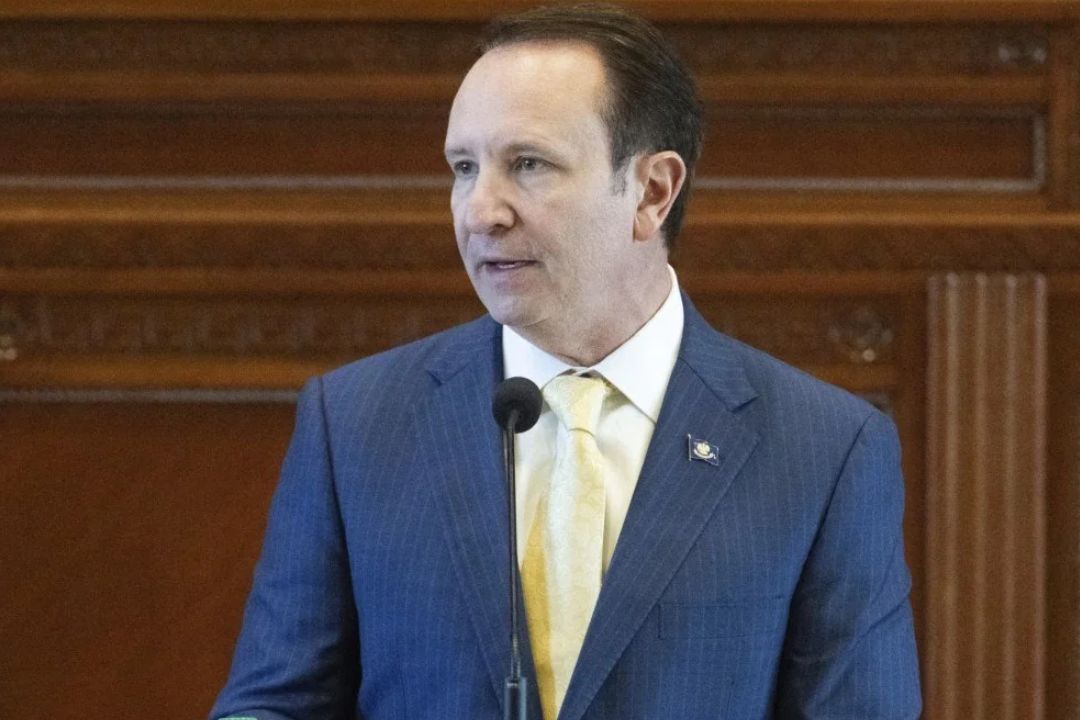
In a move that could send shockwaves through college football’s power structure, a sitting governor from an SEC powerhouse state is breaking ranks to challenge the very system that made his school rich. At the Smash Sports summit, attended by various trustees, donors, and presidents, LSU Governor Jeff Landry hinted at going against the power conferences like the SEC and the Big Ten.
Watch What’s Trending Now!
“A sitting governor is publicly supporting the Smash Sports plan for a new model of college sports,” reported YahooSports’ Ross Dellenger. “In an interview with @YahooSports, Louisiana Gov. Jeff Landry applauds LSU president Wade Rousse’s attendance at the meeting and calls the Smash plan a “common sense solution.”
So, what makes the Smash Sports plan create a ridge between the conferences? It is a private equity-backed crew of ex-television executives. They are now seeking votes from trustees, donors, and presidents to float a new-age model built around pooling FBS TV rights into one mega-package. Even though LSU belongs to the SEC, the Tigers’ governor attended a summit in Dallas a few days before their roundtable with President Donald Trump.
“We draft this memo to suggest a better set of strategies than has been available to them to date,” read the briefing memo by Smash Sports dated March 3, 2026. “We do this to empower the leaders of college sports to grow and safeguard college sports for generations to come.”
Landry views the current fragmented system as a financial disaster, pushing athletic departments toward bankruptcy. With sweeping compensation changes straining university budgets, he argues that without immediate centralized governance, widespread cuts to non-revenue and women’s sports are practically inevitable.

A sitting governor is publicly supporting the Smash Sports plan for a new model of college sports.
In an interview with @YahooSports, Louisiana Gov. Jeff Landry applauds LSU president Wade Rousse’s attendance at the meeting and calls the Smash plan a “common sense solution.”
— Ross Dellenger (@RossDellenger) March 3, 2026
The Dallas event was attended by programs like LSU, Texas Tech, Penn State, among others. Landry even praised LSU president Wade Rousse, for coming forward in this fight for financial stability, even though other SEC programs stand firmly against this proposal.
So, right now, any Power Five program’s schedule has lower-tier opponents early in the season for safer wins. Smash’s model would encourage more marquee clashes in order to drive in higher ratings and more fan engagement. LSU’s governor and president supported how Smash guarantees increased annual distributions to all 138 FBS schools. At the same time, it lets conferences keep their authority over who gets the biggest portion.
“College football is leaving billions of dollars on the table, and unifying the media rights is the only way to capture this money,” said Landry in his statement. “Everyone should get a proportional share based on their value of a much bigger pie, and when we do this, LSU, the SEC, and all other schools and conferences will make far more than we ever could. Who could be against that? This is a common-sense solution that all conferences should explore.”
The SEC and the Big Ten already command multi-billion-dollar exclusive television agreements, granting them unparalleled financial supremacy. Both conferences are cashing in on record-smashing media deals that dwarf the rest of the FBS. Landy’s push for a pooled mega-package directly threatens this autonomy, as power conferences fiercely reject subsidizing smaller programs and diluting their own premium payouts.
Landry’s support is notable given LSU’s secure position within the SEC, but he argues that if all of college football sells its TV rights together, the overall deal could be worth significantly more than separate conference deals. In that way, the Tigers must be in support of Texas Tech billionaire’s plea.
LSU Tigers’ governor Jeff Landry fights for the same cause as Texas Tech booster
Parallel to Smash Sports’ plan, there has been another campaign. It started with the help of Texas Tech billionaire Cody Campbell. He came up with a “Save College Sports” (SCS) proposal in an attempt to fix the imbalance in media rights.
By explicitly championing Cody Campbell’s legislative push, Landry aligns with the specific strategy to amend the 1961 Sports Broadcasting Act. He agrees that granting college football an NFL-style antitrust exemption is the ultimate financial lifeline needed to collectively negotiate and maximize television rights. But college football is far removed from it. Here, the Big Ten negotiates solo, while the SEC goes its own way.
So, Campbell argued that if college sports gained the same legal protection, turning into a unified model, that could unlock a $7 million boost. However, this proposal, too, faced rejection from the power conferences. They released an eight-page memo titled “Preserving Autonomy and Stability in College Sports: Why Media Rights Pooling and SBA Reform are Misguided.”
Since the LSU Tigers’ governor is now fighting for centralization, that brings him to support Campbell’s proposal. Jeff Landry claims that even in a unified model, the programs could make more money. But no matter who supports the cause and goes against it, everything depends on Congress for approval.
Related Newsletters