Imago
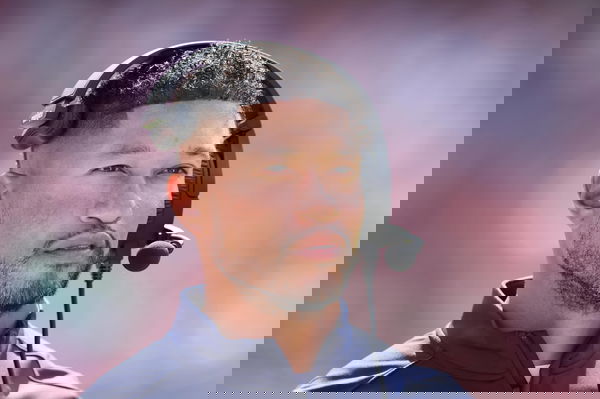
NCAA, College League, USA Football: Notre Dame at Arkansas Sep 27, 2025 Fayetteville, Arkansas, USA Notre Dame Fighting Irish head coach Marcus Freeman during the fourth quarter against the Arkansas Razorbacks at Donald W. Reynolds Razorback Stadium. Notre Dame won 56-13. Fayetteville Donald W. Reynolds Razorback Stadium Arkansas USA, EDITORIAL USE ONLY PUBLICATIONxINxGERxSUIxAUTxONLY Copyright: xNelsonxChenaultx 20250927_cec_sc6_213
Imago
NCAA, College League, USA Football: Notre Dame at Arkansas Sep 27, 2025 Fayetteville, Arkansas, USA Notre Dame Fighting Irish head coach Marcus Freeman during the fourth quarter against the Arkansas Razorbacks at Donald W. Reynolds Razorback Stadium. Notre Dame won 56-13. Fayetteville Donald W. Reynolds Razorback Stadium Arkansas USA, EDITORIAL USE ONLY PUBLICATIONxINxGERxSUIxAUTxONLY Copyright: xNelsonxChenaultx 20250927_cec_sc6_213
Will Schweitzer’s dream of playing for Notre Dame was shattered by a diagnosis that attacked his heart, but it was that same vulnerability that forged an unbreakable bond with his coach, Marcus Freeman. While he was forced to change his career plans, the Fighting Irish head coach stood by his side, as they shared the same fate.
Watch What’s Trending Now!
“I definitely want to highlight coach Freeman in a good light here,” Schweitzer shared with Blue & Gold. “It’s something I want to make sure — he was of the more ‘in my corner’ type of people. And he was there for me through it all, and he understood, and he continues to impact in my life.”
Schweitzer’s Fighting Irish chapter was limited to 37 snaps, 17 grinding on special teams, and 20 cameo appearances during his 2021 freshman season. Unfortunately, that chance never came as the stroke happened in 2022, bringing his college football career to an end.
Back then, Freeman was stepping into a new role from defensive coordinator to head coach, replacing Brian Kelly. In this transition process, he and his staff were present for Schweitzer from day one. A few months later, Freeman called him into his office. Even though he’s seen the head coach as a mentally strong person, for the first time, he saw visible sadness in Freeman’s eyes as he disclosed the decision to Schweitzer.
“He told me, ‘After speaking with the doctors and the team, they came to the conclusion that, at least at Notre Dame, it wasn’t going to be football for me anymore. There were too many question marks and too many risks involved,” shared the player.

After surviving a stroke and medically retiring, Will Schweitzer was told the congenital hole in his heart had “completely disappeared” — and football was back on the table.
He had already decided life was bigger than football.@EHansenND has more: https://t.co/WzEKfC6DCq pic.twitter.com/sQ2UMpjwrk
— BlueandGold.com (@BGInews) March 3, 2026
Marcus Freeman didn’t rely on hollow coach-speak; he offered empathy rooted in deferred dreams, as an enlarged heart valve ended his own NFL aspirations in 2010. Their shared experience, being forced from the game by their own hearts, created a unique bond between player and coach.
Lying in that hospital bed, the defensive end made a vow to prioritize his health over football glory. Even though doctors forced him to medically retire, he honored the decision. However, he carried a part of Freeman’s teaching with him. After graduating from Notre Dame with a business degree in management consulting, the former defensive end now works at Databricks, a software development, data, and AI firm.
But he confessed that when he was going through the interview process for his current job, he texted Freeman the premise of his presentation. It revolved around a mindset he learned at Notre Dame under Freeman’s leadership.
“I texted him the whole premise of my interview presentation, the golden standard, something I learned from him at Notre Dame,” shared Schweitzer. “Like, how I do everything is how I do that. And that’s continued past Notre Dame. So I definitely don’t want to put the coaching staff in a bad light there.”
Reaching out wasn’t a casual update, as it was a powerful message with a profound thank-you moment that proved Freeman’s leadership wasn’t wasted on a sidelined player. By texting Freeman a Databricks presentation anchored by Notre Dame’s “golden standard.” Schwartzer made it clear that those locker room lessons became the exact blueprint for his corporate success.
Freeman, standing as a moral support for players forced to medically retire, is not a rare sight. When freshman offensive lineman Joey Tanona medically retired in 2022 after a winter car crash, the Irish head coach stepped in with steady guidance.
“Although it looks like you’re not going to be able to play football right now, you continue to work hard and get your degree, and your life still has a very positive outlook in front of you,” advised Freeman.
Freeman’s empathy comes from experience. He’s felt the sting of having the game taken away, too.
Marcus Freeman’s story of giving up his playing career
The Chicago Bears used a fifth-round pick in the 2009 NFL Draft on Freeman. He had picked up the reputation of being a fast and physical linebacker from the Ohio State Buckeyes football team. Freeman had already impressed Lovie Smith. But with the linebacker room stacked with talent, the Bears ultimately released Freeman after the preseason.
There were thoughts about a turnaround in the next year, but that did not happen since Freeman had to retire. Just four days after falling in Super Bowl XLIV, the Colts were ready to bring Freeman aboard. However, as the now Notre Dame head coach underwent a routine physical examination, it led to an additional four hours of tests on his heart, which included stress tests and a cardiac MRI. At the end of the examination, Freeman was informed that he had an enlarged heart valve in his left ventricle. Indianapolis couldn’t sign him, nor could any NFL team.
But the Notre Dame head coach has clearly set an example about how one must keep pushing no matter what life throws at them.
“You look at that, that’s probably (12) years ago, and it hasn’t stopped me from working out and running and pushing myself,” shared the head coach. “But the element of the unknown is like, OK, you have an enlarged heart valve, does that mean I’m going to die? So that was the one scary part about it. But it’s been fine.”
Marcus Freeman’s impact stretches far beyond the gridiron. He has been a pillar in moments of pain, and he stays connected even when his players are no longer part of the program.