
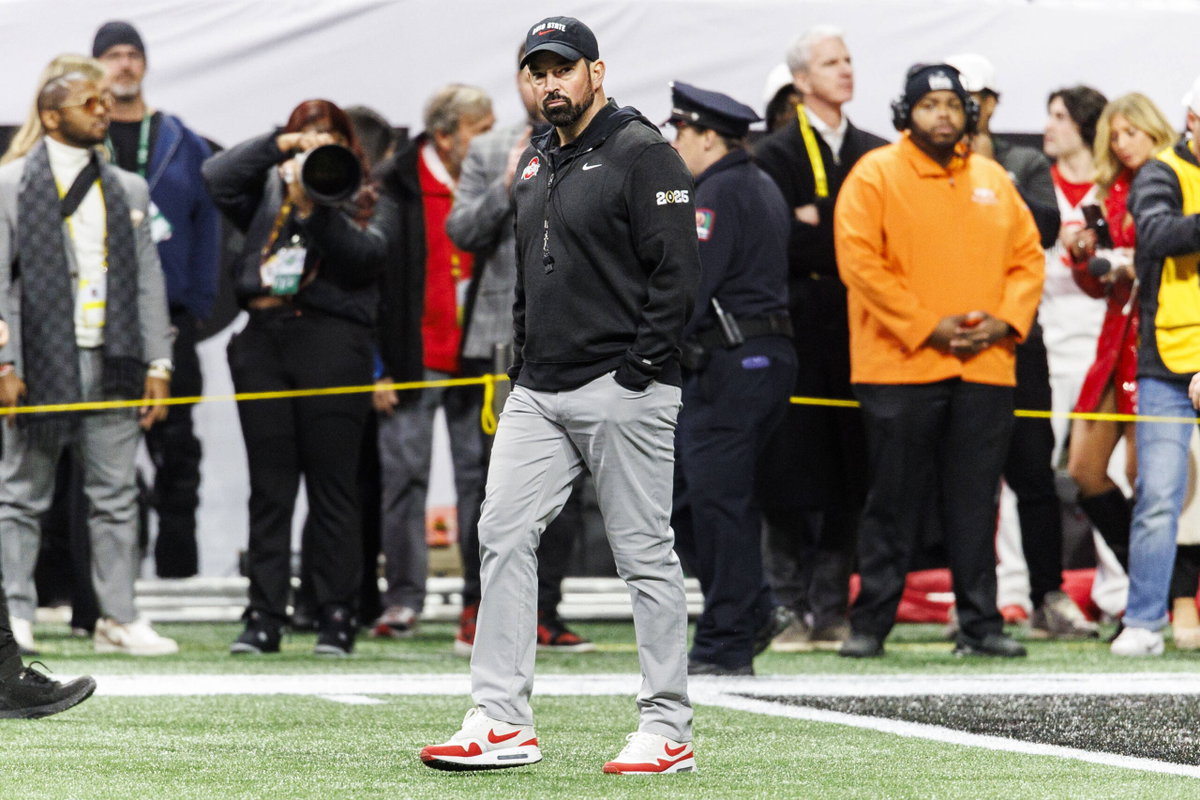
Ohio State wants the biggest names in college football, but Ryan Day has a growing problem. Finding elite powerhouses willing to sign on the dotted line is turning into an uphill battle. Outside programs simply do not want the risk of facing the Buckeyes.
Watch What’s Trending Now!
Ohio State athletic director Ross Bjork made that clear while discussing the Buckeyes’ future nonconference schedule. With Alabama and Georgia already locked into future home-and-home series, Ohio State has shown it has no fear of stacking its schedule with heavyweight opponents. Texas is another example, with the Buckeyes traveling to Austin in 2026 to finish their current home-and-home series.
“Ohio State should never shy away from an Alabama, a Georgia [game] that we have coming up or a Texas; we should still try to schedule those games.” The Ohio State AD Bjork said during his appearance on the ‘97.1 The Fan’ podcast. “There’s not a lot of willingness, honestly, to play Ohio State past 2030, and we have Georgia.”
With the SEC moving to nine conference games and the Big Ten expanding, athletic departments are playing it safe. A single nonconference loss to Ryan Day’s squad could derail a team’s College Football Playoff hopes. As Bjork explained, without clear data on how hard schedules are weighed, athletic directors refuse to gamble.
“We’re asking, ‘Hey, give us some data,’” Bjork explained. “And nobody seems to have some formula on what those games will mean in the future.”
That uncertainty could become a major factor in how college football’s biggest programs build their schedules.
Ohio State already has some heavyweight matchups on the books. The Buckeyes are set to host Alabama in 2027 before heading to Tuscaloosa in 2028. After that, they will then start a home-and-home series with Georgia in 2030, followed by a return game in Columbus in 2031.
But Bjork made it pretty clear that Ohio State isn’t going to sit around and wait for those big games to happen. The Buckeyes want to keep having conversations about future matchups. From the outside, scheduling a big opponent might seem as easy as picking up the phone and setting a date.
But in reality, both schools have to agree to the game, sign a contract, and take on the risks that come with putting two top teams on the same schedule. “So it’s not like people say, ‘We’ll just schedule these games,” Bjork said. “Well, the other team has to actually sign a contract, too.” Ohio State has already made some changes to its future schedule.
The Buckeyes added Navy and Youngstown State to the 2029 schedule while moving Nevada to 2030. They currently have one nonconference spot open in 2030, along with their scheduled trip to Georgia.
But then again, it’s fairly understandable why elite SEC teams don’t want any beef with the Buckeyes. Steve Sarkisian’s Texas Longhorns know that better than anybody since losing to Ohio State in the 2025 season opener cost them a playoff spot.
Since 2023, the Buckeyes have only had six losses and 37 wins, the second-best record in all of college football, behind only the Oregon Ducks, who have one more win and one fewer loss.
There’s a pretty good chance the SEC’s top teams wouldn’t want to run it back once they finish with their home-and-away series.
While tests against Big Ten powers like Oregon and Indiana keep the schedule tough, Ohio State wants national blockbusters. But until college football provides clarity on postseason math, fewer elite programs are willing to sign contracts past 2030, leaving Ryan Day and Ross Bjork with a severe shortage of willing partners across the country.