
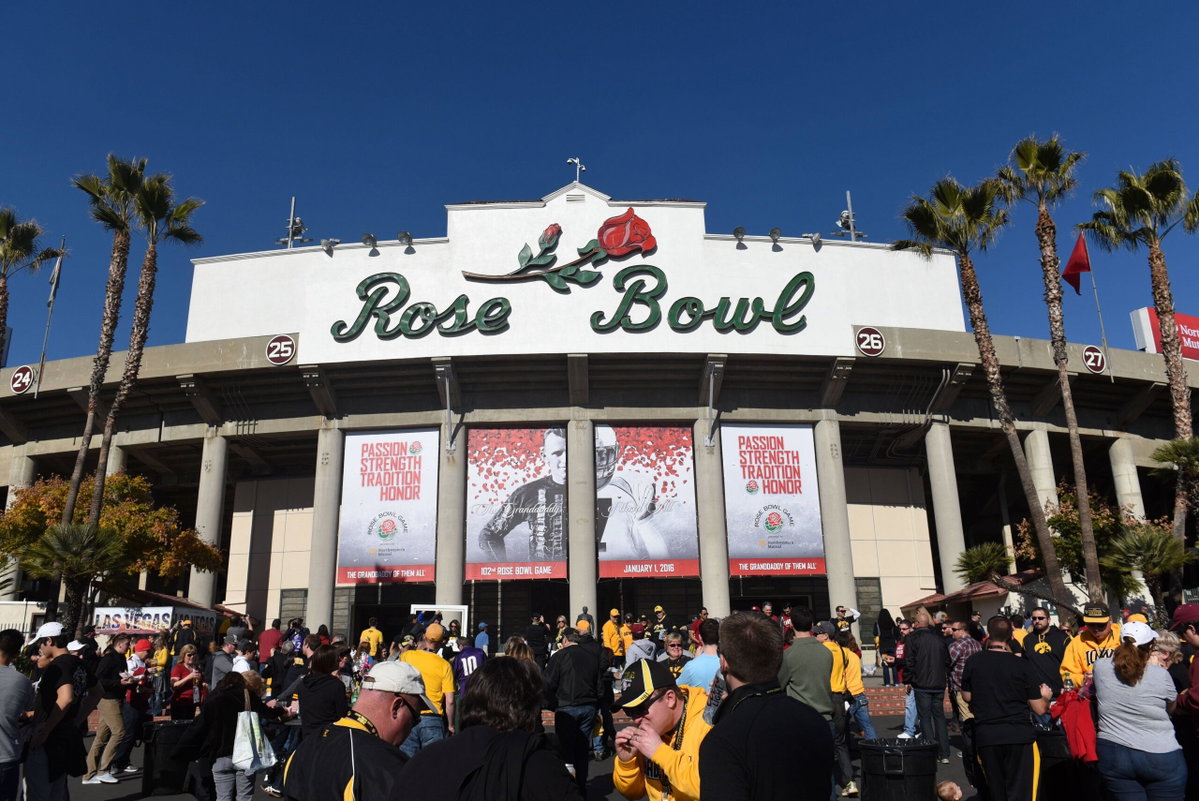
The College Football Playoff has just locked in its quarterfinal and semifinal sites through the 2031 season, and one historic bowl is set to keep its place on the calendar exactly where fans expect it.
Watch What’s Trending Now!
According to CBS Sports, the Rose Bowl successfully fought to stay out of the semifinal rotation, preserving its historic New Year’s Day afternoon kickoff. If it had stayed in the semifinal rotation, television networks would have forced the game to move its kickoff time around depending on the year, which bowl organizers absolutely refused to do.
So, they will not do the semi-finals there. The Rose Bowl will act strictly as a playoff quarterfinal venue from now on. This plan keeps the Rose Bowl on the 1st of January, right about when the famous Rose Parade ends in Pasadena. Folks can enjoy the same New Year’s Day tradition every year. And the stadium will continue to host a big College Football Playoff game.
Imago
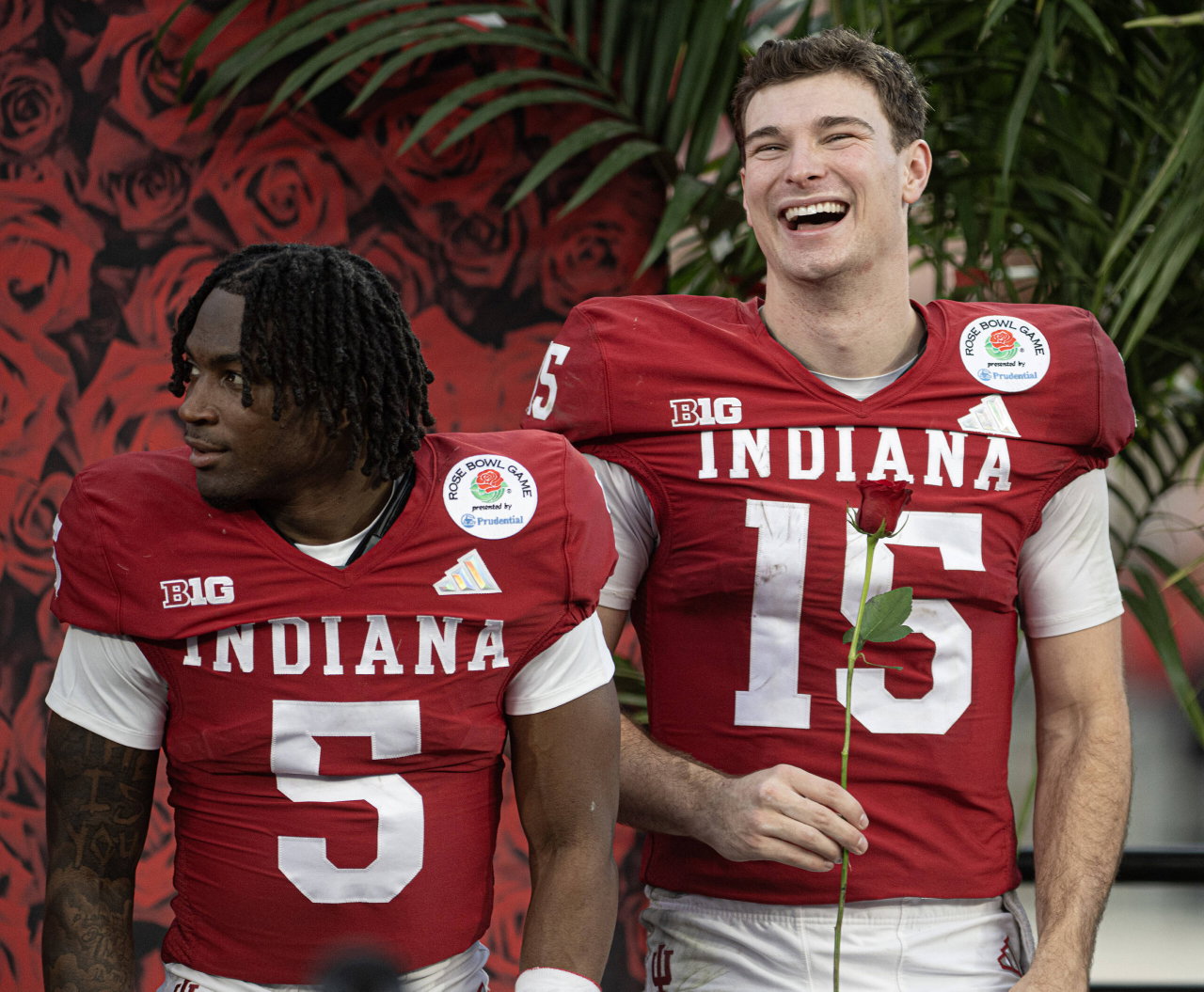
January 1, 2026, Pasadena, California, USA: Indiana University DAngelo Ponds, left, and quarterback Fernando Mendoza celebrate on the victory podium after defeating Alabama during the CFP Quarterfinal at the Rose Bowl in Pasadena, California. Thursday, Jan1, 2026. Pasadena USA – ZUMAr44_ 20260101_zsp_r44_014 Copyright: xThomasxJ.xRussox
Not to mention, the new schedule ensures that college football and the NFL do not play at the same time on TV. For example, during the 2026 holiday season, New Year’s Eve falls on a Thursday night. The NFL runs Thursday night television. The college football committee decided to move its first 2026 quarterfinal game to Wednesday, December 30.
College football organizers know they cannot beat the NFL in a ratings battle. So why even bother about going band-for-band, right?
One thing college football got right this time around was putting player safety first. Now with the expanded playoffs, teams now have to play more games than ever before. That means players have less time to rest and recover during the season.
The committee made an important change to the playoff schedule for the 2026 and 2027 seasons. Teams will now get a full two weeks to rest and prepare between the quarterfinals and the semifinals.
For the 2026 season, the quarterfinal games will be played on New Year’s Day. After that, teams will have a two-week break before returning for the semifinals on January 14 and 15. The extra time will give players a better chance to rest and recover and get ready for another important playoff game.
Committee’s favour!
So far, the dates and locations are set. The actual playoff bracket is staying the same for now. The tournament will stick with its current 12-team format through at least 2026.
Powerful conferences like the SEC and Big Ten did look into expanding the field even further to 16 or 24 teams. But those talks are officially paused. No one could agree on a bigger bracket, so the committee decided to stick with what they have while they iron out the logistics.
End of the day, this multi-year plan gives some much-needed stability to a college football world that has been full of chaotic changes lately.
Balancing television ratings, player health, and their old-school traditions, the sport is trying to create a postseason model that actually works for everyone. Fans get to keep their holiday bowl setups. Players get a bit more rest. More importantly, the road to the national championship becomes a lot clearer for the next half-decade.