
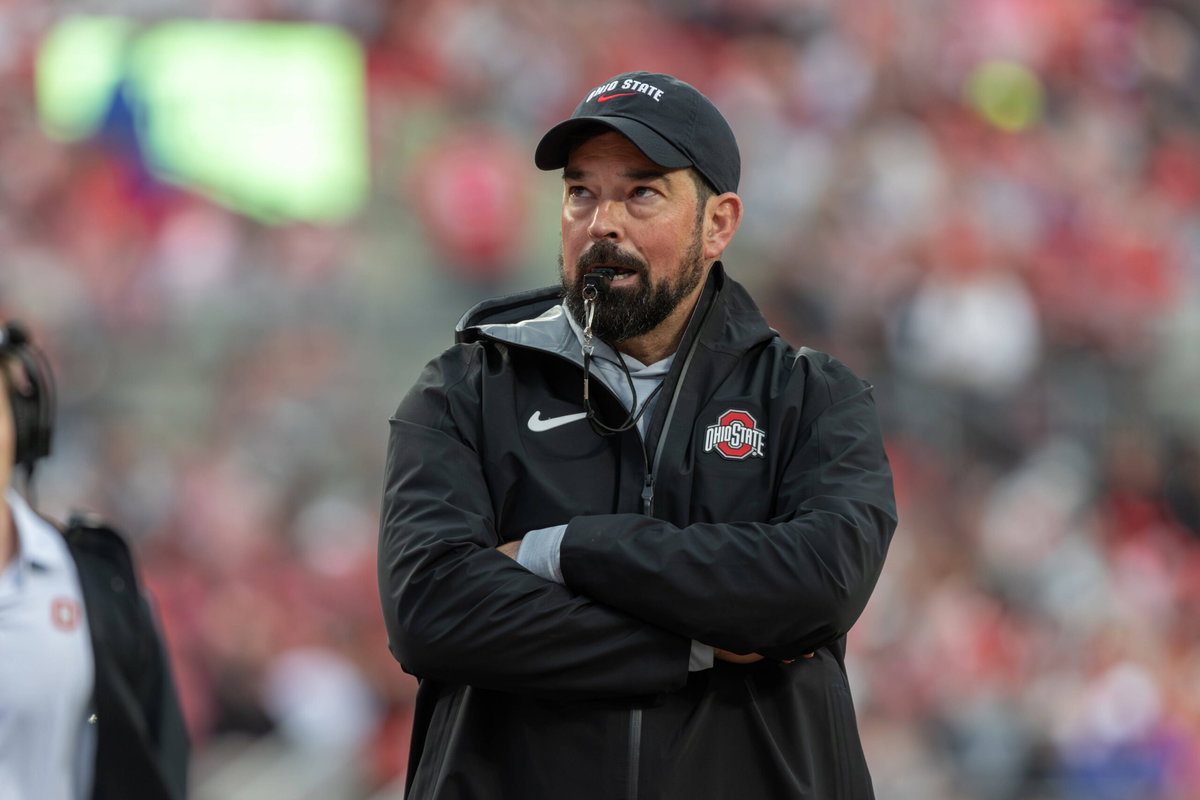
The 12-team playoff will cease to exist at the end of this year, and now the absolute talk of the town in college football is whether the format should be pushed to 16 or 24 teams. With not much actual football happening on the field this time of year, Ohio State’s Ryan Day chimed in to give his two cents on the expansion debate, backtracking on his earlier comments.
Watch What’s Trending Now!
The Ohio State head coach sat down with The Lantern TV and completely leveled with the college football world: the sport is changing at a breakneck pace, and everyone needs to just take a breather before they break the system entirely.
“Now, that being said, about the playoffs, you know, right now it’s a 12. I do think it makes sense to go to 16. I think once we go to 16, now there’s no byes, so everybody’s playing, you know, for all four weeks, and you know, I think it’s good for the sport.”
Ryan Day has also backed the playoff’s growth before. In earlier comments, he pushed for a bigger field and even said he could support 20 teams, arguing that more postseason access would help the sport and give conference champions a fairer path. That makes his latest preference for 16 teams sound less like a flip and more like a more cautious version of the same idea.
He has shown a liking for a 16-team format because it removes first-round byes and levels the playing field. Day’s point is simple: college football is already moving fast, and he does not want the playoff to keep changing every year. In his view, the sport needs a little time to settle before leaders make the bracket even bigger.
The natty-winning HC thinks jumping straight into a 24-team bracket right now creates way too much fatigue and chaos for players and coaches. 16 teams makes total sense on paper because a 16-team layout ensures everyone plays all four weeks. By doing this, they can boost fan engagement and save dying bowl games.
Look, Ryan Day isn’t totally against a 26-team expansion, too soon, perhaps. He’s asking the people making decisions in college football to first test the upcoming 16-team model for a couple of seasons before making the playoff even bigger, especially since the upcoming season is only the third year of the 12-team format.

Imago
The Ohio State Buckeyes at Wisconsin Badgers On October 18, 2025, in Madison, Wisconsin, USA, Ohio State Buckeyes head coach Ryan Day heads to the locker room after shutting out the Wisconsin Badgers at Camp Randall Stadium. Madison Wisconsin USA PUBLICATIONxNOTxINxFRA Copyright: xRossxHarriedx originalFilename:harried-theohios251018_npuKW.jpg
“I think with so much change going on in college football, it’s important to make sure that, like, we make some decisions and then, like, work through it for a couple years, and then go from there, as opposed to continually changing things year after year after year in a time where there’s so much change already.”
With the transfer portal, name, image, and likeness (NIL) rule changes, and some conference realignments already turning the sport upside down, he believes constantly moving the playoff goalposts is a recipe for burnout.
The backstage political war over expanding to 16 versus 24 teams is basically a battle of competing philosophies and different opinions. According to CBS Sports reports, the SEC and broadcasting giant ESPN are heavily pushing for a 16-team limit. Analysts like Paul Finebaum on the McElroy and Cubelic podcast argue that a 16-team bracket keeps the schedule manageable for young athletes and preserves the regular season’s “every week matters” magic of the college football regular season.
So, critics of the 24-team model argue that there are rarely even 10 or 12 true, elite national championship contenders in any given season anyway, let alone 24!
The Contrary
The Big Ten, Big 12, and ACC are strongly supporting a new 24-team playoff format similar to March Madness. Big 12 commissioner Brett Yormark and ACC commissioner Jim Phillips believe a bigger playoff would give more teams a chance to compete. They also want to make sure top teams do not miss the playoffs because of committee decisions, while smaller schools get an opportunity to chase a national championship.
The American Football Coaches Association (AFCA) also supported the 24-team idea. One plan could even remove conference title games to help players stay healthier. But many people believe a bigger playoff would be too hard on players because some teams could end up playing 16 or 17 games in one season. That would make college football feel almost like the NFL.
There are also problems with TV deals. ESPN currently owns the playoff rights only for a 14-team format. If the playoffs expand to 24 teams, it could lead to a huge new battle for TV money worth billions of dollars.
Overall, Ryan Day’s “slow down” comments show that many coaches are worried that TV money is becoming more important than keeping college football stable. CFP executive director Rich Clark said different playoff formats are still being discussed, but a final decision must be made by December 1 if changes are going to happen soon.