
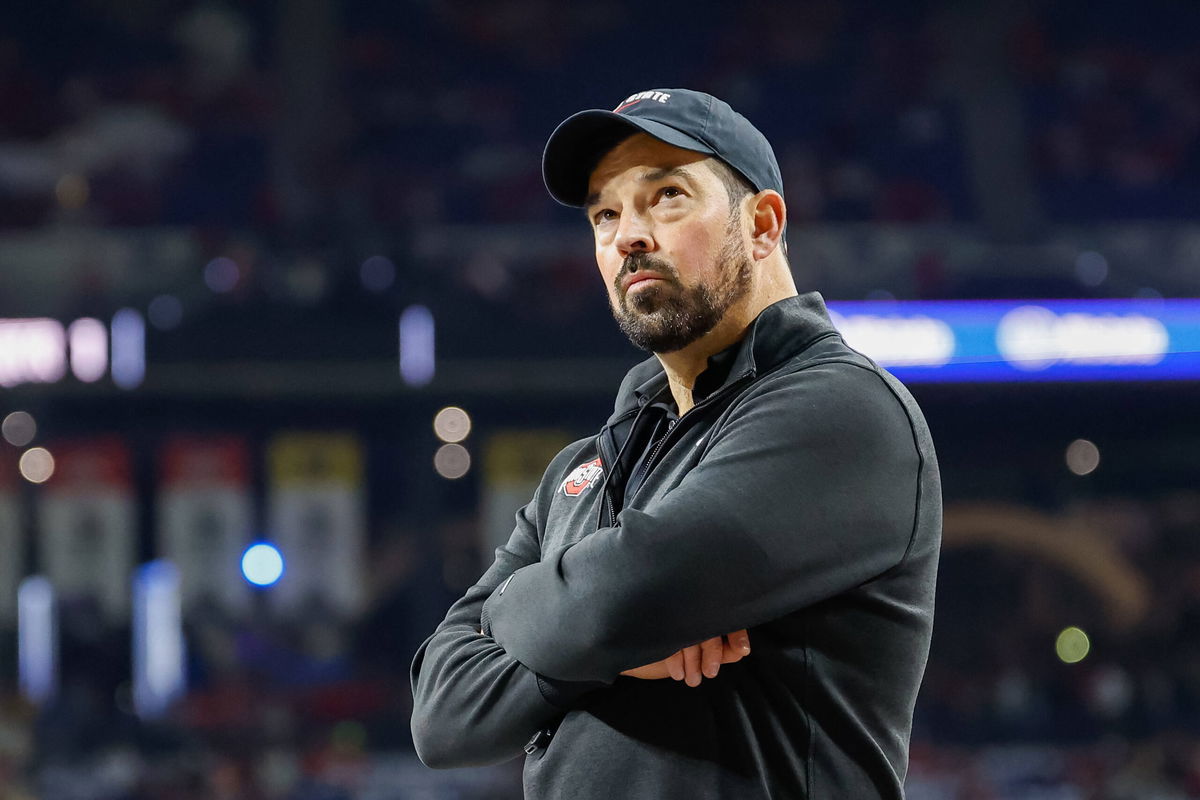
With Ohio State’s athletic department tightening the purse strings on football, Ryan Day is being forced to look for new allies. His most powerful one might be a hometown giant with a nine-figure checkbook and a very familiar logo.
Watch What’s Trending Now!
According to On3’s reports, the Columbus-based behemoth, Nationwide Insurance, is going to sponsor Day’s squad. The brand already owns the name of the Buckeyes’ hockey arena. Nationwide isn’t just a corporate sponsor. They are a Columbus institution with deep pockets. The same financial muscle that privately bankrolled a $175 million NFL arena decades ago is exactly the type of entity Ryan Day needs to sustain a championship-caliber roster in today’s NIL era.
The potential partnership is no surprise, as Nationwide, a Fortune 500 company, has been a major sponsor of all 36 Ohio State varsity sports for nearly two decades. Ever since 2005, to be exact. In 2014, the Buckeyes signed a 10-year agreement with the company as the official insurance sponsor for the university community. Based in Columbus, Nationwide has grown into a global powerhouse in insurance and finance, offering everything from auto and homeowners coverage to pensions and mutual funds.
“From football to soccer to lacrosse, we hope our support makes a difference,” said Nationwide Insurance’s regional vice president of Ohio and West Virginia, Amy Shore, about their intention behind the deal. “We’ve also extended our sponsorship beyond athletics by providing the best band in the land with the best new uniforms.”
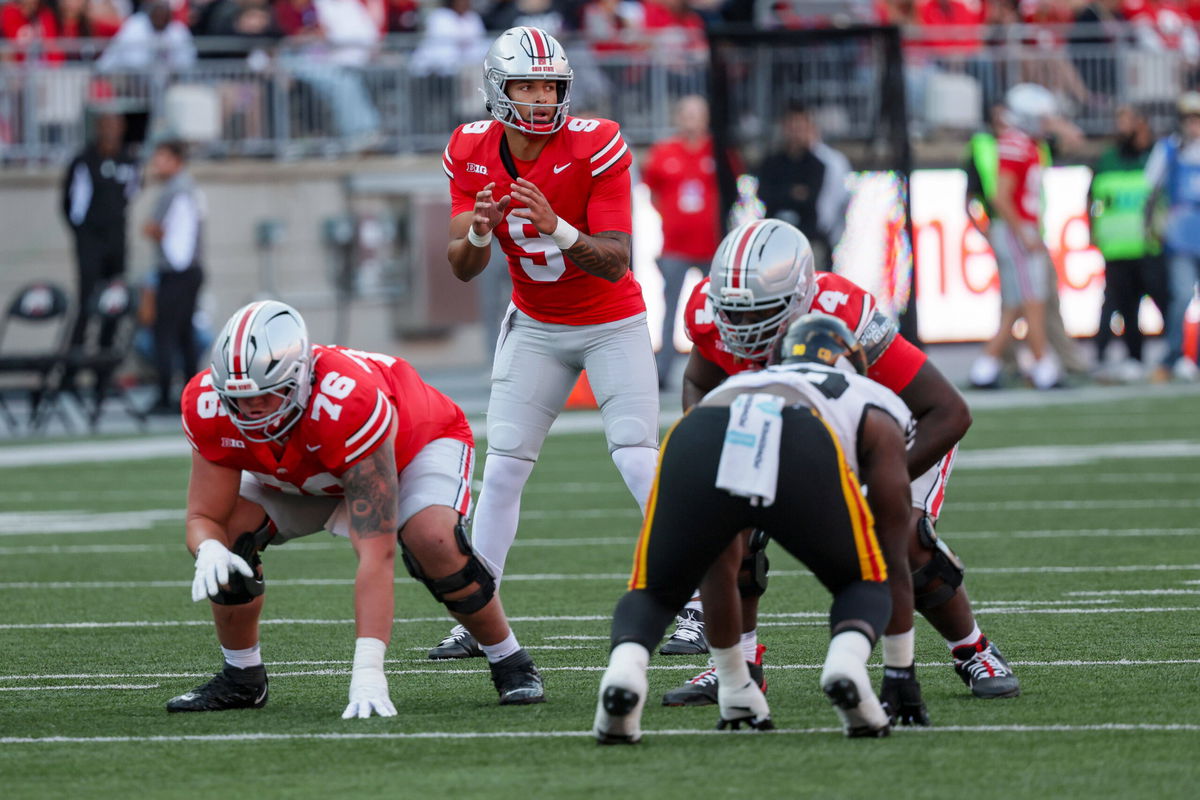
Imago
September 6, 2025, Columbus, Ohio, U.S: Ohio State Buckeyes quarterback Tavien St. Clair 9 prepares to take the snap during the game between the Grambling State Tigers and the Ohio State Buckeyes at Ohio Stadium, Columbus, Ohio. Columbus U.S – ZUMAs304 20250906_zaf_s304_042 Copyright: xScottxStuartx
After four straight years of record sales, the company climbed three places to No. 72 on the 2025 Fortune 500, remaining firmly in the top tier of global insurers. While all these factors must be enough to pacify Day, the Ohio State head coach is finicky about another factor.
Day has strictly cancelled the blue theme in the Columbus camp and has forbidden players from wearing that color in team practices. All this to underscore the seriousness of the Michigan game. So, does Nationwide pass Day’s check? The only potential snag is Nationwide’s iconic blue logo, a color Day has famously banned from the facility to maintain the focus on the Michigan rivalry.
While the blue in Nationwide’s logo presents a potential hurdle, the financial realities of modern college football may force Day’s hand, as conference rivals are already securing their own lucrative deals. Already, the Arkansas Razorbacks have signed a five-year deal with Tyson Foods. The sweet spot of the agreement is that roughly 90% of the revenue is expected to be funneled directly to athletes through NIL deals with the company.
Georgia Bulldogs Aathletic Director Josh Brooks also confirmed in January that the university is “taking a look at” the opportunity of placing commercial logos on uniforms. While no contract is signed, Delta Air Lines is considered a frontrunner for a potential patch deal due to its existing deep ties with the program. In late 2025, Georgia added Delta logos to the 25-yard lines at Dooley Field at Sanford Stadium, marking the first time a corporate logo appeared on the playing surface. Brooks emphasized on the deal needing to be a “right fit” for the Bulldogs brand, noting, “We’re not just out here chasing dollars just for the sake of chasing dollars”.
Over the past year, college football programs and conferences began aggressively pursuing private equity and other capital ventures to address financial deficits caused by rising costs and athlete revenue-sharing. In December, The University of Utah became the first NCAA school to secure a major private equity deal, partnering with New York-based Otro Capital. The university spun off a new commercial entity, Utah Brands & Entertainment LLC, owned by the school’s foundation.
The deal is reportedly worth up to $500 million in capital. The firm takes a minority stake and provides operational expertise to monetize corporate sponsorships, ticketing, and licensing.
Even the Big 12 Conference has entered advanced talks for its own landmark deal with Collegiate Athletic Solutions (CAS), a fund backed by RedBird Capital Partners and Weatherford Capital. It involves a proposed $500 million cash injection. Unlike a traditional buyout, this is structured as a “credit deal” or strategic business partnership where member schools can “opt in” to receive roughly $30 million each in exchange for a percentage of future revenue streams.
The Big Ten Conference also explored a private capital deal involving a $2 billion cash infusion from the University of California pension fund (UC Investments). The league proposed spinning off Big Ten Enterprises, a new commercial arm to house all media rights and sponsorship deals. As of early 2026, the deal is in a holding pattern due to opposition from flagship schools like Michigan and USC, who have rejected institutional investment in favor of maintaining autonomy.
With AD Ross Bjork openly shifting revenue-sharing focus toward rebuilding the basketball program, football is suddenly feeling the pinch. Landing a lucrative jersey patch isn’t just about aesthetics anymore, but a necessary and aggressive countermove by Ryan Day. He needs to ensure his transfer portal war chest doesn’t dry up because things aren’t looking so good for the head coach currently.
Ryan Day’s program is now running on limited financial support
The urgency to find a sponsor looks real for Day’s squad since the Buckeyes’ football had a tumultuous 2025 season. They were supposed to defend their Natty. Instead, Day’s squad ended up losing it, finishing the season with a 12-2 overall record. This disappointing end to the football season coincided with the athletic department publicly shifting its financial focus, creating the perception that football was no longer the sole priority.
But that served them no good. The basketball program lost its footing in March Madness and wrapped up the season with a 15-8 overall record. The Buckeyes’ athletic director Ross Bjork still leaned towards the basketball program, tightening the future budget for Day’s squad.
“Basketball will have a bigger (revenue share) number next year. And then it’s about, again, the race to build out third-party NIL opportunities is here,” he said. “We’ve done it on the football side, and we’re doing it on the basketball side. We’ve got to build that number up.”
While Nationwide’s signature blue logo clashes directly with Ryan Day’s strict ban on Michigan colors, financial necessity usually forces compromises. When millions of dollars in NIL funding are on the line to keep Ohio State competitive, the Buckeyes might just have to tolerate a little blue on their scarlet jersey.