Imago
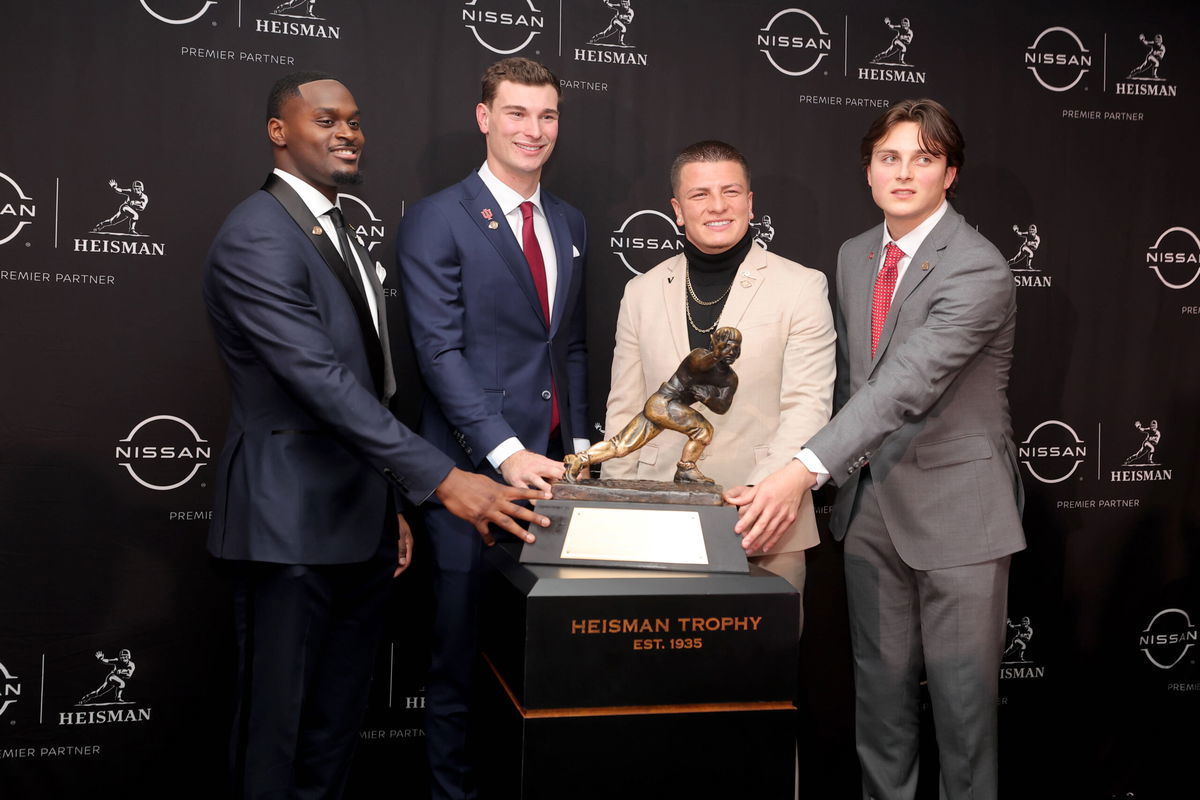
NCAA, College League, USA Football: Heisman Trophy Presentation Dec 13, 2025 New York, NY, USA Notre Dame Fighting Irish running back Jeremiyah Love left to right and Indiana Hoosiers quarterback Fernando Mendoza and Vanderbilt Commodores quarterback Diego Pavia and Ohio State Buckeyes quarterback Julian Sayin pose with the Heisman trophy during a press conference, PK, Pressekonferenz at the New York Marriott Marquis. New York Jazz at Lincoln CenterÕs Appel Room NY USA, EDITORIAL USE ONLY PUBLICATIONxINxGERxSUIxAUTxONLY Copyright: xBradxPennerx 20251213_bjp_ae5_020
Imago
NCAA, College League, USA Football: Heisman Trophy Presentation Dec 13, 2025 New York, NY, USA Notre Dame Fighting Irish running back Jeremiyah Love left to right and Indiana Hoosiers quarterback Fernando Mendoza and Vanderbilt Commodores quarterback Diego Pavia and Ohio State Buckeyes quarterback Julian Sayin pose with the Heisman trophy during a press conference, PK, Pressekonferenz at the New York Marriott Marquis. New York Jazz at Lincoln CenterÕs Appel Room NY USA, EDITORIAL USE ONLY PUBLICATIONxINxGERxSUIxAUTxONLY Copyright: xBradxPennerx 20251213_bjp_ae5_020
Every year, college football fans circle the Heisman Trophy as the ultimate bridge between the regular season and the national championship. However, the other prestigious award — that is, the Maxwell Award — also calls for attention. This year, Indiana quarterback Fernando Mendoza struck gold with both awards. But with all the hype surrounding the award, many fans are curious about the difference between the two honors.
Watch What’s Trending Now!
ADVERTISEMENT
What is the Heisman Trophy, and how is the winner selected?
Every year, the Heisman Trophy goes to the nation’s top college football player. The winner is chosen by a panel of sportswriters. Established in 1935 by New York’s Downtown Athletic Club, it was named a year later for John Heisman, the pioneering player and coach whose legacy still echoes on the gridiron.
Sectional Representatives once served as the backbone of the Heisman voting process, managing ballot distribution across wide regions to ensure national balance. Their work helped elevate the trophy into college football’s most prestigious individual honor. So much so that, still today, their role remains more honorary than operational.
ADVERTISEMENT
.png)
.png)
.png)
The Heisman is voted on by nearly 870 media members, along with former winners and a single fan vote.
Imago
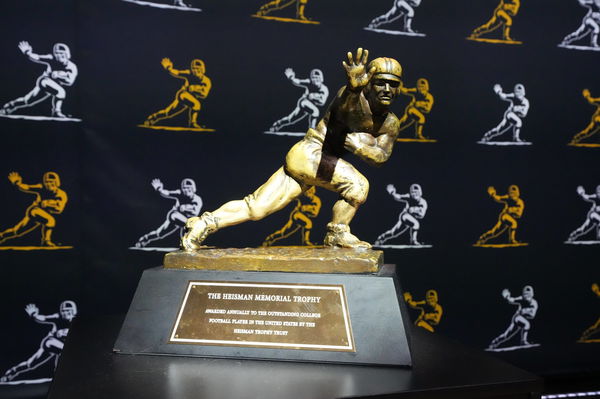
NCAA, College League, USA Football: CFP National Championship City Views Jan 7, 2024 Houston, TX, USA A Heisman Trophy at the College Football Playoff Fan Central at the George R. Brown Convention Center. Houston TX USA, EDITORIAL USE ONLY PUBLICATIONxINxGERxSUIxAUTxONLY Copyright: xKirbyxLeex 20240107_sjb_al2_338
Media voters are evenly divided across six regions-Northeast, Mid-Atlantic, South, Midwest, Southwest, and Far West. With this year’s finalists coming from the heart of the country, geographic bias was less of a factor.
ADVERTISEMENT
What is the Maxwell Award, and who votes for it?
ADVERTISEMENT
The Maxwell Award, established in 1937, is annually given to college football’s top player for on-field brilliance and overall impact. The honor bears the name of Robert “Tiny” Maxwell, a revered sportswriter and pioneer of the sport.
The Maxwell race starts with a preseason watch list and is trimmed down through semifinalist and finalist voting by media members and coaches. In the panel, there are sportscasters, sportswriters, National Collegiate Athletic Association head coaches, and the membership of the Maxwell Football Club.
ADVERTISEMENT
The winner is unveiled each December during ESPN’s College Football Awards Show at the College Football Hall of Fame.
How is the Heisman Trophy different from the Maxwell Award?
The main difference between the Heisman Trophy and the Maxwell Award lies in the voting structure. Heisman voting is divided across six U.S. regions, each assigned 145 media ballots for a total of 870 votes. Former Heisman winners also vote, along with one aggregated public ballot.
ADVERTISEMENT
Each voter ranks their top three players using a 3-2-1 point system. Three points for first place, two for second, and one for third. All points are totaled, and the player with the highest overall score is awarded the Heisman Trophy. Voters don’t gather in person; all ballots are submitted electronically.
When it comes to the Maxwell, 131 college football coaches and sports information directors, experts in athletic PR, cast their votes for the winner.
ADVERTISEMENT
Why has the Heisman Trophy become dominated by quarterbacks?
The hype for the Heisman has been hitting the roof. However, this season, too, the award could not get rid of its quarterback bias. Even standout performers outside the quarterback position often get overlooked for the Heisman unless they deliver a historic campaign.
Imago
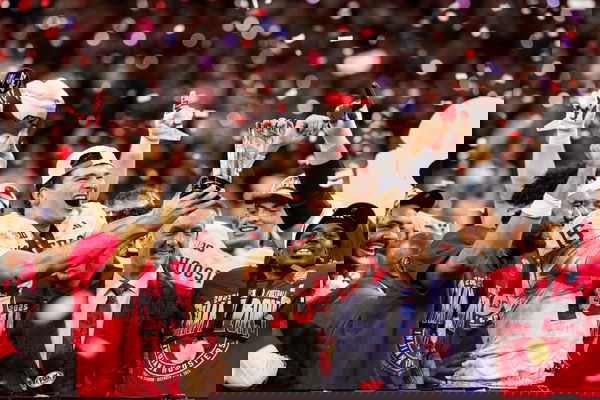
December 06, 2025: Indiana quarterback Fernando Mendoza 15 holds up MVP trophy after NCAA, College League, USA football game action between the Indiana Hoosiers and the Ohio State Buckeyes at Lucas Oil Stadium in Indianapolis, Indiana. /CSM Indianapolis United States of America – ZUMAc04_ 20251206_zma_c04_704 Copyright: xJohnxMersitsx
Chicago’s Jay Berwanger claimed the first Heisman in 1935, starting a tradition honoring college football’s top player. Running backs still lead with 40 wins, but quarterbacks are closing in. Indiana Hoosiers’ quarterback Fernando Mendoza pushed them to 39, making quarterbacks the second-most decorated position in Heisman history.
ADVERTISEMENT
Since 2000, only five non-quarterbacks have claimed the Heisman, with the rest dominated by offensive leaders, openly hinting at a clear quarterback tilt. The reason?
Modern offenses shine a bright light on quarterbacks, the game’s most impactful position. Spread and up-tempo systems are built for high passing volumes. It lets quarterbacks rack up “video game numbers” in yards and touchdowns and consistently dominate the stat sheets.
Does the Maxwell Award favor non-quarterbacks more than the Heisman?
The Maxwell Award has long leaned toward quarterbacks, with 40 winners compared to 17 running backs, six linebackers, and just three wide receivers, among others. The trend continues in recent years, as Bryce Young (2021), Caleb Williams (2022), and Michael Penix Jr. (2023) all won back-to-back at the position.
In 2024, Ashton Jeanty claimed the Maxwell Trophy, even as Travis Hunter took home the Heisman. This season again, Heisman winner, quarterback Mendoza lifted the honor.
When was the last non-quarterback to win the Heisman Trophy?
In December 2024, Colorado Buffaloes’ Travis Hunter made history as the 52nd non-quarterback to win the Heisman Trophy. A game-changing wide receiver and lockdown cornerback, Hunter excelled on both sides of the ball for Deion Sanders’ Buffaloes.
He joined Rashaan Salaam (1994) as the only Heisman winners in school history. Hunter cruised to victory with 552 first-place votes and 2,231 points, cementing a truly standout season.
Right now, both the Heisman and Maxwell Awards lean heavily toward quarterbacks. Could that trend shift anytime soon?
ADVERTISEMENT
ADVERTISEMENT
ADVERTISEMENT
Related Newsletters