The New England Patriots and the Seattle Seahawks are headed to the Super Bowl after grinding through their respective conference championship games on Sunday. Next stop: Santa Clara, where the Vince Lombardi Trophy will be up for grabs on the second Sunday of February. But just hours after punching their Super Bowl tickets, reports surfaced that neither team plans to practice anywhere near Levi’s Stadium.


According to Chase Senior, the Patriots will hold their practices at Stanford, while the Seahawks will set up shop at San Jose State. Both locations are more than 10 miles away from the stadium. Senior also noted that neither team will use the San Francisco 49ers’ training facility. And while the explanation on paper is simple (dedicated practice spaces), Senior couldn’t help but add a pointed observation: “It is pretty hilarious given what’s going on.”
Watch What’s Trending Now!
The Patriots will be practicing at Stanford.
The Seahawks will be practicing at San Jose State.
Neither team will be practicing at the 49ers practice facility.
This setup allows each team to have dedicated practice space while staying in the area, but it is pretty hilarious…
— Chase Senior (@Chase_Senior) January 26, 2026
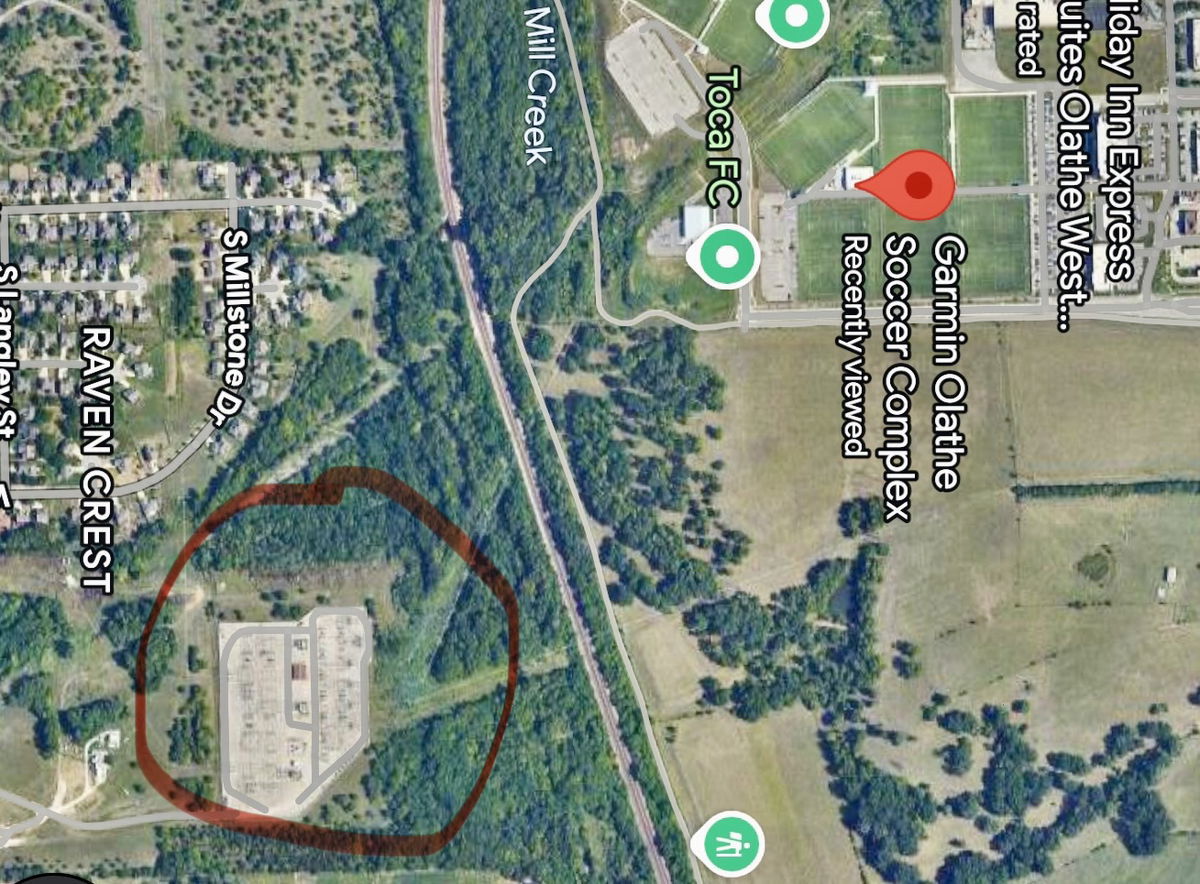
And the way things have been shaping up, it’s not hard to connect the dots. Over the past few weeks, a viral conspiracy theory gained traction online. It began when a user named Peter Cowan, who claims to be “board-certified,” shared a map showing Levi’s Stadium and the 49ers’ practice facility located next to an electrical substation. His claim was blunt: “Low-frequency electromagnetic fields can degrade collagen, weaken tendons, and cause soft-tissue damage at levels that regulators call ‘safe.'”
Cowan never identified himself as a medical practitioner. Instead, he doubled down through a series of posts and Substack articles, attempting to link the 49ers’ long history of injuries to the facility’s proximity to the substation. Most dismissed it instantly, while several reports labeled the theory as nothing more than nonsense.
But things escalated quickly.
When tight end George Kittle suffered a torn Achilles during the Wild Card loss to the Philadelphia Eagles, the conversation took a sharper turn. Suddenly, what had been a fringe theory started circulating far more widely, and context matters here. The 49ers’ 2025 season was defined by attrition. Yes, they reached the Divisional Round. But at a massive cost.
Nick Bosa tore his ACL. Fred Warner broke his ankle. Kittle’s season ended abruptly. First-round pick Mykel Williams also went down with an ACL injury and missed a significant chunk of the year. The list also includes Brock Purdy’s extended absence with a turf-toe variant. Ricky Pearsall’s knee and ankle issues, Jauan Jennings playing through rib, shoulder, and ankle injuries, or linebacker Tatum Bethune dealing with a groin problem.
Here’s where the question started getting louder: Is the electrical substation near Levi’s Stadium and the 49ers’ facility playing any role at all? With the Super Bowl scheduled at Levi’s Stadium, it suddenly doesn’t feel shocking that New England and Seattle chose to practice elsewhere. Whether it’s coincidence, caution, or simply optics, the timing has only fueled speculation. That said, not everyone is buying into the theory. And for good reason.
Levi’s Stadium conspiracy theory: Facts or mere nonsense?
Kyle Shanahan’s 49ers have routinely ranked among the most injured teams in the NFL. That part isn’t up for debate. What is far harder to prove, though, is whether any of it has something to do with the electrical substation near their training facility. For starters, the timeline doesn’t exactly cooperate with the theory. The substation has been operating since 1986, and the 49ers’ practice facility opened right next door in 1988.
In the seven years that followed, San Francisco won three Super Bowls. If the exposure was truly that damaging, it didn’t seem to slow them down during one of the most dominant stretches in the franchise’s history. There’s also the medical angle, or lack of one. Cowan’s argument focuses on extremely low-frequency radiation (ELF), the kind generated by power lines and electrical equipment operating around 60 Hz.
But according to Jerrold Bushberg, a radiology professor at UC Davis, there’s simply no solid evidence tying that type of exposure to biological harm in humans. “These so-called ‘mechanisms’ have not been established, and many of the experiments are contradictory, and many of the experiments have exposures that either don’t relate specifically to 50-, 60-Hz magnetic fields, or are at much, much higher levels than what would be experienced at a practice level,” Bushberg reported, per Front Office Sports.
That’s the core issue. Cowan’s claims rely on mechanisms that he has not scientifically established, and the data behind them don’t cleanly translate to real-world NFL conditions. This is why, as things stand, it’s still difficult to argue that the substation has a direct impact on the 49ers’ injury problems. Still, perception matters. And with injuries continuing to pile up, general manager John Lynch has already said the team will examine “everything,” including the substation theory.
And until there’s actual proof one way or the other, it’s probably safest to view New England and Seattle choosing to practice away from Levi’s Stadium as caution rather than confirmation. With the Championship weekend now over, both teams will now meet in the Super Bowl next month.
Related Newsletters