Imago
Brian Schaefering
Imago
Brian Schaefering
When her husband was playing in the NFL, Jasmatia Schaefering enjoyed what she now describes as the “perks” that came with life on the sidelines. But after Brian Schaefering’s career ended after just five seasons, that world as she knew it changed. Her role as an “NFL wife” was now shaped by years of medical appointments, rising expenses, and the realities many players face when they leave the league carrying the long-term effects of repeated head trauma. It’s left Jasmatia to openly question whether the NFL’s promises truly exist once the game is over.
One of the biggest hurdles Jasmatia highlighted on her exclusive with People was the lack of long-term support: “They have all of these medical issues now that a lot of doctors, if they’re not sports doctors that are really good, they don’t know what to do. You get surgery, and it doesn’t heal right. Now you don’t walk right. Your back is hurting even more. It’s craziness.”
Watch What’s Trending Now!
What Jasmatia came to understand over time is that the NFL’s safety net for former players exists more on paper than in practice. While the league often points to its post-career benefits as evidence of long-term care, accessing those resources is far from straightforward, especially for players dealing with head trauma. Programs like the NFL’s disability plans, neurocognitive benefits, and the widely publicized concussion settlement are governed by narrow medical definitions and strict eligibility thresholds. Conditions such as CTE, which can only be definitively diagnosed after death, leave many former players in limbo, symptomatic but unable to meet the league’s required criteria for compensation. For Brian Schaefering, those gaps became impossible to ignore
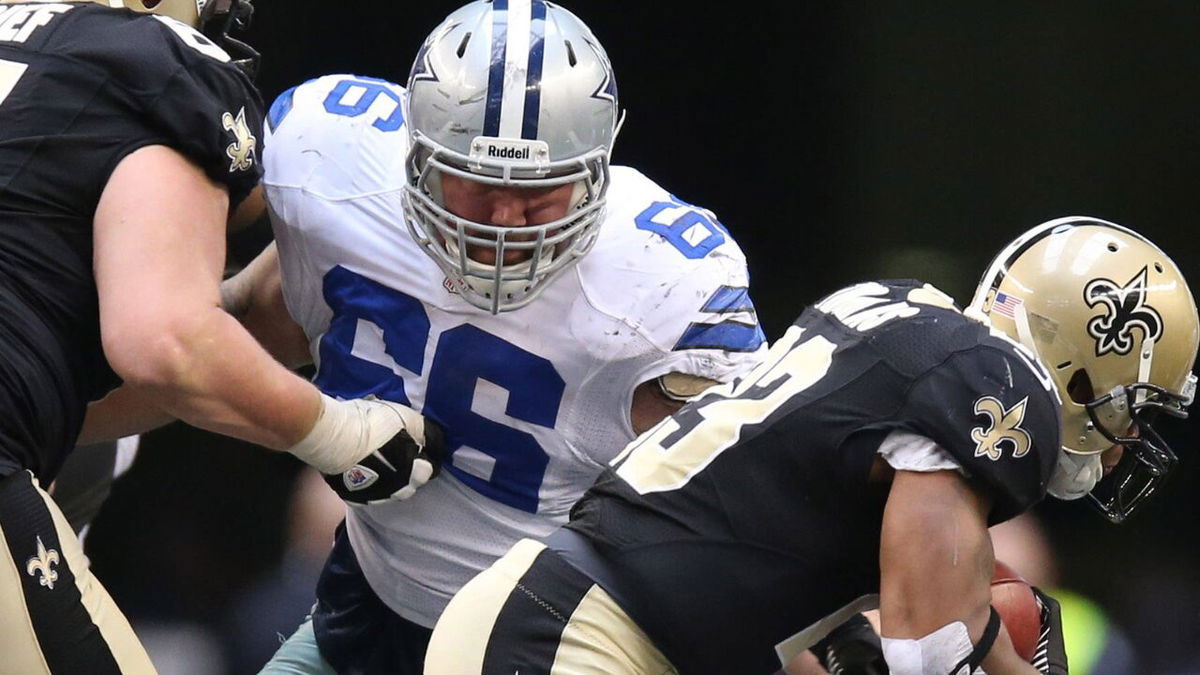
After his five-year NFL career ended in 2012, during which he played defensive end for the New York Jets, Dallas Cowboys, and the Cleveland Browns, and had 75 tackles and two sacks to his name, the heavy physical toll of the sport followed him off the field. He was diagnosed with traumatic brain damage and began exhibiting symptoms consistent with early or suspected CTE, along with PTSD, depression, memory loss, and impulse-control issues. On the physical side, his body bore the cumulative cost of professional football: a shoulder that required replacement, torn ligaments in the other shoulder, multiple bulging discs in his neck and back, a torn hip labrum, unresolved foot damage from surgery, and chronic pain in his ankles and knees. These were not short-term injuries but lifelong conditions requiring ongoing care.
As his condition worsened, Jasmatia became his primary caretaker, dedicating years to understanding brain health, researching treatment options, and educating their four children, now ages 22, 19, 18, and 11, about their father’s condition.
Despite the existence of league benefit programs, Jasmatia has said navigating those systems proved difficult, with limited clarity around what support Brian qualified for and how long it would last, particularly as his symptoms fell into gray areas not easily captured by official criteria.
The financial reality of the league was also much harsher than it appeared from the outside. While salaries can look massive, Jasmatia explained that nearly half is lost to taxes, while the rest is chipped away by agent fees and team expenses. These dwindling funds often collide with massive, long-term medical bills. Compounding that strain was Jasmatia’s own identity shift after retirement, as the relationships and social circles tied to the NFL slowly faded, leaving her to reassess who she was once the title of “NFL wife” no longer defined her life.
However, rather than holding a grudge against the league, Jasmatia, who was married to Brian for 20 years, hopes to work with the NFL to fix these systemic issues. She further wishes that the league had more resources for those affected by severe injuries like brain trauma and CTE.
“I don’t hate the NFL. I don’t want to go after them. I’d rather partner with them so that it grows instead of being squashed,” she explained. “I want to make an impact for the wives and for the kids and for the players. These players cannot keep walking around like, ‘Yeah, it’s fine. Yeah, I’m fine.'”
That belief was shaped years earlier, when Brian’s health needs began to interfere with basic day-to-day functioning. By 2016, doctors recommended a service dog to help him manage both the physical and psychological effects of his injuries, support that, once again, fell outside the limits of what insurance would cover, and they found themselves dependent on the kindness of others.
Brian Schaefering’s service dog, funded beyond the league
Much of Schaefering’s finances had already been absorbed by ongoing medical care, and insurance offered little help when it came to specialized support like a service animal. Faced with limited options, Schaefering turned to a GoFundMe campaign, setting a modest $3,000 goal to cover the cost. The response was swift, with former teammates stepping in to help him. Tony Pashos contributed $1,000 toward the goal, while smaller donations from other former players helped close the gap.
That effort led to Niklaus, a trained Dutch Shepherd whose impact was immediate and tangible. Beyond helping Schaefering maintain balance, the dog played a critical role in easing anxiety and managing symptoms that had kept him largely confined to his home. Crowded environments became more navigable, emotional spikes more manageable, and everyday moments, like sitting through a movie or spending uninterrupted time with his children, became possible again.
The change was immediate enough to be noticeable. But the service dog also revealed how much of that support had to be built outside the system. And for Jasmatia Schaefering, the story isn’t about blame as much as it is about what lingers after football ends, and who is left to carry it.
Related Newsletters