
Imago
NFL, American Football Herren, USA Green Bay Packers at Cleveland Browns Aug 10, 2024 Cleveland, Ohio, USA Cleveland Browns managing and principal partner Jimmy Haslam before the game at Cleveland Browns Stadium. Cleveland Cleveland Browns Stadium Ohio USA, EDITORIAL USE ONLY PUBLICATIONxINxGERxSUIxAUTxONLY Copyright: xKenxBlazex 20240814_kab_bk4_001
Imago
NFL, American Football Herren, USA Green Bay Packers at Cleveland Browns Aug 10, 2024 Cleveland, Ohio, USA Cleveland Browns managing and principal partner Jimmy Haslam before the game at Cleveland Browns Stadium. Cleveland Cleveland Browns Stadium Ohio USA, EDITORIAL USE ONLY PUBLICATIONxINxGERxSUIxAUTxONLY Copyright: xKenxBlazex 20240814_kab_bk4_001
The NFL seems to be going through a bit of an evolution right now. Or maybe it is more accurate to call it a trend. Several teams are moving toward dome-style stadiums, and Jimmy Haslam’s Cleveland Browns are among them. The franchise is currently working on a new $2.4 billion stadium project in suburban Brook Park that is expected to open in 2029. However, a key part of the funding plan has now hit a legal roadblock.
Watch What’s Trending Now!
This week, reports confirmed that a Columbus magistrate has blocked the state from using unclaimed funds to help finance the Browns’ new stadium. Jennifer Hunt granted a preliminary injunction in favor of Ohio residents who had filed a lawsuit against state officials.
For a broader context, Ohio lawmakers had introduced a plan designed to support the construction of sports stadiums and cultural facilities across the state. Under that plan, officials intended to take more than $1 billion from Ohio’s unclaimed funds account.
The proposal would have created a sports and cultural facilities fund. Out of that total amount, $600 million was expected to go toward the Browns’ new stadium in Brook Park.
The funding approach was tied to a broader legal change passed by Ohio lawmakers regarding how long-unclaimed money could be handled by the state.
According to reports, the Ohio General Assembly directed the state to take ownership of funds that had remained unclaimed for at least a decade. At the same time, the law created a grace period allowing individuals to file claims for those funds through January 1, 2036.
That move quickly faced pushback.
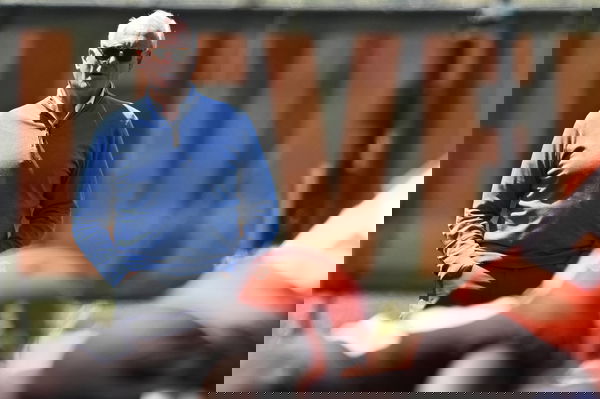
Imago
NFL, American Football Herren, USA Cleveland Browns Rookie Minicamp May 9, 2025 Berea, OH, USA Cleveland Browns managing and principal partner Jimmy Haslam watches during rookie minicamp at CrossCountry Mortgage Campus. Berea CrossCountry Mortgage Campus OH USA, EDITORIAL USE ONLY PUBLICATIONxINxGERxSUIxAUTxONLY Copyright: xKenxBlazex 20250509_kab_bk4_027
A group of Ohio residents and former politicians filed a class-action lawsuit challenging the policy. Their argument centered on two main points. First, they claimed the plan effectively represented an unconstitutional taking of private property for a purpose that was not truly public. Second, they argued that the state risked depriving rightful owners of their property without providing adequate notice.
For now, the court has sided with the plaintiffs temporarily. Hunt issued a preliminary injunction that prevents the state from using the unclaimed funds while the lawsuit moves forward.
As a result, the funding plan is currently paused until the legal dispute is resolved.
“We understood this temporary outcome was a possibility, but remain undeterred and on schedule in delivering this transformative stadium and economic development project for our region and the state as the legal process continues to play out,” Peter John-Baptiste, a spokesman for owner Haslam Sports Group, wrote in an email.
In practical terms, the ruling means the $600 million that had been earmarked for the Browns’ stadium cannot be used for now. The broader funding plan remains uncertain as the lawsuit proceeds.
That said, the Browns are still expected to open the stadium in 2029, which is projected to cost $2.4 billion.
A look at Jimmy Haslam’s $2.4 billion domed-shaped project
Jimmy Haslam’s Browns are among the franchises currently exploring dome-style stadiums. Other teams in that group include the Washington Commanders, where construction is already underway. The Jacksonville Jaguars are with renovations in progress. And potentially the Chicago Bears, Denver Broncos, and, most recently, the Kansas City Chiefs.
As for Cleveland, HKS has been chosen as the designer for the Browns’ new stadium. The firm has already been involved in designing several stadium projects across the NFL.
One of the main reasons the Haslam ownership group opted for a dome-style design is the flexibility it provides beyond just hosting Browns games on Sundays. The stadium is expected to host a range of other events. Think of concerts, basketball tournaments, and soccer matches, with the potential to accommodate crowds of up to 75,000 people.
The dome also places Cleveland in a position to potentially host a Super Bowl in the future. Under current league requirements, host cities must either maintain an average game-day temperature of at least 50 degrees. Or they must have a domed stadium if the climate falls below that threshold.
Another feature that has drawn attention is the stadium’s seating design. According to a press release, the venue is expected to feature the closest seating configuration in the NFL. It’ll bring “fans closer to the field than any other NFL stadium.”
For now, though, the immediate issue remains the legal roadblock involving unclaimed funds. A state magistrate has blocked that portion of the financing plan. Still, based on the current trajectory, the Browns appear set to continue moving forward with construction.