
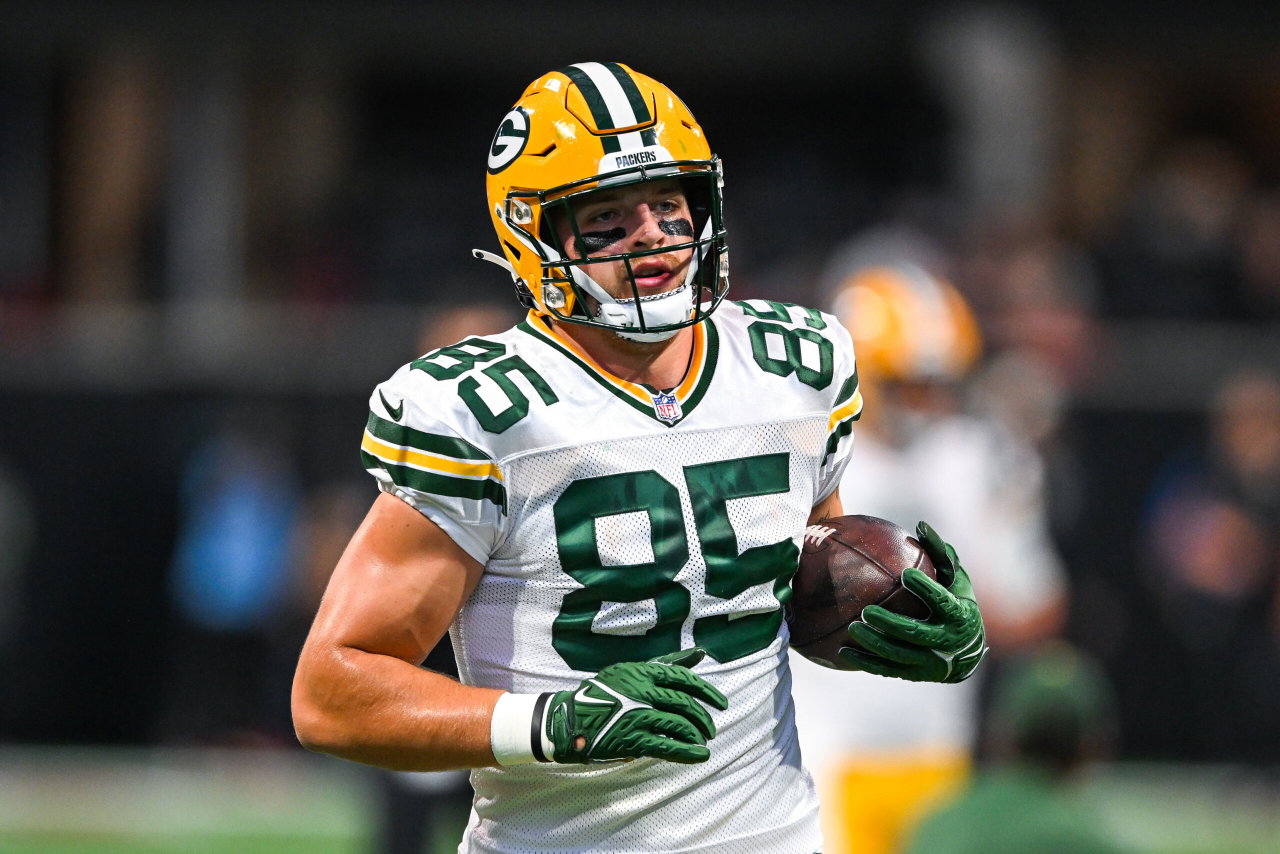
NFL officiating has endured relentless criticism throughout the 2026 season, but a controversial Week 7 Packers–Lions showdown pushed frustration to a boiling point. Amid eight penalties against Green Bay and sharp rebukes from the broadcast booth, one glaring oversight stood out: Lions safety Brian Branch’s unflagged helmet-to-helmet hit on Tucker Kraft. Long after the dust had settled and Green Bay had already played its eighth game, the league put forward an unmistakable postgame confession of an officiating mistake that came too late to save the Packers’ 20-17 Week 7 defeat.
Watch What’s Trending Now!
“Only fine #Packers received against the #Lions was a taunting call ($9,459) against CB Brandon Cisse. The Lions’ Brian Branch was fined $23,882 for use of the helmet for hit on TE Tucker Kraft. No penalty was called in the game. Derrick Barnes fined for late hit on M. Lloyd,” reported Milwaukee Journal Sentinel reporter Tom Silverstein.
The incident occurred with 3:39 remaining in the opening quarter. With the Packers needing two yards to keep the drive alive, Jordan Love dropped back at Detroit’s 49-yard line and found Tucker Kraft on the right side. What followed was a massive 22-yard completion that put Green Bay in a promising position. However, the play took a sudden turn when Jack Campbell moved in to tackle the tight end. Branch then launched himself into the scene, diving toward Kraft helmet-first, and the two collided.
Despite the clear case for a penalty on Branch’s hit, the officials kept their flags down, leaving Green Bay without the 15 yards it should have gained. This led to head referee Alex Moore and his team landing in the hot seat. Besides fining Branch, they also addressed their fault.
“The NFL confirmed an officiating mistake against the Green Bay Packers in their Week 7 loss to the Detroit Lions, but the confirmation came too late to matter. The league fined Lions safety Brian Branch $23,882 for his head-to-head contact on Packers tight end Tucker Kraft. The hit didn’t draw a flag during Detroit’s 20-17 win,” as reported by A to Z Sports NFL reporter Wendell Ferreira.
The apology came given how seriously the league deals with the use of helmets.
“In covering the passer position, Referees will be particularly alert to fouls in which defenders impermissibly use the helmet and/or facemask to hit the passer, or use hands, arms, or other parts of the body to hit the passer forcibly in the head or neck area (see also the other unnecessary roughness rules covering these subjects),” it is clearly stated in Rule 12 and Section 2, Article 11 of their rulebook.
“A defensive player must not use his helmet against a passer who is in a defenseless posture—for example, (1) forcibly hitting the passer’s head or neck area with the helmet or facemask, even if the initial contact of the defender’s helmet or facemask is lower than the passer’s neck, and regardless of whether the defensive player also uses his arms to tackle the passer by encircling or grasping him; or (2) lowering the head and making forcible contact with any part of the helmet against any part of the passer’s body.”
It’s clearly mentioned that it’s the referees’ responsibility to take immediate action and review it sincerely. Yet the NFL continues to address such incidents through postgame fines rather than establishing a meaningful mechanism to review missed calls. Every week follows the same frustrating cycle. League officials review game tape in isolation, and roughly seven days later, they drop financial hammers on players. It is a post-hoc system whose logic is impossible to track.
Clear fouls flagged during live play often draw zero postgame discipline, while unflagged hits go completely unnoticed until the fine sheet lands on Saturday. Brian Branch’s helmet-to-helmet hit on Tucker Kraft sits squarely in that second category. And while the league views postgame fines as a sign of diligence, every check levied for a non-call is actually an admission that an on-field crew missed a critical call in real time.
In a league defined by razor-thin margins, those misses carry massive consequences. A single unflagged 15-yard penalty in a tight three-point divisional clash doesn’t just alter a stat line; it resets down and distance, keeps scoring drives alive, and directly shifts the outcome of a game. Detroit’s narrow victory over Green Bay proved that in agonizing fashion. Worse still is the human cost of these delays.
Green Bay narrowly avoided losing Kraft to a serious injury on that unpunished hit, but luck is not an officiating strategy. By relying on financial slap-on-the-wrists long after the final whistle, the NFL leaves its most vital offensive stars completely unprotected when it matters most. Additionally, when it comes to Branch, it was the referee’s duty to be extra careful given how it’s not new for him to pay fines for unnecessary roughness.
The Lions safety has repeatedly come under scrutiny for his conduct on the field. Spotrac lists 15 fines for Branch, including five for impermissible use of the helmet and two for hitting defenseless receivers. He has also been disciplined on two other occasions, getting ejected for a helmet-to-helmet hit against the Packers in 2024 and later receiving a one-game suspension for throwing punches at JuJu Smith-Schuster after a game.
Branch’s play is not the only time that calls mounted against the referees for favoring the Lions.
Brian Branch’s Fine Comes Days After Packers Question Referees’ Performance
In the third quarter, Detroit wide receiver Amon-Ra St. Brown caught a short pass from Jared Goff and appeared to be tackled after a four-yard gain. However, the Lions receiver got back up and tried to keep running, prompting Packers defensive tackle Devonte Wyatt to tackle him again. As the play unfolded, St. Brown’s cleats struck umpire Terry Killens Jr., sending him to the ground. Killens threw a flag from the turf, and Wyatt was subsequently called for unnecessary roughness.
Other questionable calls also appeared to benefit the Lions. With time winding down in the fourth quarter, Goff connected with Sam LaPorta for an 18-yard gain on second-and-8. Although Packers defensive lineman Karl Brooks appeared to make a legal tackle, the officials called him for roughing the passer, awarding Detroit an additional 15 yards.
All these controversial calls fueled the criticism against the referees.
“I don’t know how the NFL’s going to treat it, but I’m not a big fan of the refs right now,” Packers safety Xavier McKinney said. “I don’t think it’s great officiating, if I’m being completely honest. I think it’s bulls— a lot of the times.”
Now that the fine against Branch arrived days later, it now raises questions about whether it was part of their damage control plan.