
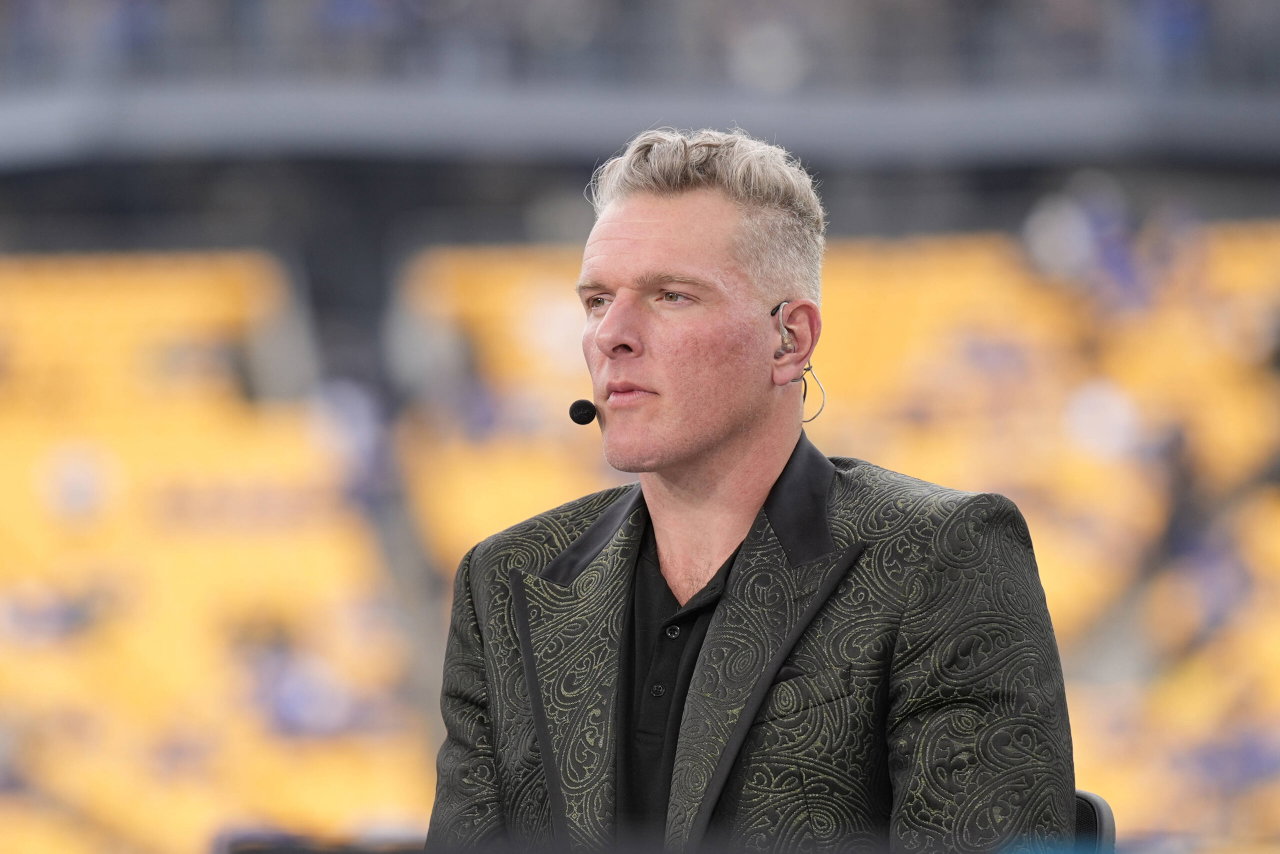
ESPN’s Monday Night Countdown is off to its best start since 2015, averaging 1.6M viewers through Week 9. With a star-studded crew, it was supposed to hit such fame. However, fans are not happy with the discrimination by ESPN. They are paying millions to Pat McAfee and others while at the same time laying off others to manage costs.
Watch What’s Trending Now!
“What’s the combined annual salary at this table?” That single question from Awful Announcing on X, paired with a photo of ESPN’s Monday Night Countdown desk, set off a wave of anger among sports fans.
In the picture, Scott Van Pelt is on the far left, followed by Jason McCourty, Stephen A. Smith, McAfee, Troy Aikman, and Marcus Spears.
As Awful Announcing asks the fans to calculate, it’s time to add the numbers. In 2023, ESPN revamped the Monday Night Countdown show and replaced Suzy Kolber with Van Pelt. Back then, he signed a four-year, nearly $7 million contract.
In June this year, ESPN announced that they have signed McCourty to a new, multi-year contract, though the exact amount is not publicly disclosed. When it comes to Smith, he sealed a new contract with ESPN worth at least $100 million for five years in March 2025.
Besides this, the former Indianapolis Colts punter already earns $30 million per year from ESPN. In order to hold onto him a while longer, the network is even willing to negotiate a deal that could be worth between $60 million and $65 million per year. They are open to making this change even after McAfee has been on the hot seat.
McAfee’s footprint at ESPN continues to expand, but not every viewer is pleased with the development. From his two-hour weekday program to his Saturday appearances on College GameDay, the former punter already has a regular presence across the network’s biggest football properties. His latest involvement with Monday Night Football has only increased that exposure.
Besides the names mentioned, Aikman is in the last year of his five-year deal, valued near $90 million when signed in 2022.
So, that’s indeed a lot of money that ESPN put at stake for the Monday Night Countdown crew. What rubbed the fans the wrong way is the fact that ESPN is cutting costs to pay these highly paid personalities by adopting a mass layoff strategy.
In this year’s summer, they have laid off Ryan Clark, who was with the network since 2015. Karl Ravech was let go after 33 years with ESPN.
Among the other notable departures were David Lloyd and Stephania Bell, both of whom had built lengthy careers at ESPN. Lloyd arrived in Bristol in 1997 as an ESPN NEWS anchor and eventually became one of the longest-tenured anchors on SportsCenter. Bell joined the network in 2007, made frequent appearances since 2008, and became a trailblazer in sports injury analysis.
Those July cuts followed ESPN’s acquisition of NFL Network as the network trimmed both on-air talent and behind-the-scenes staff. Ryan Clark alone reportedly earned around $2 million a year before his exit. That means the $30 million to $35 million jump ESPN is considering for McAfee’s next deal could pay for more than a dozen analysts like Clark.
Even Stephen A. Smith admitted on his YouTube show that he told bosses he was unhappy about losing Clark, though he noted those budget calls belong to executives above him.
That’s how Awful Announcing’s post gave the fans a chance to lash out at ESPN.
“Just because they can be on every ESPN show doesn’t mean they should be on every ESPN show,” wrote a fan.
“Its absolutely insane ESPN thinks this is necessary, or that anyone cares enough to pay attention to whats being said,” wrote another fan.
“Too many cooks in the kitchen,” read a comment.
“Another question is, how many people got laid off to compensate this table?” a fan wrote.
“Whatever ESPN was originally paying to the on air talents that were released. ESPN just gave that money to these goofs,” wrote a fan.
“Idk but the two douche bags in the middle have ruined espn,” a fan wrote.
Across American sports media, this split-screen strategy has become the new normal as cable TV shrinks and streaming takes over. Networks like ESPN are cutting traditional studio anchors while pouring record cash into a few mega-stars who bring built-in digital audiences and viral clips.
While parent company Disney has slashed thousands of corporate and media roles in recent years to control costs, executives treat massive talent deals as must-have investments to keep viewers tuned in.