
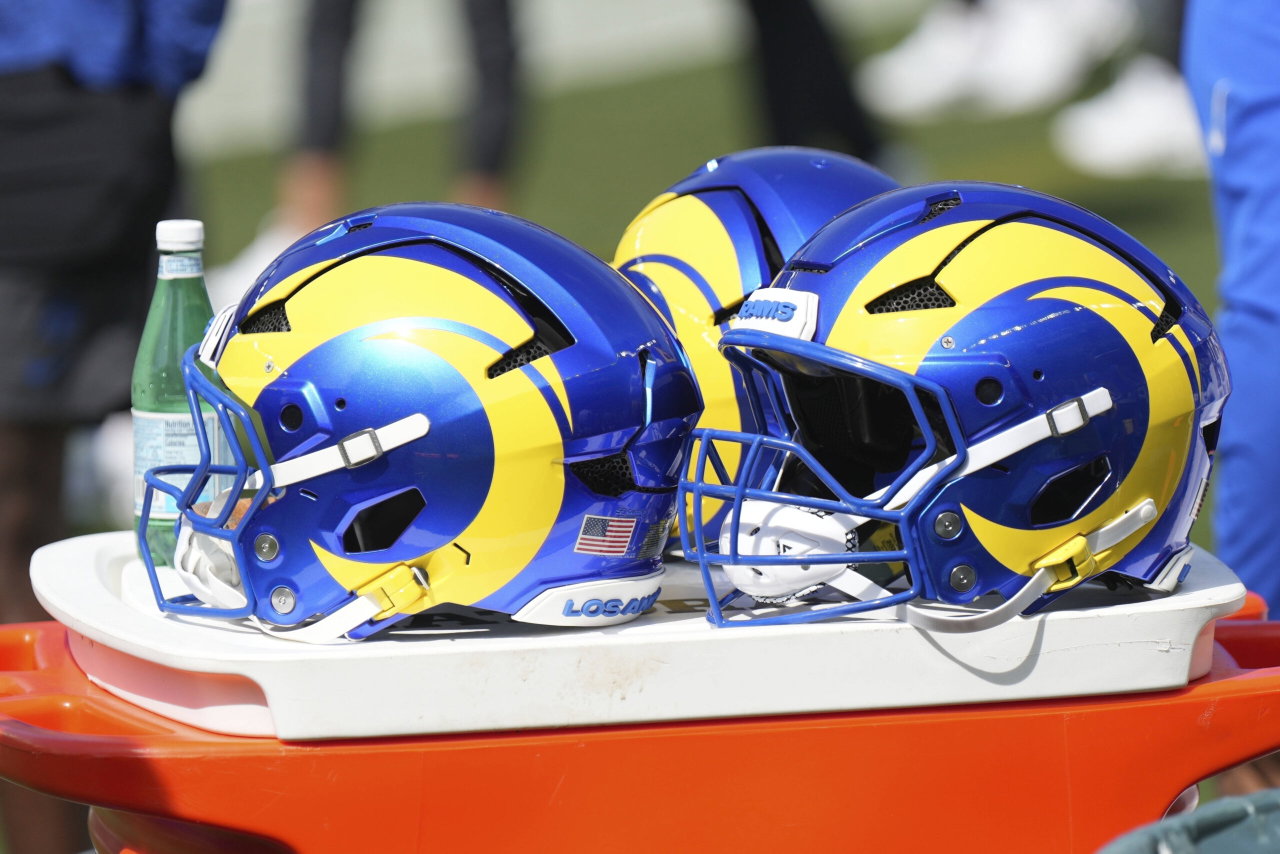
Lawrence McCutcheon’s stint with the Los Angeles Rams was limited to less than a decade, from 1972 to 1979. Still, it was enough for him to leave a mark in the Rams’ history. The player was the one who gave Los Angeles a 19-17 lead over Pittsburgh in the Super Bowl XIV that the Rams ultimately lost. Years later, fans are reminiscing about Lawrence, who passed away on October 23 at the age of 76.
Watch What’s Trending Now!
“It is with great sadness that we share the passing of our husband, brother, father, grandfather, and great-grandfather, Lawrence McCutcheon Clutch passed away on October 23 with family at his bedside following a long, courageous battle with Parkinson’s disease,” Lawrence’s family released a statement.
After joining CSU in 1969, the halfback from Plainview, Texas, compiled 797 yards on the ground before a broken wrist sidelined him. Lawrence found fame early in his career. Known as The Clutch, he made history as the first player at his school to surpass 1,000 rushing yards in a season, helping shape a new generation of running backs at Colorado State University. It was enough to woo the NFL scouts, but he was picked by the Los Angeles Rams in the third round (No. 70 overall) of the 1972 NFL draft.
However, he ensured he proved himself after being a mid-round pick. He led the team in rushing for five consecutive seasons from 1973 to 1977, serving as a key component of head coach Chuck Knox’s effective offense. In 1974, the Associated Press recognized him as a second-team All-Pro. There have been multiple highlight moments for Lawrence in Los Angeles.
Following his breakout season in 1973, he earned five straight Pro Bowl selections from 1973 through 1977, recording more than 1,000 rushing yards in four of those campaigns.
He saw himself as a complete running back capable of running the ball, catching passes and blocking, qualities he believed helped him become a starter in 1973.
“All it takes is quickness and blocking,” Lawrence said in a presser in 1974. “If you have our kind of blocking and any kind of ability, you should gain 1,000 yards every year. Quickness is the ability to hit between the blockers as soon as the hole starts to open. Speed only help on end runs.”
He also established Rams postseason records in the 1975 playoffs, rushing 37 times for 202 yards in a 35-23 win over the St. Louis Cardinals in the divisional round.
Knox experimented a little with Lawrence, and it paid off. The head coach repositioned him, and he went on to average about 1,200 rushing yards over the next two seasons, placing among the top five in Proscout, Inc.’s evaluations.
Another came in January 1980, on the Super Bowl stage. Across 11 playoff games with the Rams, he made his mark in Super Bowl XIV in January 1980 by throwing a 24-yard touchdown pass.
When it came to wrapping up his chapter in Los Angeles in 1980, he left as the Rams’ career rushing leader. By the end of his Rams career, he had amassed 6,186 rushing yards, the most in franchise history at the time. His total now ranks behind those of Marshall Faulk (6,959 yards), Eric Dickerson (7,245) and Steven Jackson (10,138) among the franchise’s leading rushers.
After Los Angeles, he did make stops at Denver Broncos, Seattle Seahawks, and Buffalo Bills but did not stretch his career for long and hung up his cleats after the 1981 season. Yet, the Rams still occupied a large part of his heart, which led him to return to Los Angeles, but this time not as a player.
Lawrence McCutcheon Built a Second Career in the Rams’ Organization
His retirement marked the beginning of Lawrence’s long run with Los Angeles. He returned to the Rams squad in 1982 as a scout. But over the years, he has taken up multiple roles, including director of player personnel for seven years.
“Through a decade-long playing career and another 32 years in the Rams’ front office, Clutch earned the respect and admiration of teammates, opposing players, colleagues, and fans alike. Clutch will be missed and remembered forever. We are thankful to those in our community who have reached out with love and support,” the family’s statement read.
Finally, he retired from his front office role in 2016.
“The contributions he made as a player as well as a talent evaluator in our personnel department have been invaluable to this organization,” General Manager Les Snead said in a statement after Lawrence’s retirement. “We will miss ‘Clutch’ being around on routine basis, but he will always be an important part of our family.”
Lawrence’s impact extends well beyond his own playing days. His son Daylon spent eight seasons with the Cleveland Browns, and his grandson Dyson is carrying the family name forward as a defensive back at Middle Tennessee. Three generations later, Lawrence’s football legacy is still alive.