
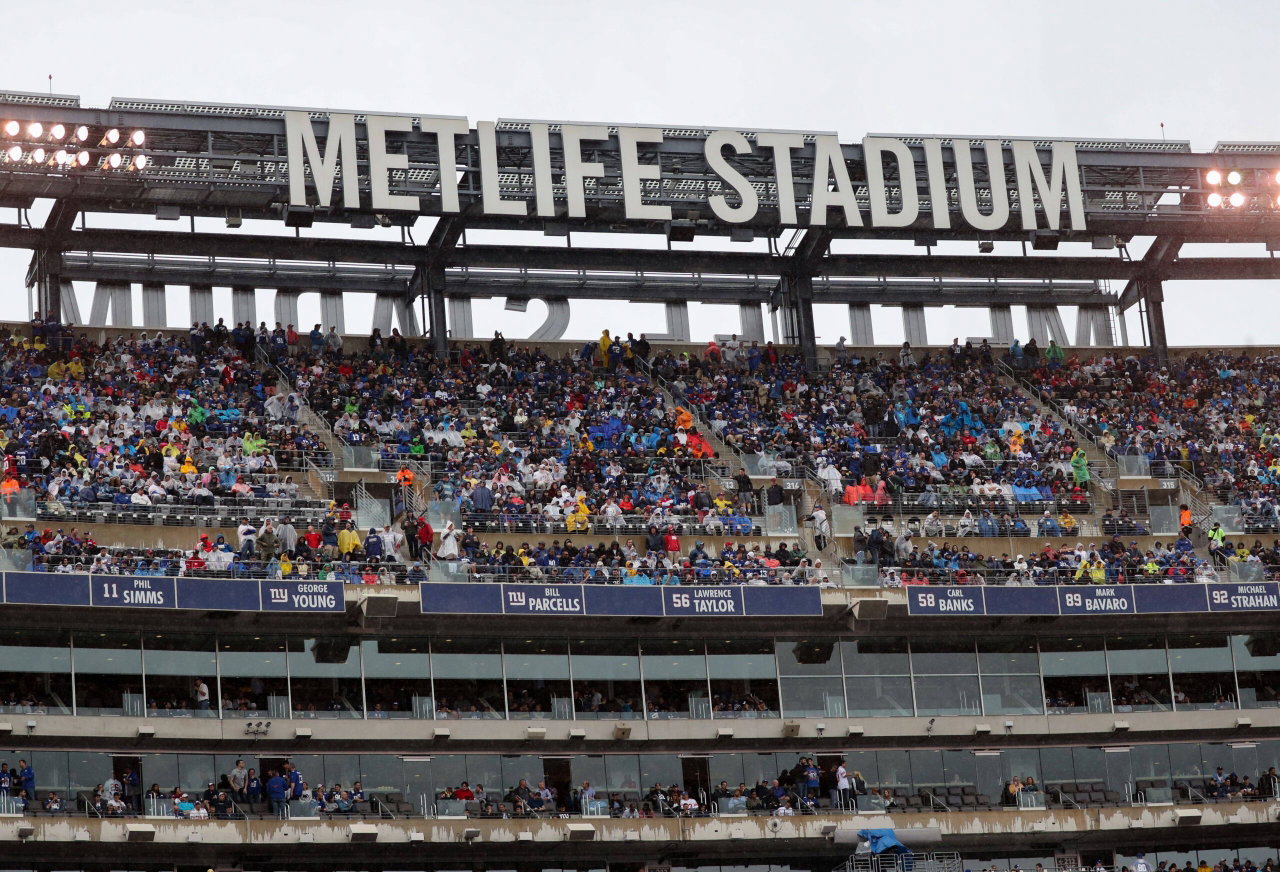
MetLife is an emotion for NFL fans. It is one of only two NFL stadiums shared by two teams: the New York Jets and the New York Giants. The stadium holds its share of good and bad memories in the fans’ hearts in terms of being the site of some massive wins and heartbreaks, like ex-Jets quarterback Aaron Rodgers tearing his Achilles. Sunday, November 15, turned out to be an ominous day for the New York Jets.
Watch What’s Trending Now!
They lost for the fifth time after losing 12-31 to the Buffalo Bills. Just as soon as they thought that they would be wrapping up the day distracting themselves, another disturbing piece of news came. Videos started doing the rounds on social media that captured a fire outbreak outside the MetLife Stadium.
“So MetLife is on fire,” reported game reporter for 24/7 News, Michael Mancuso, on X.
Located in East Rutherford, New Jersey, about 5 miles west of New York City, MetLife is an emotion for the NFL fans. It is one of only two NFL stadiums shared by two teams, the Jets and the New York Giants.
As reported by Pix 11 and based on the visuals, smoke and flames were seen billowing from an area east of the stadium shortly before 6 p.m.
Authorities had yet to confirm whether anyone sustained injuries in the fire or determine what triggered the incident. The blaze broke out a few hours after the Bills-Jets game concluded at approximately 4:15 p.m.
ESPN’s Rich Cimini, the Jets reporter, who was present at the game, said officials had informed attendees about a “structure fire” near the Meadowlands Sports Complex Station.
“People told not to go near the east plaza of the stadium (train station side). There is smoke billowing in the stadium. #Jets,” he reported on X.
However, the situation was reportedly resolved by approximately 6:15 p.m., according to Cimini.
The news was enough to rob the Giants and Jets’ fans of sleep.
The arrangement between the Giants and Jets goes beyond simply sharing a stadium. Both franchises contributed equally toward MetLife Stadium’s construction, avoiding the taxpayer-funded model used for many other stadium projects. Nevertheless, the possibility of the two franchises seeking separate homes has always been there.
The Jets previously came close to pursuing an ambitious alternative in Manhattan. The plan involved a 75,000-seat stadium with a retractable roof on the West Side, which was initially linked to New York’s potential Olympic bid. However, the proposal did not see any future because of political resistance and funding problems.
So, for the time being, MetLife Stadium continues to accommodate both teams.
Meanwhile, fire scares are not new for the Jets and Giants fans. Back on May 8 this year, thick black smoke and towering flames from a warehouse fire in Carlstadt, New Jersey, sparked alarm among social media users. The multi-story building was engulfed in flames, and its proximity to MetLife Stadium led to speculation that the NFL venue was also on fire. The incident, however, had no impact on the stadium.
The November 15th incident might be a deja vu for the fans.
Seven vehicles were damaged by fires in MetLife Stadium’s parking lots after tailgaters allegedly left behind hot coals from their grills. The incident took place in October, 2018, during the Jets’ game against the Minnesota Vikings.
According to New Jersey State Trooper Alejandro Goez, one driver unknowingly parked over an area where tailgaters had dumped hot coals. Another vehicle was parked over discarded coals in a different lot, causing flames to spread to five other vehicles.
While this time, the actual cause of the fire is yet to be confirmed, overall there has been a lot of complaints about the stadium.
MetLife’s Safety Debate Takes Another Turn
When it comes to players’ safety, MetLife is top-notch. Per Dianna Russini of The Athletic, the stadium ranked ninth-best when it came to lower-extremity injuries in a 2024 study. But fans have always complained about their safety.
Leaving MetLife Stadium after a game used to be an exhausting experience, especially for fans seated in the upper levels. Instead of having wide, direct exit routes, they had to walk through narrow ramps that went in a zigzag pattern.
While the design was aesthetically pleasing, it raised concerns about crowd movement and the possibility of delays during an emergency. For fans, the slow exit process remained one of the venue’s most frustrating features.
Over the past few years, MetLife underwent a two-phase lower-bowl renovation.
It’s time to see what caused the fire this time.