Imago
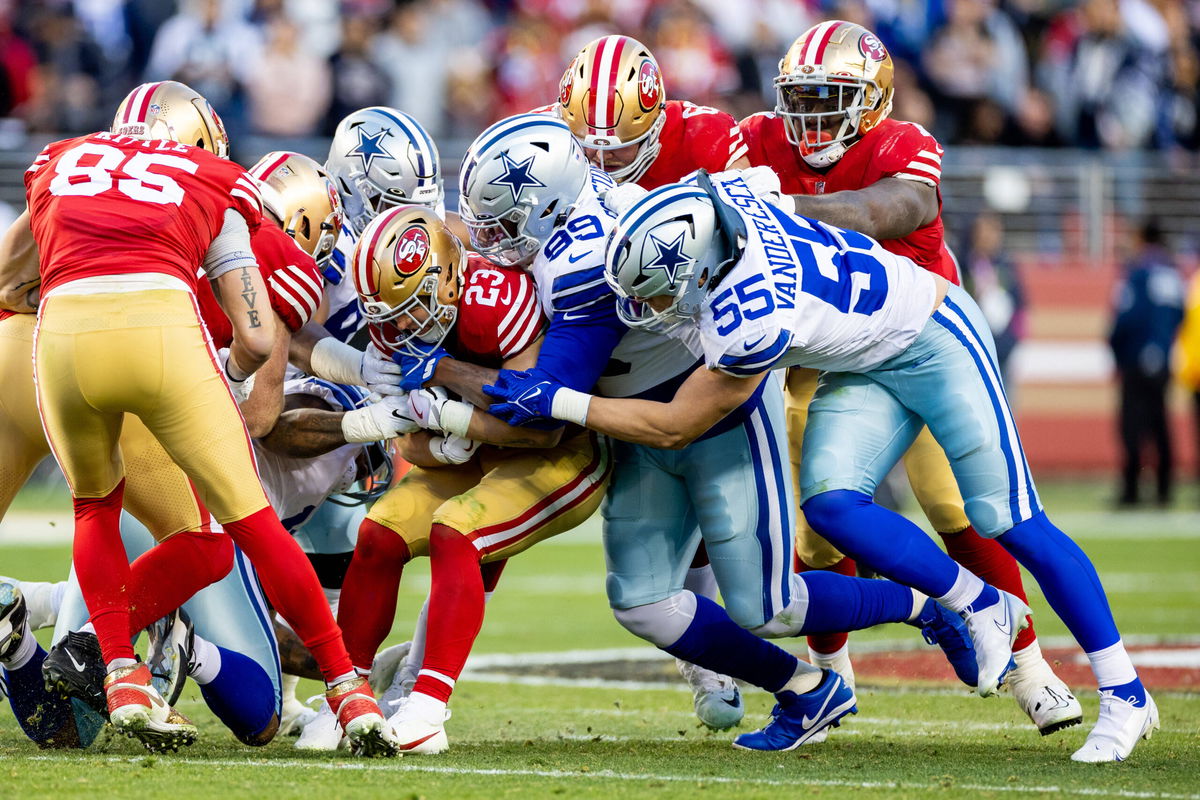
SANTA CLARA, CA – JANUARY 22: San Francisco 49ers running back Christian McCaffrey 23 is wrapped up by the Dallas defense during the NFL, American Football Herren, USA NFC Divisional Playoff game between the Dallas Cowboys and San Francisco 49ers at Levis Stadium in Santa Clara, CA. Photo by Bob Kupbens/Icon Sportswire NFL: JAN 22 NFC Divisional Playoffs – TBD at 49ers Icon230122145
Imago
SANTA CLARA, CA – JANUARY 22: San Francisco 49ers running back Christian McCaffrey 23 is wrapped up by the Dallas defense during the NFL, American Football Herren, USA NFC Divisional Playoff game between the Dallas Cowboys and San Francisco 49ers at Levis Stadium in Santa Clara, CA. Photo by Bob Kupbens/Icon Sportswire NFL: JAN 22 NFC Divisional Playoffs – TBD at 49ers Icon230122145
Imago
SANTA CLARA, CA – JANUARY 22: San Francisco 49ers running back Christian McCaffrey 23 is wrapped up by the Dallas defense during the NFL, American Football Herren, USA NFC Divisional Playoff game between the Dallas Cowboys and San Francisco 49ers at Levis Stadium in Santa Clara, CA. Photo by Bob Kupbens/Icon Sportswire NFL: JAN 22 NFC Divisional Playoffs – TBD at 49ers Icon230122145
Imago
SANTA CLARA, CA – JANUARY 22: San Francisco 49ers running back Christian McCaffrey 23 is wrapped up by the Dallas defense during the NFL, American Football Herren, USA NFC Divisional Playoff game between the Dallas Cowboys and San Francisco 49ers at Levis Stadium in Santa Clara, CA. Photo by Bob Kupbens/Icon Sportswire NFL: JAN 22 NFC Divisional Playoffs – TBD at 49ers Icon230122145
Essentials Inside The Story
- A decade-long antitrust battle puts the NFL’s massive broadcasting profits at risk.
- Federal judges will determine if the league’s exclusive game bundles are illegal.
- The March hearing could finally grant fans flexible out-of-market team packages.
The NFL is facing a major legal battle that could change how fans watch football. On March 9, 2026, a long-running lawsuit over “NFL Sunday Ticket” returns to court.
To give you a quick gist, the 11-year-old case argues that the league has been breaking the law for decades by forcing fans to buy every single out-of-market game in one expensive package, rather than letting them pay for just the team they want to watch.
The money involved is massive. Although a jury previously awarded fans $4.7 billion, that amount could triple to $14.1 billion under federal law. If the league is forced to pay, it would cost each of the 32 NFL teams about $440 million, a huge blow that could disrupt how the entire league makes and spends money.
Sports Business Journal reported the same on their X account, as it stated, “The 11-year-old ‘NFL Sunday Ticket’ antitrust lawsuit returns to the Ninth Circuit Court of Appeals on March 9. Hanging in the balance? A potential $14.1 billion judgment against the league and more.”
The 11-year-old “NFL Sunday Ticket” antitrust lawsuit returns to the Ninth Circuit Court of Appeals on March 9. Hanging in the balance? A potential $14.1 billion judgment against the league and more. https://t.co/X84pSK0wfv
— Sports Business Journal (@SBJ) February 19, 2026
The case has been a back-and-forth struggle. In 2024, a jury ruled against the NFL, but a judge later tossed out that multi-billion dollar fine because he felt the math used to calculate the damages wasn’t right. Now, a new panel of judges will decide whether to bring that huge fine back. The NFL is particularly nervous because this specific court has already ruled against them in the past.


At the heart of the issue is how the NFL controls what you see. Evidence from the trial suggests the league acts like a “cartel,” keeping Sunday Ticket prices high on purpose. By making the streaming package expensive, they “nudge” fans to watch the “free” games on local CBS and Fox stations. This protects the billion-dollar deals the NFL has with those big TV networks, but it leaves fans paying much more than they should for the games they actually want.
If the NFL loses this final fight, it could be the end of the “all-or-nothing” model. For the first time since 1994, fans might finally get cheaper, more flexible options—like a package that only shows their favorite team’s games. Now that being said, why would a case from 11 years back resurface now?
“NFL Sunday Ticket” case makes its return to the court
The “NFL Sunday Ticket” lawsuit is returning to the courtroom now because of a high-stakes legal tug-of-war over a $14 billion jury verdict that was overturned. After 11 years of litigation, the case has reached a critical “make or break” moment in the appeals process.
The primary reason for this current legal activity is the appeal of a 2024 ruling. Originally, a jury found the NFL liable for violating antitrust laws and awarded fans billions of dollars in damages.
However, the trial judge took the rare step of throwing out that verdict, claiming the jury’s math was flawed. The plaintiffs (the fans and businesses) have now officially challenged that reversal, forcing the case into the U.S. Court of Appeals for the Ninth Circuit.
Oral arguments are specifically scheduled for March 9, 2026, because this is the designated time for a three-judge panel to decide if the original multi-billion-dollar penalty should be reinstated. The court must now determine if the trial judge was wrong to dismiss the jury’s decision or if the NFL’s “bundled” broadcasting model—which forces fans to buy every out-of-market game rather than just their favorite team—is legally protected. Ultimately, the case is back in court now because the future of sports broadcasting is at a crossroads.
The outcome of this March hearing could fundamentally change how the NFL sells its games, potentially ending the exclusive “all-or-nothing” Sunday Ticket model and opening the door for cheaper, more flexible viewing options for fans across the country.
Related Newsletters