
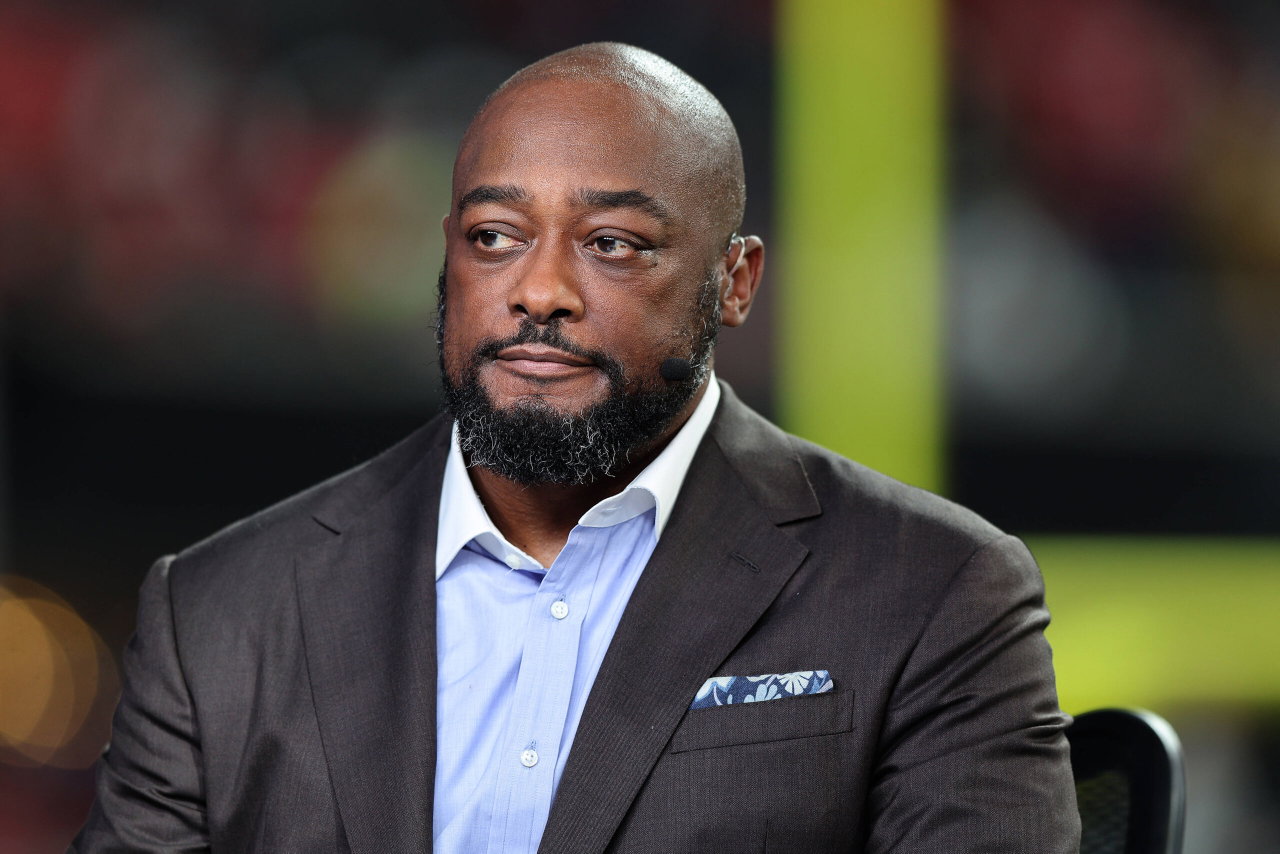
Former Pittsburgh Steelers head coach Mike Tomlin pulled himself away from the coaching job in the NFL after being in the business for over two decades. That’s a long time to know the league to the core. Given his experience, Tomlin opened up about the unusual approach to friendship within the coaching fraternity.
Watch What’s Trending Now!
“In our business, man, if you’re real friends, you don’t check on them, because checking on them is like you don’t believe they can hack it,” shared Tomlin on the Not Just Football with Cam Heyward podcast. “Like me and Raheem Morris specifically, I would never call him when he’s going through a tough time. He would never, ever, ever call me if I’m going through a tough time, because like, ‘No, man, don’t check on me. Check on the bear.’
“It’s just the mentality that I have in my coaching friend group. The relationships are what they are, man, they’re deep and they’re real, but no, we don’t check on each other. That’s a display of weakness.”
Tomlin’s first exposure to coaching in the NFL came with the University of Cincinnati when he served as the defensive backs coach for one season in 1999. After that came the Tampa Bay Buccaneers stint, where he worked from 2001 to 2005. That’s when he crossed paths with Raheem Morris.
Talking about their bond? They shared a strong friendship that stayed even though their roads led in different directions. Morris became the Tampa Bay head coach in 2009 while Tomlin was in charge of the Steelers from 2007.
Back in 2010, their teams were winning, but Tomlin and Morris still found a reason to challenge each other. Shortly after Pittsburgh and Tampa Bay claimed road victories to stay unbeaten, the two coaches exchanged some pointed text messages. The conversation captured the competitive edge in their friendship as the Steelers and Buccaneers prepared to meet in Tampa.
“We’re coming,” messaged Tomlin
“Good,” responded Morris.
In another interview, Morris opened up about what Tomlin meant to him.
“Man, I can’t stand this man. He’s an archenemy of mine”, he said in a clearly unserious manner, via the team’s YouTube channel. “We got the chance to work with each other for a couple of years, and we remained really good friends off the field-and on the field, I can’t stand him.”
But when Morris hit a rough patch in Tampa Bay, Tomlin left his former colleague alone to face his challenges and fight his own battles rather than give his peer sympathy or reassurance.
In January 2012, Morris was fired as a head coach from the Buccaneers. Under him, the team failed to recover from its midseason struggles, losing 10 straight games before closing the campaign with a 45-24 defeat to the Atlanta Falcons. It marked the franchise’s longest losing streak in one season since 1977.
But as Tomlin shared, he did not check on Morris even once. That doesn’t mean Tomlin did not have any role to play in his life.
Morris picked up an important coaching habit from Tomlin: never limit your understanding of football to one side of the ball. Tomlin, a former college wide receiver at William & Mary, frequently attended offensive meetings, prompting Morris to do the same. The initiative became a defining part of Morris’ coaching philosophy, allowing him to move between offensive and defensive responsibilities. So, when Atlanta assigned him to its wide receivers room in 2016, the decision may have surprised some, but Morris was well prepared for the challenge.
“The first opportunity I got to coach (offense) was here with Dan Quinn, and really that was full force,” Morris said. “No hesitation going into it because of those moments with Mike Tomlin and thinking about the background knowledge that you want to have being a coach on defense, having knowledge to coach on offense, and it certainly serves me well right now in the position I’m in now.”
So the relationship among the coaches, as Tomlin stressed, is strong and deep. However, at the same time, they show respect by trusting each other to overcome difficult situations without needing emotional check-ins.