
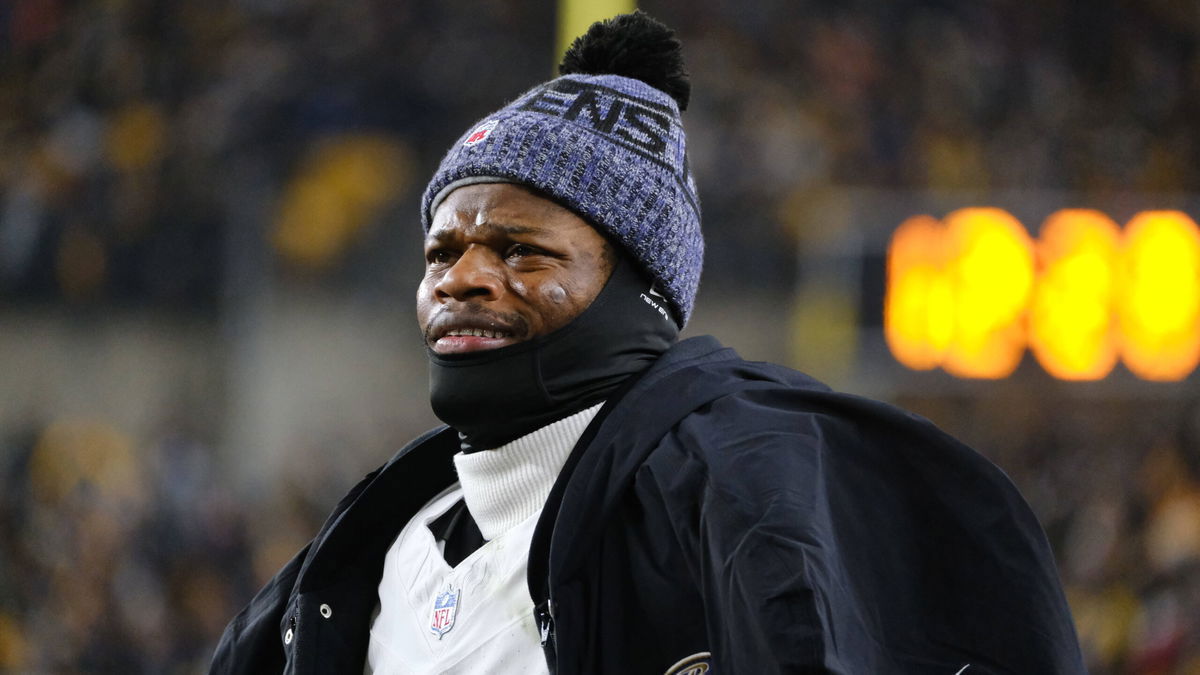
On March 7, 2023, the Baltimore Ravens placed the non-exclusive franchise tag on Lamar Jackson. Twenty days later, however, the quarterback publicly claimed he had requested a trade five days before the tag, stating the Ravens’ front office “has not been interested in meeting my value” during long-term contract negotiations. A month later, that stalemate ended when Jackson signed a five-year, $260 million extension with $185 million guaranteed. But now, former NFL Players Association leader DeMaurice Smith has raised a major concern, noting that despite Jackson being available, no other team stepped in to pursue one of the league’s top quarterbacks.
Watch What’s Trending Now!
“He (Lamar Jackson) is the most electric quarterback in the National Football League,” Smith said. “Yeah, MVP. Then the Ravens give him a franchise tag, which means that other teams could come in and if they offered one dollar more to him, they could have the best player in the National Football League. Not only did no team make an offer to Lamar Jackson.”
“For the first time in my history, I watched league and team executives give press conferences, ‘You know what? I’m not really interested in him.’ I mean, one of them was from the Washington team that is 30 miles to the south. That did not have an MVP quarterback. The Falcons were saying, ‘I’m not interested in that guy.'”

Ex-NFLPA leader @DeMauriceSmith on the Lamar Jackson collusion case: "If they offered $1 more to him, they could have the best player in the National Football League. Not only did no team — not one — make an offer to Lamar Jackson, I watched league and team executives give press Show more
Smith’s comments tie back to the collusion debate between the NFL and the NFLPA that has stretched over the past three years. Following Deshaun Watson’s fully guaranteed deal with the Cleveland Browns in 2022, the league reportedly encouraged teams to limit fully guaranteed contracts.
Smith was among the first to allege that owners and executives coordinated to restrict such deals, pointing to quarterbacks like Russell Wilson and Kyler Murray alongside Jackson during the 2022 owners’ meetings. Around that time, Lamar declined an extension, believing his value could rise further with continued performance.
By 2023, Jackson was reportedly seeking a fully guaranteed contract similar to Watson’s. The Ravens responded with the non-exclusive tag, opening the door for other teams to negotiate. In theory, that created a market. In practice, nothing materialized.
That absence is what Smith continues to question. Despite Jackson’s MVP-caliber production, no team submitted a competing offer, which fueled speculation that there was an unspoken understanding across the league to avoid engaging. Not formally, not publicly, but effectively the same outcome.
“I don’t care how much you believe in either the competence or the quote-unquote myth that all of these owners want to win equally,” Smith added. “That fact that no one even made a call to say, ‘Hey, here’s an extra dollar,’ raises a question.”
Which circles back to the broader concern. Since the 2022 meetings, in which collusion was alleged, fully guaranteed deals and signing bonuses have remained rare, following Watson’s contract. And while the NFLPA challenged that dynamic, a three-member arbitration panel ultimately dismissed the case after the union appealed a January 2025 ruling, siding against the players’ claims.
A three-member panel ruled against the NFLPA in the NFL collusion case
After DeMaurice Smith alleged that the NFL had asked teams to collude and limit fully guaranteed contracts, the initial arbitration ruling did not support that claim. Christopher F. Droney, who oversaw the dispute between the league and the NFLPA, concluded there was insufficient evidence of coordinated action among teams.
“While the NFL Management Council encouraged 32 member clubs of the NFL to reduce guarantees in future contracts with players at the March 2022 annual meeting of the Club owners, the Clubs did not join in such a collusive agreement and did not act in accordance with one as to the three quarterbacks named in the initial arbitration demand or to the veteran players. Accordingly, I dismiss the arbitration demand of the NFLPA in its entirety,” Droney stated in January 2025
Soon after, the NFLPA filed an appeal following the ruling against the union. But earlier this month, a three-member panel again dismissed the case, ruling in favor of the league and once more against the NFLPA.
“For reasons stated… we deny the appeal of the grievance by the NFLPA,” the appeals panel of Richard J. Howell, Martin F. Scheinman, and James R. Spencer wrote in a 15-page ruling that was obtained on Friday.
Imago
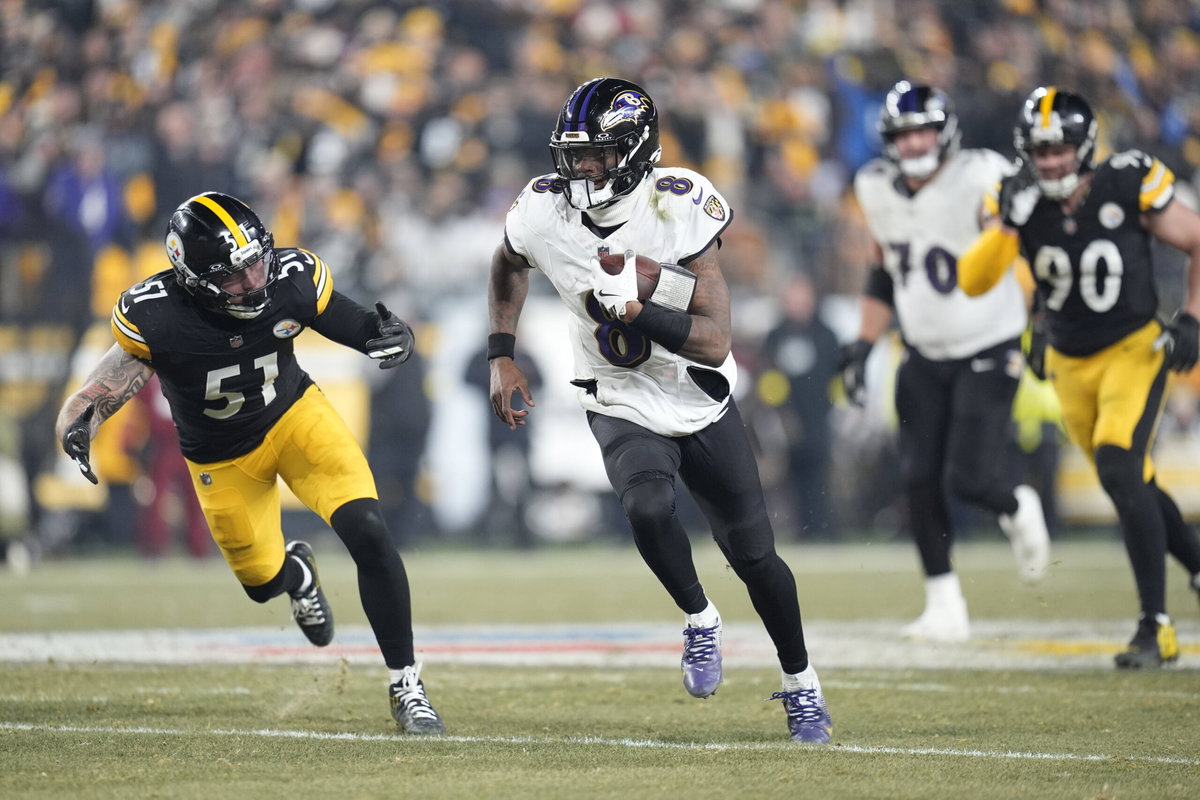
January 4, 2026, Pittsburgh, Pennsylvania, USA: January 4, 2026: Lamar Jackson 8 and Nick Herbig 51 during the Pittsburgh Steelers vs Baltimore Ravens at Acrisure Stadium in Pittsburgh PA. Brook Ward / Apparent Media Group. Pittsburgh USA – ZUMAa234 20260104_zsa_a234_425 Copyright: xAMGx
At the same time, the broader context remains more layered. While the decision ultimately sided with the league, it also acknowledged that league officials did encourage owners to limit fully guaranteed contracts. From notes presented to teams in March 2022:
“If guarantees continue to grow in both amount and number of players, then there’s a risk that they become the norm in contracts regardless of player quality . . . That not only has the potential to hinder roster management but also set a market standard that will be difficult to walk back. Of course, all clubs must make their own decisions. But continuing these trends can handcuff a club long into the future.”
All 32 teams operate within a shared structure, from revenue distribution to the Collective Bargaining Agreement that governs league rules. That agreement allows fully guaranteed contracts if teams choose to offer them. This is why the league even suggesting restraint raises questions. Even so, as things stand, the panel has ruled in favor of the NFL and against the NFLPA.