Imago
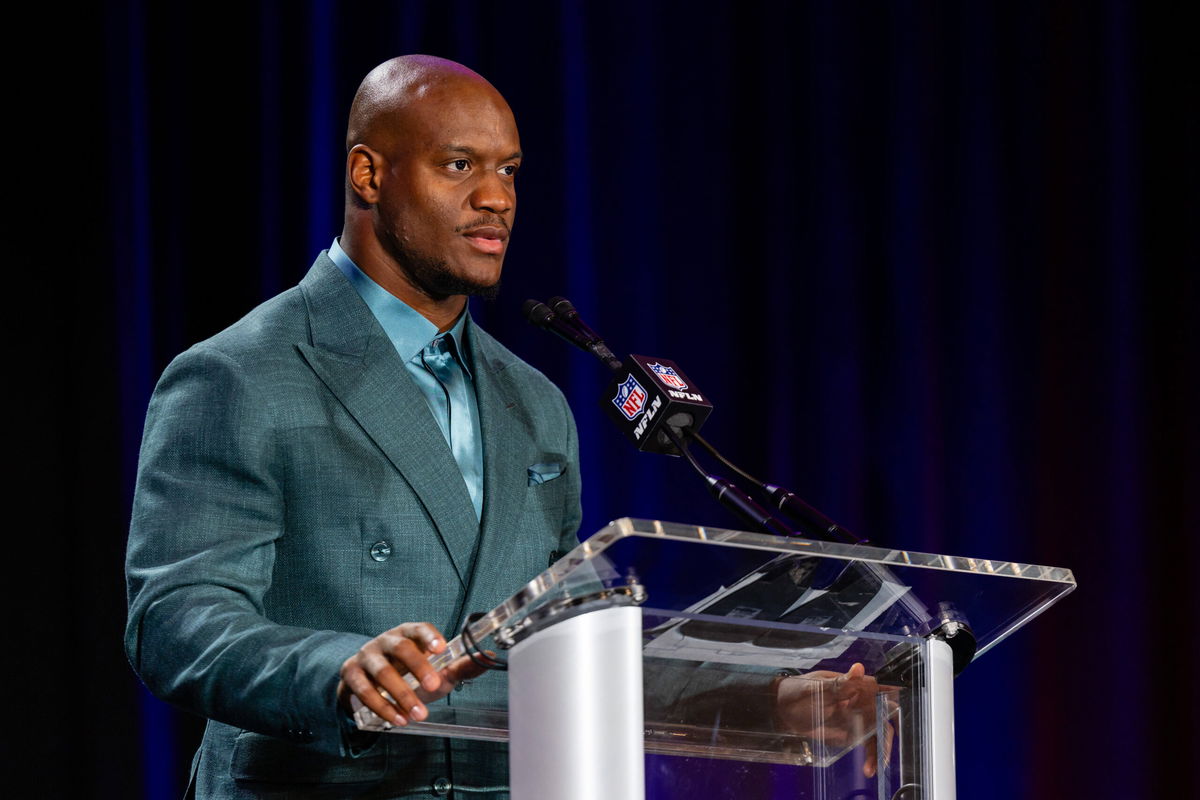
SAN FRANCISCO, CA – FEBRUARY 09: Kenneth Walker III 9 of the Seattle Seahawks speaks during a press conference, PK, Pressekonferenz after Super Bowl LX on February 9, 2026 at Moscone Center in San Francisco, CA. Photo by Matthew Huang/Icon Sportswire NFL, American Football Herren, USA FEB 09 Super Bowl LX Press Conference EDITORIAL USE ONLY Icon260209025
Imago
SAN FRANCISCO, CA – FEBRUARY 09: Kenneth Walker III 9 of the Seattle Seahawks speaks during a press conference, PK, Pressekonferenz after Super Bowl LX on February 9, 2026 at Moscone Center in San Francisco, CA. Photo by Matthew Huang/Icon Sportswire NFL, American Football Herren, USA FEB 09 Super Bowl LX Press Conference EDITORIAL USE ONLY Icon260209025
Essentials Inside The Story
- Seattle Seahawks are prioritizing the future of Super Bowl LX MVP Kenneth Walker III
- Walker played in all 17 regular-season games for the first time in his career
- Walker reportedly tried to negotiate his new contract mid-celebration
With Super Bowl LX now in the rearview, the Seattle Seahawks turn the page to free agency. And at the center of that conversation sits Super Bowl MVP Kenneth Walker III. After a career year in Seattle, a contract extension feels like the logical next step. But according to CBS insider Jonathan Jones, the franchise tag is also an option general manager John Schneider is considering.
Watch What’s Trending Now!
“The Seahawks have plenty of cap space, but both sides may struggle to immediately agree on an extension after this playoff burst,” Jones wrote. “Has he earned a Josh Jacobs- or James Cook-type deal worth $12 million per year? Or does GM John Schneider opt for the one-year, roughly $14 million tag? Either way, after the past few weeks, there is little doubt Walker will remain in Seattle.”
For now, the expectations are clear: Walker is staying in Seattle for 2026. The real question is how. Does he enter the season with long-term security? Or does he play under a one-year franchise tag? Both paths are realistic, and each carries its own logic.
Starting with the tag, the projected franchise tag for a running back sits around $14.5 million for the 2026 season. It’s certainly an option. But it may not be the most likely one. Financially, that one-year number would exceed his projected average annual value on a multi-year deal. And historically, Schneider hasn’t leaned heavily on the franchise tag.

Tony's Top Prospects For QB For SEAHAWKS
In over a decade, he’s used it just twice, first on kicker Olindo Mare in 2010 and later on defensive end Frank Clark in 2019. That context matters. A $14 million-plus tag is possible, but Schneider’s track record suggests it’s not his preferred route. Which naturally shifts the focus to a contract extension.
Imago
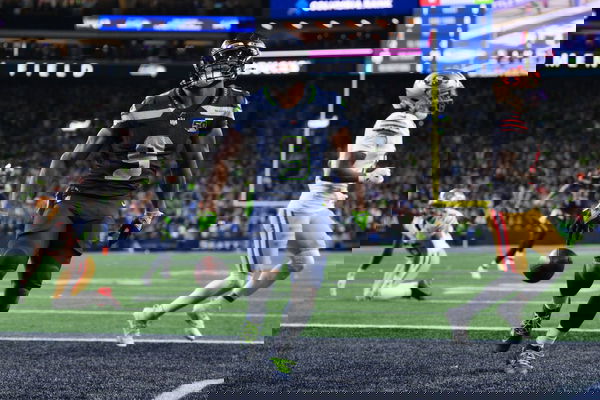
NFL, American Football Herren, USA NFC Divisional Round-San Francisco 49ers at Seattle Seahawks Jan 17, 2026 Seattle, WA, USA Seattle Seahawks running back Kenneth Walker III 9 scores a touchdown against the San Francisco 49ers during the first half in an NFC Divisional Round game at Lumen Field. Seattle Lumen Field WA USA, EDITORIAL USE ONLY PUBLICATIONxINxGERxSUIxAUTxONLY Copyright: xStevenxBisigx 20260117_rtc_ab9_0124
The case for an extension is straightforward. Seattle has flexibility. Per Over the Cap, the Seahawks are projected to have roughly $72 million in cap space. That’s more than enough room to structure a long-term deal creatively. Meanwhile, Spotrac projects Walker at four years, $36 million, an average annual value of $9 million.
When you look at those numbers side by side, an extension feels practical. It would provide cost certainty for the team and long-term security for the player. And if structured aggressively, Walker could position himself among the higher-paid running backs in the league.
From Walker’s side, the conversation has already begun, and that hasn’t gone unnoticed. The Super Bowl MVP stepping into negotiations signals confidence. The only question now is whether Seattle rewards that postseason surge with long-term stability or opts for the short-term leverage of the franchise tag.
Kenneth Walker tried negotiating an extension during the Super Bowl parade
The Seahawks, powered by a Dark Side defense and a Super Bowl MVP performance from Kenneth Walker III, captured their second Lombardi Trophy on Sunday. The celebration rolled straight into the victory parade. But while most were soaking in the moment, Walker briefly shifted the focus to business. At one point, he pulled general manager John Schneider aside to talk about a contract extension.
“Ken Walker being the MVP, let’s go!” Schneider said into the microphone while hyping up the crowd. “He tried negotiating with me five minutes ago, it was really weird.”
As Schneider joked about the back’s negotiation attempt, Walker stood behind him, smiling and shaking his head. Lighthearted? Absolutely, but also telling. It’s not hard to understand why Walker would bring it up. The former second-round pick is heading toward free agency after one of the best seasons of his career. For the first time, he suited up in all 17 regular-season games. Durability, production, and timing; that combination matters in negotiations.
Statistically, the case is solid. Walker rushed for 1,027 yards and five touchdowns during the regular season, while adding nearly 300 receiving yards. Then came the postseason. In three playoff games, he totaled 313 rushing yards, 104 receiving yards, and four rushing touchdowns. When it mattered most, he delivered.
He kept the offense steady while the defense held up its end of the bargain. Together, they brought another championship to Seattle. Now the spotlight shifts. Does that performance translate into a long-term extension? Or do the Seahawks opt for the franchise tag route? The answer should come into focus within the next month.
Written by

Edited by

Antra Koul