
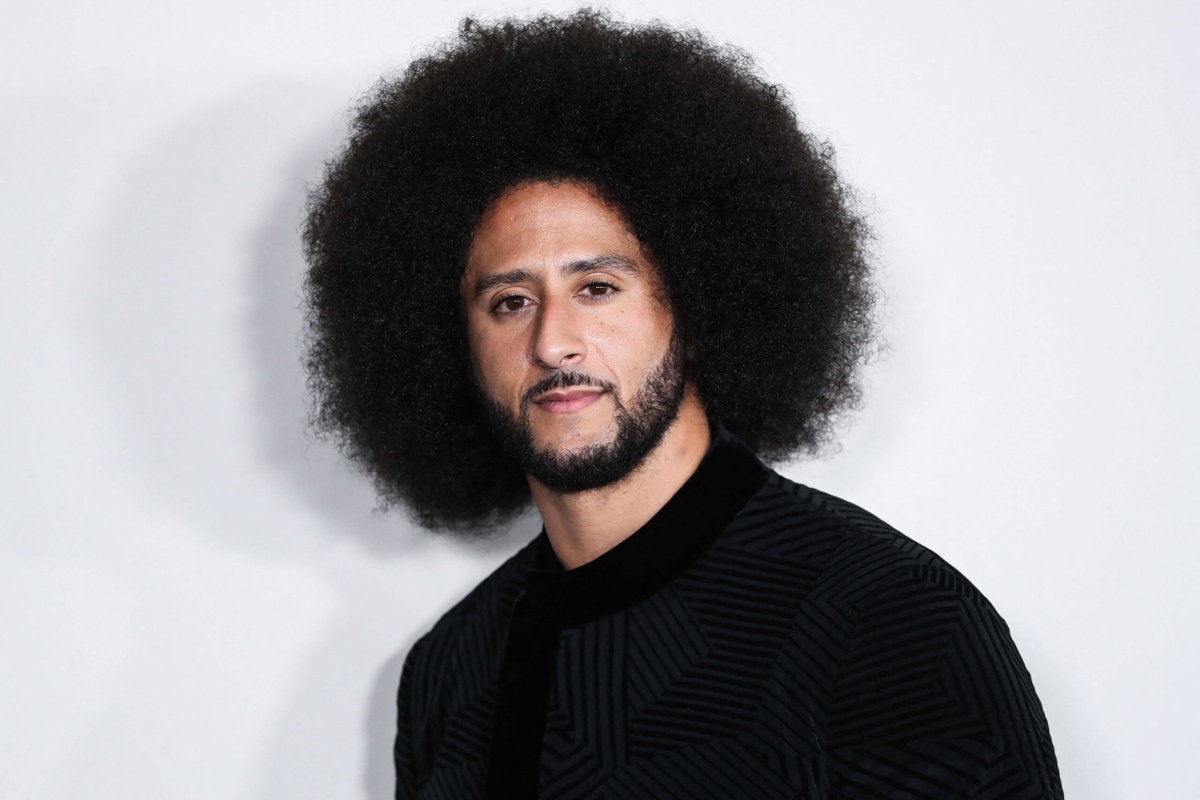
It has been a decade since former San Francisco 49ers quarterback Colin Kaepernick took a knee during the 2016 season. Even though he did not return to the league, he continued his fight as a social activist, focusing on racial justice. Years later, he had a sharp message for Jerry Jones and the league.
Kaepernick was at an author talk for his memoir and manifesto, “The Perilous Fight,” presented by The Dock Bookshop on Tuesday, October 6, 2026, at The Black Academy of Arts and Letters in Dallas. The setting was perfect to fire up the Dallas audience, years after Jones threatened to bench players who kneel during the anthem.
“It’s the same thing that I’ve said in the past, which is, why are you so comfortable working against black folks trying to live?” he said, via DLLS Sports’ Clarence Hill Jr., replying to what he would tell Jones and the others who didn’t agree with his protest. “I mean, for me, people that worked, and I think this was one of the unique insights that I got in this process. People revealed who they were.
“And just stepping back for a moment. We were fighting specifically against police killing black folks. It’s amazing to me that there’s anybody that’s like, ‘I’m against that.’ And I think the people who came out and fought against it revealed who they were revealed their intentions. And my question would be, why are you so comfortable with it? And the question for us, collectively. Why are we supporting it?”
It all started with Kaepernick taking a knee during the anthem in the 2016 season to protest against racial injustice against the African-American community. It became one of the most culturally relevant points in the history of the NFL.
“I am not going to stand up to show pride in a flag for a country that oppresses Black people and people of color,” he said back then. “To me, this is bigger than football, and it would be selfish on my part to look the other way.”
At the time, Jerry Jones did not shy away from delivering his take on the situation.
“There is no question the league is suffering negative effects from these protests,” Jones said in 2017. “Our ability to be substantive is based on having a strong NFL, a league that people are really interested in and want to watch and want to watch the games. At all times, if I am anything, I am first and foremost a proponent of making the NFL strong. Making us have as many people watching the game as we can and watching in light of what we are doing and that’s playing football. If all this makes you stronger to represent messages, let’s don’t do it in a way that tears down the strength of the NFL.”
While Kaepernick’s path drifted away from the league, the discussions about his national anthem protest continued. About 30 NFL owners, players, and league executives gathered urgently at the league’s Park Avenue headquarters in October 2017.
Houston Texans owner Bob McNair did not mince words, urging players to tell their teammates to stop kneeling during the anthem.
“You fellas need to ask your compadres, fellas, stop that other business, let’s go out and do something that really produces positive results, and we’ll help you,” he said.
Kaepernick chose to opt out of his contract after the 49ers informed him they planned to release him following a 2-14 season. He has not taken an NFL snap since that season. But the mission he started, for which he had to risk his playing career, is still on.
“I’ve gotten so many questions about why did I protest, what happened, what led up to it, the details behind the scenes of all of the moments,” Kaepernick told TIME Magazine about his memoir. “Not just the protest, but owners in the NFL, the conversations that were happening there, the workout in 2019 and all the things that transpired around that. Then also just the work that we’re doing directly in the communities. It felt like it was a great time to be able to go out, answer some of those questions, and also be able to give insight into how we build, how we move forward together. I think it’s especially critical in a moment like this.”