
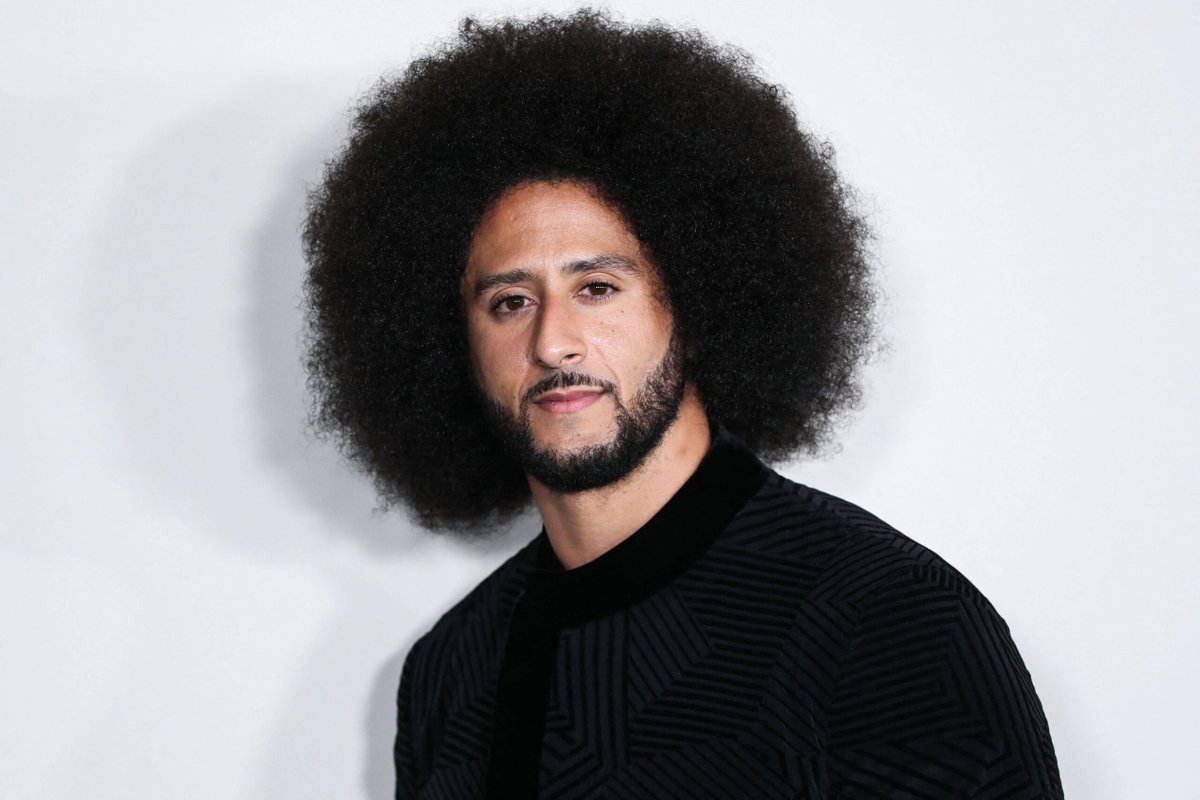
Nearly a decade has passed since Colin Kaepernick last stepped onto an NFL field. He doesn’t even watch the league anymore, believing the NFL has repeatedly failed to confront racism. Still, he hasn’t completely walked away from football. To keep the game close, Kaepernick turns to college football instead.
Watch What’s Trending Now!
Now, years after kneeling during the national anthem before preseason games in August 2016, his name is once again back in the spotlight. This time, he is revisiting the aftermath of it all and bringing attention to parts of the NFL’s story that, until now, had largely gone unsaid.
“I think they only looked at it from the perspective of white fans,” shared the former San Francisco 49ers quarterback on The New Yorker’s Radio Hour. “The part that I think is undercovered is the massive support for the protests and how that continued to grow.
“And one of the narratives that the NFL continued to try to push out, because it benefited them, saying, ‘Oh, we’re not going to do this,’ because they didn’t want to align with supporting Black communities, was, ‘Oh, you’re bad for business. Like, you’re going to hurt the value of our teams. You’re going to hurt our ticket sales. You’re going to hurt all of these things.’”
Here’s what happened in 2016: Before a preseason contest, Kaepernick knelt during the national anthem to draw attention to police brutality and racial injustice affecting Black people and other minorities. His decision to protest on the field did not sit well with the league, as, according to the quarterback, the NFL “blackballed” him.
It was a sensitive time politically. In fact, a year later, President Donald Trump sharply escalated the political fight over anthem protests, criticizing kneeling players and calling on fans to boycott NFL games. Ultimately, the NFL did not take any harsh action to officially ban him, but he went unsigned by any team after the 2016 season.
Now, Kaepernick is arguing that the claim that his protest would hurt the NFL’s business was false.
“Which got proven to be demonstrably false multiple times. One, because my jersey went to number one as far as a seller,” shared Kaepernick. “Two, in 2018 we did a campaign called ‘Dream Crazy’ with Nike, and on the back of that Nike stock jumped approximately $6 billion because of the support from people and communities saying, ‘Oh, this is the first time that a company and a corporation has stepped up and supported our communities in this way. We want to make sure that we support that.’”
Back then, Kaepernick remained unsigned, yet the campaign saw massive success. The Nike campaign later won the Grand Prix in Creative Effectiveness at Cannes Lions in 2021. Developed by Wieden+Kennedy, it generated more than $163 million in earned media value; the campaign case study attributed a $6 billion increase in Nike’s brand value to the campaign, as it lifted sales by 31%.
Not just this, Nike released Kaepernick’s signature Air Force 1 ’07 x Colin Kaepernick in December 2019. It was sold out in both adult and children’s sizes within a day.
Kaepernick never got the chance to return to the gridiron again, but he is now returning to his fans through his memoir, The Perilous Fight, which is releasing on September 15, 2026.
The Perilous Fight
The Perilous Fight takes readers back to the moment Colin Kaepernick stepped into the middle of a much larger American conversation. He recounts that story with the same conviction that defined his protest, an act that went far beyond the football field and left a lasting mark on American sports and culture.
Yet the book isn’t simply a look back. It also turns toward what lies ahead: the future that people are still fighting to create.
Diana Dapito, who is the Audible Head of Consumer Content, mentioned: “Hearing Colin Kaepernick tell his story in his own voice brings an urgency and authenticity that only he can deliver, and we’re honored to capture his words in this audiobook. This is a once-in-a-generation story that’s powerfully relevant today.”
The book also revisits one of the NFL’s most consequential partnerships from 2019, when Jay-Z’s entertainment company, Roc Nation, teamed up with the league. Under the agreement, Roc Nation would advise the NFL on selecting talent for the Super Bowl.
That partnership hurt Kaepernick, who once mentioned he was let down by Jay-Z.