
In the past few months, the league has found itself embroiled in multiple controversies. From Mike Vrabel and Dianna Russini’s pictures to Jed York’s arrest, the league has survived a few tough months. And now, as we inch closer to the regular season, there’s seemingly another controversy brewing and a bigger question that the league needs to answer: Why is there a lack of opportunity for black stars?
Watch What’s Trending Now!
The NFL reportedly has about 70% of Black players playing on the field, whereas white players are statistically at about 27%. However, for Dan Le Batard, a sport that’s so “disproportionately Black,” the lack of opportunities for the black players is terrifying.
“I just wonder if you guys notice that the sport is disproportionately Black, and the broadcasters who get hired are disproportionately white, and it’s on purpose…It’s to make it palatable to the broadest section of people…There aren’t that many white stars in football. There are plenty of Black stars. Why are the white ones the only ones who get the broadcasting jobs?”
Now, according to Le Batard, former white players receive the majority of the broadcasting jobs. When Tony Romo was arrested, JJ Watt replaced him at CBS. And even when talking about current players who may enter broadcasting once their NFL career ends, only names like Kirk Cousins, Travis Kelce, and Sean McVay, among others, stand out.
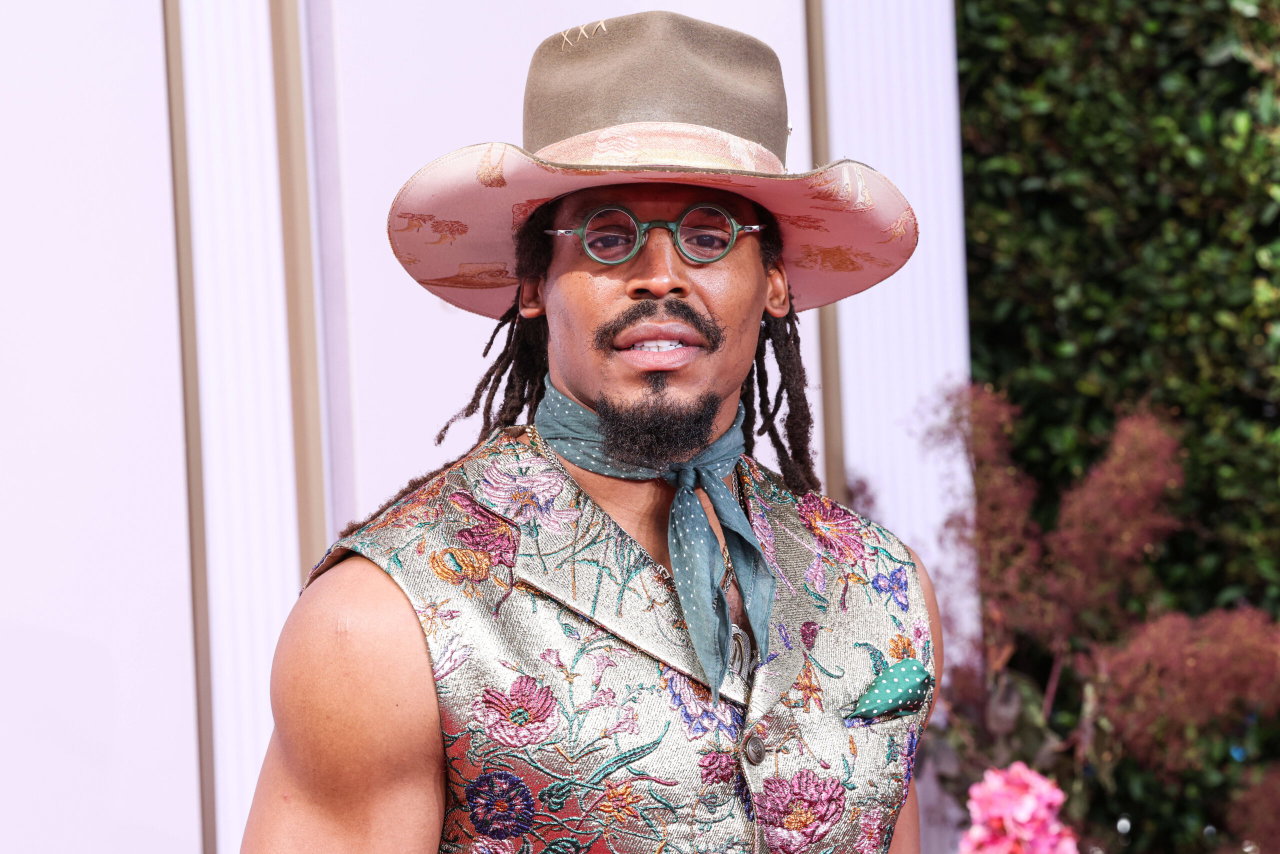
The question prompted his co-host, Jonathan Zaslow, to suggest that it’s because former Black players are turning to online podcasts. That, however, didn’t sit well with former NFL quarterback Cam Newton, who believes that former Black players are forced to pursue podcasts because of a lack of opportunities in the broadcasting world.
“It’s the black people that are doing more podcasts. Why are we doing podcasts, brother its because the major networks aren’t giving us the same opportunity. We’re forced to control our own narrative because we can’t tell a narrative to the network that gives us, or that does not give us, mainstream airtime.
“Mainstream airtime, I have to identify it, is prime-time games. What is a prime-time game? A prime-time game could be the Super Bowl. Prime-time game could be Thursday Night Football. Prime-time game could be a 4:15 game. Prime-time game could be an 8:00 game. Prime time game could be a Monday Night Football. Prime-time games come in many different time slots. But African-American or minority talent is not getting that.”
It’s evident that multiple former Black players are now on major podcasts, including Newton, Shannon Sharpe, Chad Johnson, Ryan Clark, who was recently laid off by ESPN, Brandon Marshall, and Pacman Jones, among others. And the reason behind this is a lack of better opportunity, according to both Newton and Dan.
Le Batard hasn’t been a fan of this narrative for a long time, and this certainly isn’t the first time that he’s called out the bias.
In 2005, while working with the Miami Herald, Dan wrote a column on Steve Nash’s MVP win over Shaquille O’Neal by a razor-thin 1,066-to 1,032-point margin and noted that “O’Neal had much better numbers than Nash in just about every individual statistical measurement except assists.” For Dan, the question that followed was, “Is this as black and white as the box scores that usually decide these things?”
What followed then was a massive backlash against Le Batard, followed by name-calling. However, Dan had only insinuated that Nash may have received some extra votes because white fans wanted to reward him for beating Shaq in a sport historically dominated by black players. About 70% of the NBA roster has been predominantly Black.
Now, coming to the present-day context established by him, the ratio of white and Black players in the NFL broadcasting world is heavily dominated by white players. Regardless of that, changes can be seen coming in pockets.
Russell Wilson joined CBS following his retirement. At the same time, former Pittsburgh Steelers head coach Mike Tomlin will also be the new face of NBC’s Football Night in America.
Though the disparity still persists. Throughout most of the offseason, Travis Kelce dominated the headlines as he was expected to become a broadcaster before eventually announcing his return to play another season. At the same time, Matthew Stafford and Kirk Cousins are among the veteran quarterbacks whom industry insiders predict could join the media world as a career following their retirement.
Now, while the bias may still exist, Black players have certainly started receiving more opportunities in broadcasting. However, it will be a long time before Dan Le Batard, and we can see a significant change in its wake.