
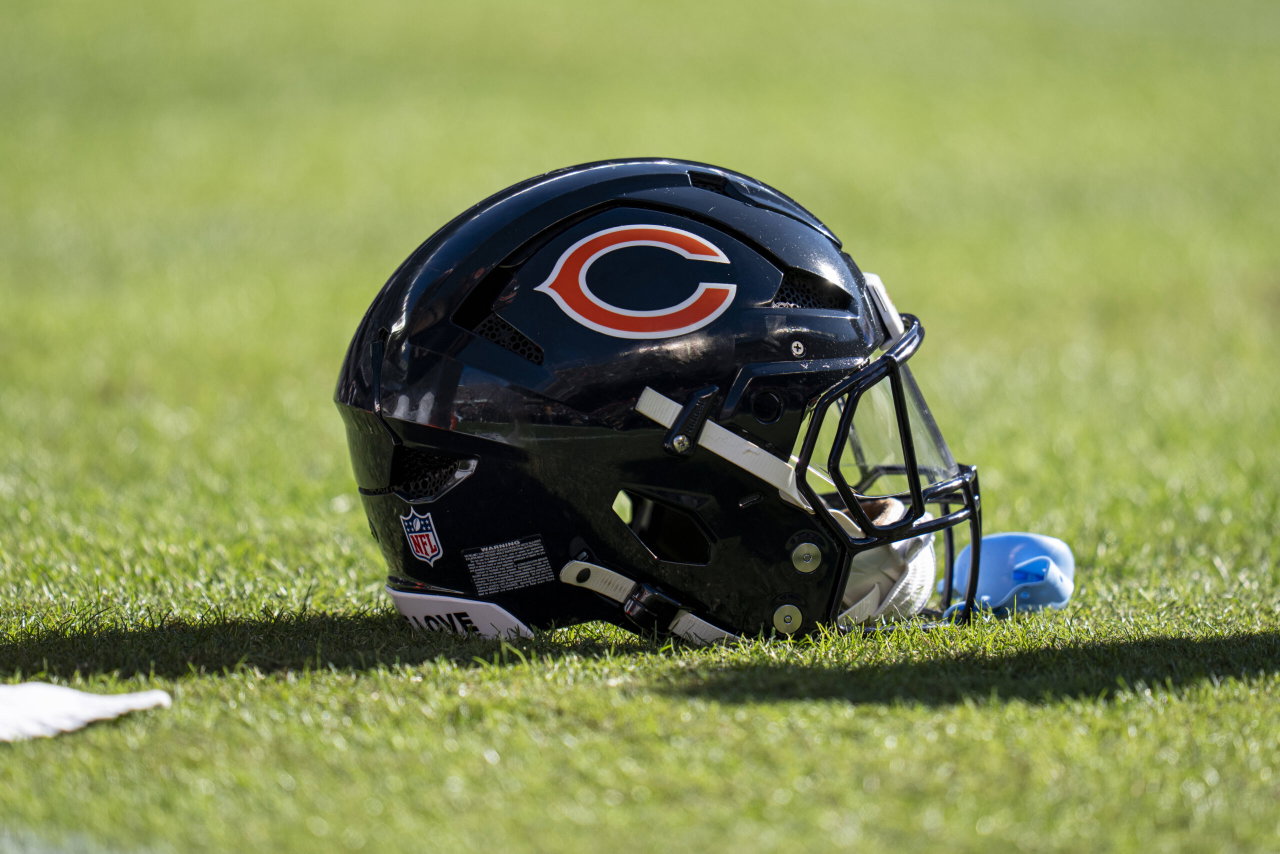
When Young Bussey joined the Chicago Bears following the 1940 NFL Draft, he reached out to Bears owner and coach George Halas to give a bold message: he had come to win, and Halas could either trade star quarterback Sid Luckman or keep Bussey as his backup. Halas kept Luckman, and Bussey spent the 1941 season on the bench behind him, a season that ended with an NFL championship.
Watch What’s Trending Now!
However, that would be the only season Bussey played in the NFL, as he eventually joined the military during World War II. He died on January 7, 1945, becoming the only Bears player to make the ultimate sacrifice during World War II. To honor that sacrifice, the Bears organization has paid tribute to Bussey.
“More than 40 Bears players and members of the organization served in the Armed Forces during World War II, including Hall of Famers Danny Fortmann, Sid Luckman, George McAfee and Joe Stydahar,” Larry Mayer wrote in a dedicated story to Bussey on the team’s official website. “…Only one Bears player paid the ultimate price during the war. Young Bussey, a backup quarterback who appeared in 10 games for the 1941 NFL champions, was killed at the battle of Lingayen Gulf in the Philippines on Jan. 7, 1945.”
Bussey was born in the small East Texas town of Timpson. His family later moved to Humble, near Houston, where he grew up in difficult circumstances. He attended San Jacinto High School in Houston, where his athletic ability made him a local attraction, which helped lead him to LSU.
Bussey suited up for LSU from 1936 to 1939 and became one of the Tigers’ most versatile players. He topped the team in rushing in 1937 and in passing in both 1937 and 1938. That 1937 season was his best: he gained 371 yards on 97 carries and threw for 712 yards and eight touchdowns.
Chicago selected him in the 20th round of the 1940 draft, 187th overall. Rather than going straight to the NFL, he spent that season with the Newark Bears, the club’s minor-league affiliate in the American Association, and played 10 games at quarterback.
Bussey finally made his Bears debut during the 1941 season and backed up Luckman on a Bears team that went on to win the NFL championship after defeating the New York Giants 37-9. He attempted just one pass, which was an 8-yard completion. The final regular-season game of the 1941 season was played on December 7, 1941, the same day Japan attacked Pearl Harbor.
The Bears were playing the Chicago Cardinals at Comiskey Park. Bussey was on the roster that day when an announcement was made during the game informing spectators that Japanese forces had attacked Pearl Harbor that morning. The United States subsequently entered World War II.
Bussey appeared in 10 games during the season and completed 13 of 40 passes for 353 yards, five touchdowns, and three interceptions before entering the military. While waiting to be called up, he worked on Liberty ships at the Houston Shipbuilding Corporation, contributing to the massive American shipbuilding effort. In August 1942, he made the decision to enter the Navy.
After completing Officer Candidate School, Bussey was commissioned as a lieutenant (junior grade) in the U.S. Navy and assigned to the USS Warren (APA-53), an attack transport that carried troops and equipment and supported amphibious landings across the Pacific.
Serving as a beachmaster, he impressed Admiral Raymond A. Spruance, commander of the U.S. Fifth Fleet, who commended his work. Over the course of the war, Bussey took part in roughly 10 amphibious assaults, among them Kwajalein, Peleliu, Leyte, and Luzon.
His record led to a bigger assignment: head beachmaster for the invasion of Lingayen Gulf, the January 1945 operation in which American forces returned to the Philippines to fight the Japanese. By then, Bussey reportedly sensed that he might not survive his next combat mission.
Shortly before the invasion, while he was home on leave, he spoke to his older brother Keefer and told him that he believed he would not survive his next landing. The night before the invasion, he also gave his personal belongings to the chaplain aboard the USS Warren. He was killed on January 7, 1945.
Decades later, Bussey’s name still holds a unique place in Bears history. The organization continues to remember the quarterback who traded the football field for a far more dangerous battlefield.